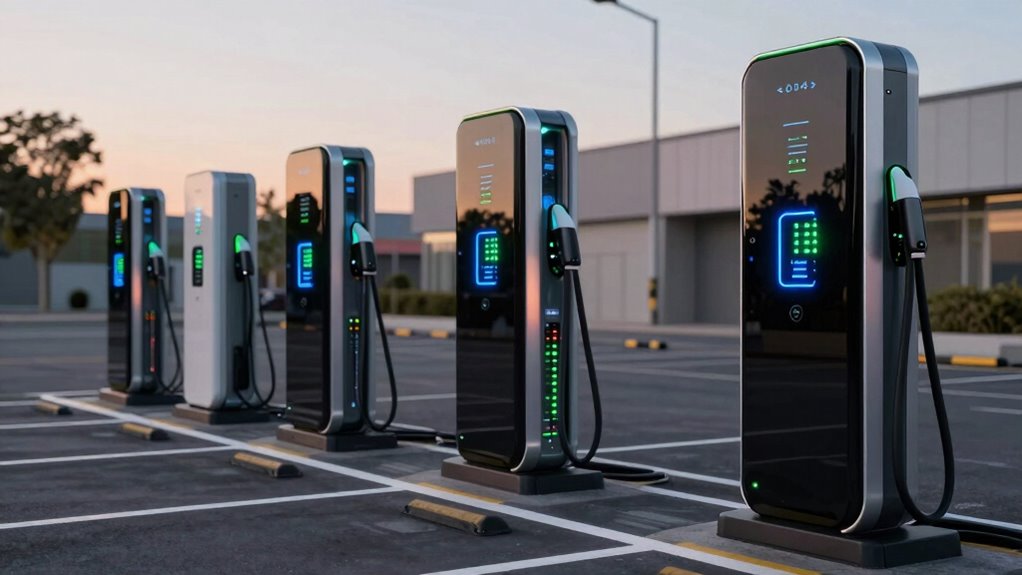

Choosing an EV charger with RFID access control in 2026 involves balancing speed, connectivity, and security. The Level 2 EV Charger 48 Amp excels with its fast charging and smart app features, making it ideal for tech-savvy users who want remote control. Meanwhile, the Level 2 EV Charger with WiFi App Control and RFID offers flexible installation options and weather resistance, suited for those who need outdoor durability. Both support RFID for secure access, but they differ in connectivity nuances and installation flexibility. Here’s how each stacks up and what tradeoffs you need to consider.
Complete the kit


Key Takeaways
- Both chargers deliver 48A power, enabling fast Level 2 charging up to 11.5 kW.
- WiFi connectivity is a core feature, supporting remote monitoring and scheduling.
- The first charger prioritizes long cable length and compatibility with all J1772 EVs, including Tesla with an adapter.
- The second offers more flexible installation options and weather resistance, ideal for outdoor use.
- Tradeoffs include higher price and installation complexity for advanced features versus simpler setups with more installation flexibility.
| Level 2 EV Charger 48 Amp, 11.5KW 240V Electric Car Charger with WiFi, NEMA 14-50 Plug, J1772, 25′ Cable, RFID, Smart App, UL & ETL Certified |  | Best Overall for Speed and Smart Features | Output Voltage: 240 volts | Input Voltage: 240 volts | Current Rating: 48 A | VIEW ON AMAZON | See Our Full Breakdown |
| Level 2 EV Charger, 48A 240V NEMA 14-50 Plug, WiFi App Control, RFID, Compatible with Tesla & J1772 EVs |  | Best for Flexible Installation and Outdoor Durability | Connector Type: NEMA 14-50 Plug | Compatible Devices: Tesla (adapter required), J1772 EVs | Input Voltage: 240 volts | VIEW ON AMAZON | See Our Full Breakdown |
| ev charger with rfid access control | Input Voltage | Compatible Devices | Output Voltage | Current Rating |
|---|---|---|---|---|
| Level 2 EV Charger 48 Amp | 240 volts | All J1772 EVs including Tesla (with adapter) | 240 volts | 48 A |
| Level 2 EV Charger | 240 volts | Tesla (adapter required), J1772 EVs | — | — |
More Details on Our Top Picks
Level 2 EV Charger 48 Amp, 11.5KW 240V Electric Car Charger with WiFi, NEMA 14-50 Plug, J1772, 25′ Cable, RFID, Smart App, UL & ETL Certified
This charger stands out for its rapid charging capability, delivering up to 48 amps and 11.5 kW, making it suitable for those who need quick turnarounds. Its WiFi integration supports remote monitoring and scheduling, while the 25-foot cable offers flexibility for different parking setups. Compatibility with all J1772 EVs, including Tesla via adapter, adds to its universal appeal. Compared with the second model, it offers a longer cable and slightly more robust app features, but it comes at a higher price and requires a dedicated NEMA 14-50 outlet, which could complicate installation.
Pros:- Fast charging with 48A / 11.5kW output
- Smart WiFi app for remote control and scheduling
- Long 25-foot cable for installation flexibility
- Compatible with all J1772 EVs, including Tesla with adapter
Cons:- Requires a NEMA 14-50 receptacle, possibly needing professional installation
- Higher price point compared to basic chargers
- Installation complexity for some setups
Best for: Users seeking fast charging, smart remote management, and broad EV compatibility.
Not ideal for: Homeowners with limited electrical infrastructure or who prefer simpler, less expensive chargers.
- Output Voltage:240 volts
- Input Voltage:240 volts
- Current Rating:48 A
- Compatible Devices:All J1772 EVs including Tesla (with adapter)
- Item Dimensions:20″D x 9″W x 14″H
- Color:White
Our verdict“A powerful, feature-rich charger ideal for tech-savvy users who prioritize speed and remote management.”
Level 2 EV Charger, 48A 240V NEMA 14-50 Plug, WiFi App Control, RFID, Compatible with Tesla & J1772 EVs
This model offers a highly adaptable installation with options for hardwired or NEMA 14-50 plug-in connections, making it suitable for a variety of setups. Its weather-resistant design ensures reliable outdoor use, and WiFi app control supports scheduling and energy management. While it provides comparable charging speeds at 48A, it relies on an additional Tesla adapter for Tesla owners—something to consider if you want a plug-and-play solution. Compared with the first charger, it emphasizes durability and installation flexibility over longer cable length and slightly advanced app features.
Pros:- Fast Level 2 charging with adjustable current
- Weather-resistant for outdoor use
- Flexible mounting options including hardwired or plug-in
- Smart WiFi app for scheduling and monitoring
Cons:- Tesla vehicles require an additional adapter, not included
- Professional installation may be needed
- Some app features depend on stable connectivity
Best for: Homeowners seeking outdoor-ready, flexible installation options with secure RFID access.
Not ideal for: Users who want an all-in-one solution with integrated Tesla compatibility without extra adapters.
- Connector Type:NEMA 14-50 Plug
- Compatible Devices:Tesla (adapter required), J1772 EVs
- Input Voltage:240 volts
- Amperage:48 A
- Wattage:11.5 KW
- Mounting Type:Wall Mount
- Warranty & Support:30-Day Return, Warranty
Our verdict“A durable, adaptable charger ideal for outdoor installations and users prioritizing flexibility and weather resistance.”

How We Picked
To select the best EV chargers with RFID access control, I focused on models that combine reliable power output, smart connectivity, and security features. I compared user reviews, safety certifications, installation requirements, and compatibility with common EVs. Special emphasis was placed on RFID functionality—how accessible and secure it is—and whether the charger’s app controls are intuitive and reliable. I also considered durability in various environments and overall value, balancing features against price and ease of use.
| ev charger with rfid access control | Compatible Devices |
|---|---|
| Level 2 EV Charger 48 Amp | All J1772 EVs including Tesla (with adapter) |
| Level 2 EV Charger | Tesla (adapter required), J1772 EVs |
Factors to Consider When Choosing Ev Charger With Rfid Access Control
When selecting an EV charger with RFID access control, I focus on features that enhance security, ease of use, and installation flexibility. RFID access helps prevent unauthorized charging, making it ideal for shared or public spaces. Beyond RFID, connectivity, power output, and durability are key factors. Understanding your specific needs—such as indoor versus outdoor use, compatibility with your EV, and whether you prefer hardwired or plug-in options—will help narrow down choices.
Power and Charging Speed
Most Level 2 chargers deliver up to 48A, providing around 11.5 kW of power. This is generally sufficient for home use, offering a full charge overnight or faster if your vehicle supports it. Higher amperage chargers cut charging times further but often require more robust electrical setups. Consider your EV’s maximum charging rate and your home’s electrical capacity before choosing.
Connectivity and Smart Features
WiFi connectivity is essential for remote control, scheduling, and energy management. Some chargers include advanced app features like usage monitoring and alerts, which can help optimize charging and reduce costs. Compatibility with smart home systems can also be a plus if you want integrated automation. The difference often lies in app reliability and feature depth, so check user reviews for real-world performance.
RFID Access and Security
RFID access provides a convenient way to restrict charging to authorized users, which is important in shared environments. The quality of RFID integration varies: some chargers feature robust encrypted systems, while others rely on basic proximity cards. Consider how many users need access and whether RFID is your preferred security method, alongside other protections like password or app authentication.
Installation and Durability
Indoor chargers generally require a standard outlet and simpler setup, but outdoor models demand weather resistance, sealed enclosures, and possibly more complex mounting. Think about your installation location—outdoor units should have corrosion-resistant materials and certifications like IP ratings. Hardwired units offer permanent setups, whereas plug-in chargers provide flexibility but may be less discreet.
Frequently Asked Questions
What is RFID access control on EV chargers?
RFID access control uses radio frequency identification to restrict who can operate the charger. It typically involves authorized users carrying RFID cards or tags that unlock the charging port, preventing unauthorized use. This feature is especially useful in shared or public spaces, ensuring only permitted users can start charging sessions.
Can I use these chargers with any electric vehicle?
Both chargers support the J1772 standard, which is the most common connector in North America. Tesla owners will need an adapter to connect to these chargers, but the chargers themselves are compatible with most EV brands. Always verify your vehicle’s charging port type and compatibility before purchasing.
Is WiFi connectivity reliable for remote control?
WiFi connectivity depends on your local network stability. Both chargers rely on a steady internet connection for app functions like scheduling and monitoring. In areas with poor WiFi, these features may be less dependable, so consider your home or installation environment when choosing.
How secure is RFID access control?
RFID systems vary in security; higher-quality units use encrypted tags and secure authentication protocols. Basic RFID may be vulnerable to cloning or unauthorized access if not properly protected. For shared or public installations, look for models with strong encryption and additional security features.
What installation considerations should I keep in mind?
Indoor chargers typically require a standard outlet and are straightforward to install. Outdoor models need weatherproofing, possibly a conduit, and certifications like IP ratings. Professional installation might be necessary for complex setups, especially if upgrading your electrical system or adding dedicated circuits. Always check the manufacturer’s guidelines for your specific model.
Conclusion
If you prioritize rapid charging, smart remote management, and broad EV compatibility, the first charger offers a compelling package, though it demands a dedicated outlet. For users seeking outdoor durability, flexible installation options, and robust weather protection, the second model stands out. Homeowners with simple setups or those installing in harsher environments should match their choice accordingly—each model serves different needs effectively.