
If you’re looking for the best equatorial mount with a belt drive system for smooth, precise astrophotography, I recommend the iEXOS-100-2 with PMC-Eight. It offers accurate tracking, low noise, and stable support to capture sharp images, even during long exposures. Its quick setup and compatibility make it a top choice for beginners and experts alike. Keep going, and you’ll discover how this mount can elevate your astrophotography experience.
Key Takeaways
- Look for mounts with dual-axis belt drives for synchronized, smooth movement essential for high-quality astrophotography.
- Choose a system with high load capacity to support your telescope, camera, and accessories without sacrificing precision.
- Prioritize mounts with low motor noise (below 50 decibels) to ensure vibration-free imaging sessions.
- Select models that are easy to install, calibrate, and offer compatibility with common telescope mounts and accessories.
- Consider features like integrated polar alignment aids and remote WiFi control for enhanced convenience and accuracy.

iEXOS-100-2 PMC-Eight Equatorial Tracker System Tripod and Mount for Astrophotography with WiFi and Bluetooth Compatible
- Advanced Multi-CPU System: Eight independent CPUs for superior performance
- Quiet Dual-Axis Gears: Clutched worm gears with precision stepper motors
- User-Friendly App: ExploreStars app for easy alignment and navigation
As an affiliate, we earn on qualifying purchases.
iEXOS-100-2 PMC-Eight Astrophotography Tracker System
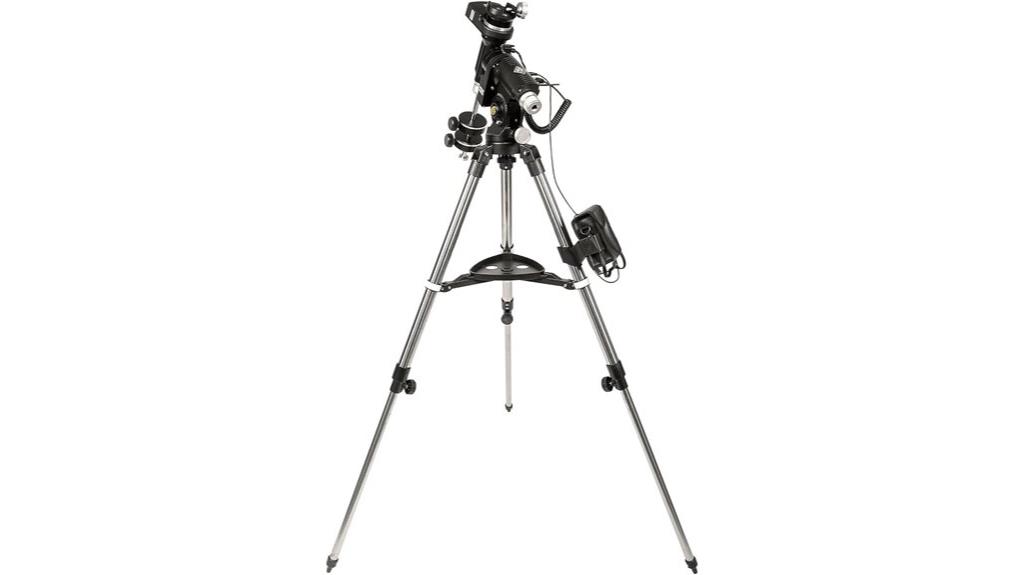
Are you looking for an astrophotography tracker that combines precision, responsiveness, and ease of use? The iEXOS-100-2 PMC-Eight system is exactly what you need. It features an integrated PMC-Eight system with eight independent CPUs, ensuring fast, reliable responses. The dual-axis worm gears with quiet stepper motors provide smooth, accurate movement, making balancing and repositioning effortless. Its polar alignment is quick thanks to the built-in sight hole and precise altitude control, eliminating the need for a polar scope. Controlled via the ExploreStars app on your tablet, it offers seamless star navigation and data access. Plus, WiFi and Bluetooth enable remote operation, enhancing your astrophotography experience.
Best For: astrophotographers and amateur astronomers seeking a precise, easy-to-use, and technologically advanced tracking system for celestial observation and photography.
Pros:
- Integrates eight independent CPUs for fast, reliable responsiveness.
- Smooth, accurate movement thanks to dual-axis worm gears and quiet stepper motors.
- Quick and easy polar alignment without the need for a polar scope, saving setup time.
Cons:
- May require a compatible tablet or device for optimal control via the ExploreStars app.
- Wireless connectivity features (WiFi and Bluetooth) can sometimes experience interference or connection issues.
- The system’s advanced features and setup might have a learning curve for beginners.
Factors to Consider When Choosing Equatorial Mounts With Belt Drive Systems
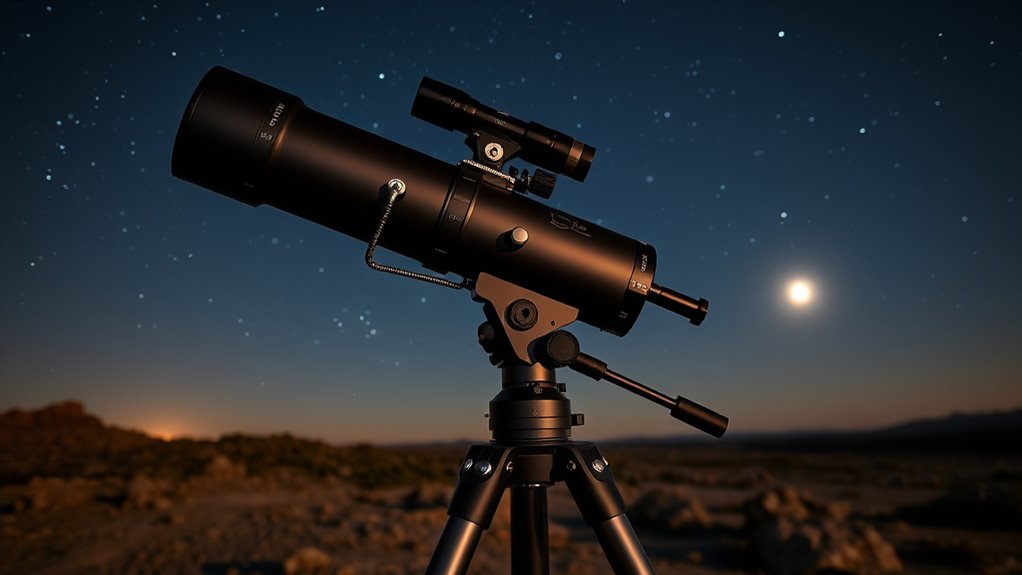
When selecting an equatorial mount with a belt drive system, I focus on factors like precision, stability, and load capacity to guarantee it meets my needs. I also consider how noisy the motor is during operation and whether the mount is easy to set up and compatible with my existing equipment. These points help me choose a reliable mount that delivers consistent performance for my astrophotography sessions.
Precision and Stability
Choosing an equatorial mount with a belt drive system hinges on its ability to deliver precise and stable tracking, which is essential for quality astrophotography and observation. Belt drives reduce gear backlash, resulting in smoother, more accurate tracking of celestial objects. The elasticity of belts absorbs minor vibrations, boosting stability during long exposures. High-quality belt systems maintain consistent gear ratios, preventing slippage and ensuring reliable motion over time. Proper tensioning is critical; loose belts can cause wobble and tracking errors, so adjustment is key. Dual-axis belt drives enable synchronized movement in both right ascension and declination, enhancing observational accuracy. Altogether, these factors contribute to a mount’s ability to deliver steady, precise tracking necessary for capturing sharp, high-quality images of the night sky.
Load Capacity Limits
How much weight your equatorial mount with a belt drive system can support is vital to ensuring reliable performance and long-term durability. Knowing the load capacity helps you choose a mount that safely supports your telescope, camera, and accessories without risking strain or damage. Exceeding this limit can cause decreased tracking accuracy and faster wear on belt drive components, compromising your astrophotography results. Higher-capacity mounts often feature stronger structural supports and more robust belt drive systems, providing better stability for heavier gear. For astrophotography, it’s essential to select a mount with a load capacity that exceeds your combined equipment weight, ensuring smooth operation and longevity. Always check the manufacturer’s specifications to confirm the maximum load and avoid overloading your mount.
Motor Noise Levels
Belt drive systems generally produce less motor noise than traditional gear setups because they transmit power smoothly and flexibly. This quieter operation helps minimize vibrations and disturbances during long exposure astrophotography. The noise level can vary depending on factors like belt material, tension, and the quality of the motor and pulley components. High-quality belt drives are designed to operate quietly, often emitting sounds well below 50 decibels, which is vital in quiet observing environments. Lower motor noise contributes to a more stable imaging experience, preventing subtle sounds from affecting sensitive equipment or disrupting focus. When choosing an equatorial mount, consider the noise level, especially if you plan to shoot in quiet settings or require uninterrupted, vibration-free imaging sessions.
Ease of Installation
When selecting an equatorial mount with a belt drive system, ease of installation is often a top priority, especially for those new to astrophotography or telescope setups. Many belt drive mounts feature straightforward assembly that doesn’t require specialized tools or technical skills, making setup accessible for beginners and experienced users alike. Clear instructions and pre-aligned components help streamline the process, saving valuable time. The design of belt drive systems typically minimizes complex calibration, allowing for quicker installation compared to traditional gear systems. Compatibility with existing telescope setups, especially if designed with adjustable or modular parts, can further simplify installation. Additionally, proper belt tensioning is easy to achieve with simple adjustment mechanisms, ensuring ideal performance without hassle.
Compatibility Features
Ensuring compatibility is essential when choosing an equatorial mount with a belt drive system, as it guarantees smooth operation across various setups. You want a mount that supports different telescope sizes and weight capacities to prevent strain or imbalance during imaging sessions. Support for standard mounting interfaces, like Vixen or Losmandy dovetails, makes attaching different optical tubes straightforward. Compatibility with control software and apps, through protocols like WiFi or Bluetooth, allows for precise tracking and slewing. Additionally, integrating with polar alignment accessories such as polar scopes or sight holes improves setup accuracy and speed. Ultimately, the belt drive system should be adaptable to your existing mount or tripod, ensuring a stable, secure foundation for your astrophotography endeavors.
Price and Value
Choosing the right equatorial mount with a belt drive system involves balancing cost with the features and performance you need. Belt drive mounts are generally more affordable than gear-based options, making them accessible for amateurs. However, it’s important to weigh the belt’s durability; cheaper belts may wear out quickly, reducing long-term value. When evaluating price, look at performance features like tracking accuracy and stability, which directly impact astrophotography quality. Belt drives often operate more quietly and produce less backlash, enhancing the observational experience relative to cost. Investing in a mount with features such as precise motor control and compatibility with accessories might cost more upfront, but it can offer increased value by delivering better performance and longevity. Ultimately, finding the right balance depends on your specific needs and budget.
Frequently Asked Questions
How Does Belt Drive Reduce Vibrations During Astrophotography?
Belt drive reduces vibrations during astrophotography by providing smoother, quieter motion compared to traditional gear systems. I notice that with belt drives, the mount operates more quietly and steadily, minimizing sudden jolts or shakes that can blur images. This enhanced stability helps me capture sharper, more precise astrophotos, especially during long exposures. Overall, belt drives make the entire imaging process more reliable and enjoyable by keeping vibrations to a minimum.
Can Belt Drive Mounts Support Heavy Astrophotography Equipment?
Yes, belt drive mounts can support heavy astrophotography equipment, but it depends on the specific model and its weight capacity. I’ve found that high-quality mounts with robust belt systems are designed to handle heavier loads while maintaining smooth, precise movements. It’s important to verify the manufacturer’s specifications to confirm your gear’s weight falls within the recommended limits. Properly chosen, a belt drive mount can definitely support advanced, heavy setups.
What Maintenance Is Required for Belt Drive Systems?
I recommend checking the belt drive system regularly for wear and tension. Keep the belts clean and free of dust, and inspect for any signs of fraying or cracks. Lubricate moving parts as specified by the manufacturer to guarantee smooth operation. Additionally, tighten any loose screws or bolts to maintain stability. Proper maintenance helps prolong the life of your mount and keeps your astrophotography sessions precise and smooth.
Are Belt Drive Mounts Compatible With All Telescope Types?
Did you know that over 80% of amateur astronomers prefer belt drive mounts for their smooth tracking? Yes, belt drive mounts are compatible with many telescope types, including refractors, reflectors, and some SCTs. However, compatibility depends on the mount’s design and the telescope’s mounting options. Always check the manufacturer’s specifications to guarantee a perfect fit. I’ve found they work great for different setups, improving stability and tracking accuracy.
How Does Belt Drive Impact the Mount’s Overall Lifespan?
Belt drive systems generally extend the lifespan of a mount by reducing wear on gears and motors, thanks to smoother, quieter operation. I’ve found that they also lower heat buildup and mechanical stress, which can cause parts to wear out faster. Proper maintenance is still essential, but overall, belt drives offer a more durable solution, helping your mount stay reliable and precise over many years of astrophotography adventures.
Conclusion
Imagine gazing up at a clear night sky, your telescope gliding smoothly as stars streak gracefully across your camera’s sensor. With the right equatorial belt drive mount, like the iEXOS-100-2 PMC-Eight system, your astrophotography becomes effortless and precise. It’s like having a trusted guide through the cosmos, ensuring every shot is crisp and stable. Invest in the best, and turn your celestial dreams into stunning reality under the shimmering tapestry above.