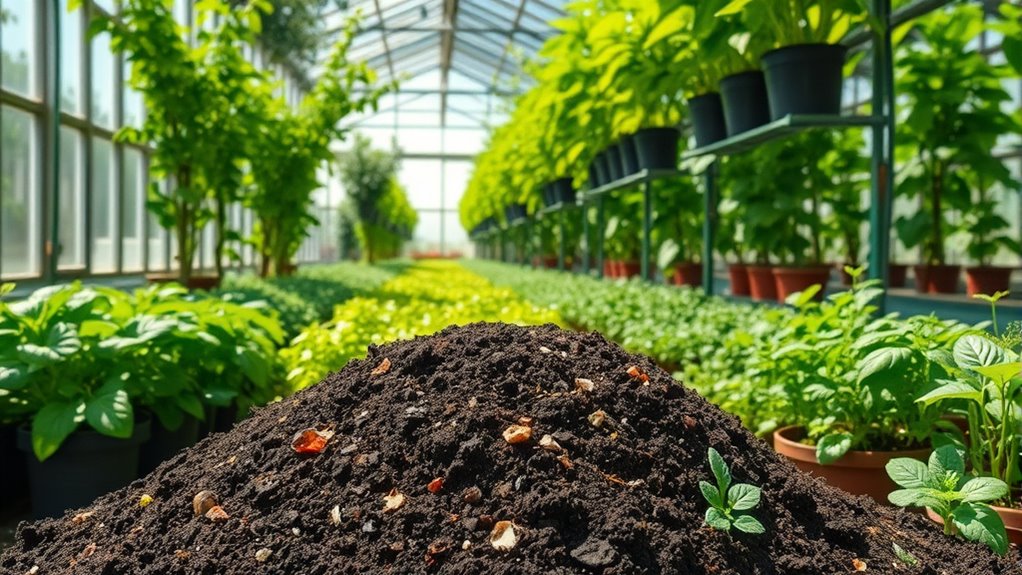

Choosing compost for a greenhouse means balancing soil improvement with the needs of plants grown in a sheltered space, where containers and beds may dry at different rates. I would start with Back to the Roots Organic Premium Compost for its peat-free raised-bed mix and moisture-related additives, or Malibu Compost Bu’s Blend for a full cubic foot intended to build soil health. For smaller jobs, Organic Compost – 1 Gallon is easier to handle and is OMRI Listed.

Get garden gear delivered free with Prime
- Fast, free delivery on millions of items
- Prime Video, Amazon Music and more included
- Member-only deals all year
These options are not interchangeable. Some are described as complete mixes for raised beds, while others are amendments whose ingredients or greenhouse-specific directions are sparsely documented. I rank them by how clearly their stated properties translate to greenhouse use, how much material they provide, and how easy it is to match them to a particular job. Compost can help improve soil, but it should not automatically replace a greenhouse potting mix or be used as the sole growing medium.
Complete the kit


Key Takeaways
- Back to the Roots has the clearest fit for a greenhouse raised bed: it is peat-free, contains upcycled plant matter and wood fines, and includes additives described for moisture and pH management.
- Malibu Bu’s Blend provides a cubic foot for broader soil building, but its ingredient list and greenhouse application rates are not specified in the supplied details.
- Organic Compost – 1 Gallon is the small-project pick when an OMRI Listed product and manageable quantity matter more than a detailed formulation.
- R&M Organics is the manure-based amendment for gardeners who want to add composted cow manure to beds or containers, though its ten-pound bag is aimed at modest applications.
- Premium Organic Screened Compost offers a refined texture in a two-pound package, but limited information about its contents and intended use makes it harder to choose for a large greenhouse job.
| Back to the Roots 25.7qt (1 Cubic ft) Organic Premium Compost |  | Best Overall for Greenhouse Raised Beds | Size: 25.7 qt (1 cubic foot) | Material: 100% organic, peat-free compost | Base ingredients: Upcycled plant matter and wood fines | VIEW ON AMAZON | See Our Full Breakdown |
| Malibu Compost Bu’s Blend Biodynamic Compost, 1 cu. ft. |  | Best for Building Greenhouse Bed Soil | Volume: 1 cubic foot | Type: Biodynamic compost | Stated functions: Soil health, water retention, and humus | VIEW ON AMAZON | See Our Full Breakdown |
| Organic Compost – 1 Gallon |  | Best for Small Greenhouse Projects | Size: 1 gallon | Type: Organic compost | Certification: OMRI Listed | VIEW ON AMAZON | See Our Full Breakdown |
| R&M Organics Compost Soil Amendment for Gardens and Lawns |  | Best Manure Amendment for Small Greenhouse Beds | Material: Composted dairy cow manure | Weight: 10 lb | Use: Indoor and outdoor gardening | VIEW ON AMAZON | See Our Full Breakdown |
| Premium Organic Screened Compost |  | Best Refined Texture for Small Top-Ups | Weight: 2 lb | Type: Manure compost | Processing: Screened | VIEW ON AMAZON | See Our Full Breakdown |
| compost for greenhouse | Type |
|---|---|
| Back to the Roots 25.7qt | — |
| Malibu Compost Bu’s Blend Biod | Biodynamic compost |
| Organic Compost | Organic compost |
| R&M Organics Compost Soil Amen | — |
| Premium Organic Screened Compo | Manure compost |
More Details on Our Top Picks
Back to the Roots 25.7qt (1 Cubic ft) Organic Premium Compost
Back to the Roots earns the first spot because its details give a greenhouse grower more to work with than a generic compost label. The peat-free, organic mix is made from upcycled plant matter and wood fines, and the maker lists yucca extract for moisture control, dolomitic limestone for pH balancing, and gypsum for water absorption. Those additions speak to practical growing-bed concerns, though they do not replace checking the pH and watering needs of a particular crop.
At one cubic foot, it is a more useful quantity for a raised bed than the one-gallon organic option or the two-pound screened compost. Its stated target is raised beds for herbs, vegetables, and fruit, which makes it the clearest match here for greenhouse beds. Compared with Malibu Bu’s Blend, it provides more ingredient detail and more explicit moisture and pH-related features. The tradeoff is a narrower declared use: gardeners seeking a plain amendment for lawns or a small pot may find the bag excessive, and the supplied description does not set out greenhouse-specific directions or a nutrient analysis.
I would use this as a component in a bed mix after checking the product label and the needs of the plants. For small individual containers, a formulated potting mix may be a more predictable base. The peat-free formulation and clear intended use make it the strongest all-around choice in this comparison, while its large bag and raised-bed focus define who should pass.
Pros:- 100% organic and peat-free, according to the product details
- One cubic foot suits a meaningful raised-bed project
- Includes yucca extract, dolomitic limestone, and gypsum for stated moisture and pH-related functions
- Made from upcycled plant matter and wood fines sourced in the USA
Cons:- The stated target is raised beds, so greenhouse container use is less clearly supported
- The supplied details do not include nutrient analysis or greenhouse application rates
- The full bag may be more than needed for a small bench or a few pots
Best for: Greenhouse growers preparing or refreshing a raised bed for herbs, vegetables, or fruit who want a peat-free mix with stated moisture and pH-related additives.
Not ideal for: People needing only a small amount, a product explicitly directed for greenhouse pots, or a highly specified nutrient formula.
- Size:25.7 qt (1 cubic foot)
- Material:100% organic, peat-free compost
- Base ingredients:Upcycled plant matter and wood fines
- Additives:Yucca extract, dolomitic limestone, and gypsum
- Stated intended use:Raised-bed herbs, vegetables, and fruits
- Origin:Made in USA
Our verdict“For greenhouse raised beds, I rank this first because it pairs useful volume with the clearest formulation and use description in the lineup.”
Malibu Compost Bu’s Blend Biodynamic Compost, 1 cu. ft.
Malibu Compost Bu’s Blend is my choice for growers who want a full cubic foot of compost described as a soil-health and humus builder. The product is presented as biodynamic compost intended to improve soil, retain water, and support a soil ecosystem. In a greenhouse bed, that broad soil-building role can be appealing when the goal is to amend existing ground or a bed mix rather than buy a narrowly specified container medium.
Its volume matches Back to the Roots, but the two products give buyers different levels of confidence about the intended job. Back to the Roots names its base ingredients and additives and identifies raised beds for food crops; Bu’s Blend offers broad claims across vegetables, flowers, lawns, and gardens but the supplied details do not identify ingredients or a nutrient profile. That makes this a flexible candidate for established beds, but a less precise choice when a grower needs to predict texture, pH effect, or nutrient contribution.
I place it below Back to the Roots because greenhouse usefulness is easier to judge when the formulation and target application are spelled out. Compared with R&M Organics, Bu’s Blend also has no stated manure base, so it may suit gardeners looking for a broader compost product rather than a clearly manure-derived amendment. I would check the bag for application rates and crop guidance before mixing it into a greenhouse bed. The cubic-foot volume and soil-building focus are its strengths; the sparse formulation details are the main limitation.
Pros:- One cubic foot provides material for a broader bed-amending task
- Described as supporting soil health and humus
- Water retention is among its stated intended benefits
- Made in the United States
Cons:- The supplied product details do not list ingredients
- No nutrient analysis or greenhouse application rate is provided
- Broad garden use claims leave the best mixing ratio unclear
Best for: Greenhouse growers improving an existing bed who want a cubic foot of broadly described biodynamic compost for soil and humus building.
Not ideal for: Buyers who need a disclosed ingredient list, nutrient analysis, or specific greenhouse container directions before choosing.
- Volume:1 cubic foot
- Type:Biodynamic compost
- Stated functions:Soil health, water retention, and humus
- Intended plants:Vegetables, plants, and flowers
- Other stated use:Lawns and gardens
- Origin:United States
Our verdict“Choose Bu’s Blend for broad soil building when volume matters more than a fully disclosed formulation.”
Organic Compost – 1 Gallon
Organic Compost – 1 Gallon is the straightforward pick when a greenhouse project calls for a modest amount of compost and the buyer values an organic-use listing. Its OMRI Listed status is useful to gardeners who need to check products against organic production requirements. The gallon package is also easier to store and portion than either cubic-foot bag, making it a practical scale for a few pots, a seed-starting bench amendment, or a small patch of bed soil.
That convenience comes with a clear limit: one gallon will not stretch far across a greenhouse bed. The product details name no ingredients, texture, maturity information, or crop-specific directions, so it is less informative than Back to the Roots for larger food-growing beds. Compared with Premium Organic Screened Compost, it offers the OMRI listing and a broader stated range of garden, container, and planting-bed use; the screened compost, however, specifies a refined texture and manure compost type.
I rank this as a small-project option rather than a greenhouse staple. It is a sensible choice when you need a little organic compost and want to avoid opening a bulkier bag, but the limited formulation details make it hard to predict how it will behave in a particular potting blend. OMRI listing and manageable size are the reasons to choose it; limited quantity and sparse product information are the reasons to keep expectations modest.
Pros:- OMRI Listed for use in organic production
- One-gallon package is manageable for small jobs
- Stated for gardens, containers, and planting beds
- Organic compost type is clearly identified
Cons:- The quantity is small for a large greenhouse project
- Ingredients and texture are not specified in the supplied details
- No crop-specific greenhouse directions are provided
Best for: Organic growers making a small amendment to a few greenhouse pots or a limited planting-bed area.
Not ideal for: Anyone refreshing a full greenhouse bed or needing a detailed formulation and predictable mixing instructions.
- Size:1 gallon
- Type:Organic compost
- Certification:OMRI Listed
- Stated use:Gardens, containers, and planting beds
- Package scale:Small project quantity
- Ingredients:Not specified in supplied details
Our verdict“This is the most convenient choice for a small organic greenhouse task, but its gallon size rules it out for broad bed work.”
R&M Organics Compost Soil Amendment for Gardens and Lawns
R&M Organics Compost Soil Amendment stands apart because its base material is specified: fully composted dairy cow manure. For greenhouse growers who want to add a manure-based amendment to soil or an existing container blend, that detail is more useful than a general promise of soil vitality. The stated benefits are improved soil structure and moisture retention, and the product directions call for a thin layer or mixing into soil.
Its ten-pound bag is better suited to modest jobs than to rebuilding a large greenhouse bed. Back to the Roots gives a full cubic foot and a broader raised-bed formulation, while R&M offers a known manure source and indoor/outdoor flexibility. Compared with the one-gallon organic compost, R&M is a larger package and includes an application method, but it lacks that product’s OMRI Listed status in the details supplied here. Do not assume the manure content makes it suitable as a complete growing medium; the stated role is soil amendment.
The low-odor, earthy scent may make handling more comfortable in enclosed spaces, although greenhouse ventilation and label directions still matter. I put this behind the broad bed composts because the bag is intended for small to medium applications and the supplied information does not identify nutrient values or greenhouse crop rates. Clearly identified composted manure is the draw for targeted soil improvement, while modest capacity makes it a less practical pick for large beds.
Pros:- Made with fully composted dairy cow manure
- Stated to improve soil structure and moisture retention
- Suitable for indoor and outdoor gardening
- Low-odor earthy scent and an identified application approach
Cons:- Ten-pound package is aimed at small to medium applications
- No nutrient analysis or crop-specific greenhouse rate is supplied
- The product details do not identify an organic certification
Best for: Greenhouse gardeners making a modest soil amendment who specifically want fully composted dairy cow manure and a stated mixing or layering direction.
Not ideal for: Growers filling a large bed, seeking an OMRI-listed product, or needing a complete container growing medium.
- Material:Composted dairy cow manure
- Weight:10 lb
- Use:Indoor and outdoor gardening
- Application:Thin layer of about 1/4 inch or mixed into soil
- Stated benefits:Soil structure and moisture retention
- Odor:Low odor; earthy scent
Our verdict“Pick R&M Organics for a targeted manure-based amendment in a modest greenhouse bed or container mix.”
Premium Organic Screened Compost
Premium Organic Screened Compost is the most texture-focused option in this group. Screening suggests a refined material that may be easier to portion for a small top-up or mix into a compact planting area than a coarser, unspecified compost. Its details also identify it as organic manure compost, which makes its material category clearer than the one-gallon organic compost, whose ingredients are not supplied.
The package weighs just two pounds, so this is not a realistic choice for refreshing a full greenhouse bed. It falls behind R&M Organics for buyers specifically seeking manure amendment because R&M identifies dairy cow manure and gives a mixing direction; this product only says manure compost and offers no application guidance. It also trails Organic Compost – 1 Gallon for documentation, since the latter is OMRI Listed and has stated use across beds, containers, and gardens.
I would consider this only for a very small greenhouse task where a screened texture and organic label matter more than detailed sourcing or coverage. The supplied description omits the compost’s contents, intended crops, and recommended rate, leaving important questions for the package label. Screened texture and small handling size are its distinct advantages, but the lack of detail and low weight place it last for general greenhouse buying.
Pros:- Organic manure compost is identified
- Screened processing offers a refined texture
- Two-pound package is easy to portion for a small task
Cons:- Two pounds is too little for most bed-scale greenhouse work
- The supplied details do not identify the manure source or other contents
- No intended crops or application directions are provided
Best for: A greenhouse grower needing a small amount of screened manure compost for a limited top-up or blend-in task.
Not ideal for: Anyone amending a large bed, seeking detailed ingredient sourcing, or requiring clear greenhouse application directions.
- Weight:2 lb
- Type:Manure compost
- Processing:Screened
- Organic:Yes
- Package scale:Small quantity
- Intended use:Not specified in supplied details
Our verdict“This is a niche small-volume pick when screened texture matters, but the limited detail keeps it below more clearly documented options.”

How We Picked
I ranked these five options for the specific conditions of a greenhouse: limited floor space, frequent container growing, and the need to manage watering and soil structure under cover. I looked at the stated material, processing, volume or weight, intended use, and any formulation details that help explain where each product could fit. I gave more weight to clear use directions and relevant characteristics than to broad claims about plant vitality.
The supplied details do not establish that any of these products is formulated specifically for greenhouse use. I therefore treat that fit as an informed match to greenhouse beds and containers, not as a manufacturer-verified designation. A compost amendment is usually mixed into an existing growing medium or soil according to its label; a container crop may need a lighter, purpose-made potting mix for drainage and aeration. Where ingredients, maturity, nutrient analysis, or application guidance are absent, I count that uncertainty as a drawback. My order favors the option with the clearest useful formulation first, then weighs versatility, volume, and suitability for smaller jobs.
| compost for greenhouse | Type |
|---|---|
| Back to the Roots 25.7qt | — |
| Malibu Compost Bu’s Blend Biod | Biodynamic compost |
| Organic Compost | Organic compost |
| R&M Organics Compost Soil Amen | — |
| Premium Organic Screened Compo | Manure compost |
Factors to Consider When Choosing Compost For Greenhouses
I would choose greenhouse compost by starting with the job: improving a bed, blending into a container mix, or making a small amendment. The product labels in this group offer different amounts of detail, so match the compost to the growing setup and confirm the directions on the bag.Decide whether you need compost or a potting mix
Compost is often used to add organic matter to soil or to form one part of a growing blend. A greenhouse container usually needs a mix that holds enough water while still draining and leaving air around roots. Do not assume that a product called compost is a complete potting medium. Back to the Roots is explicitly described for raised beds, while the other options are presented as compost or amendments. For pots, check whether the label gives a suitable mixing ratio or use it as directed alongside a purpose-made potting mix.
Match package size to the greenhouse area
Volume can be more useful than a long list of benefits when you are planning a bed refresh. The two cubic-foot options, Back to the Roots and Malibu Bu’s Blend, are the most plausible choices for broader soil work. R&M Organics at ten pounds targets small to medium applications, and the one-gallon and two-pound products make more sense for small tasks. Weight and volume cannot be compared directly without knowing density, so use the package’s coverage guidance if available.
Read the ingredient and certification details
Ingredient disclosure helps explain what you are adding. Back to the Roots lists upcycled plant matter, wood fines, and three additives; R&M identifies dairy cow manure; Premium Organic Screened Compost names manure compost but not its source. The one-gallon product is the only one in this lineup identified as OMRI Listed. If organic-production status matters to your operation, check the listing and the product label for the intended application rather than treating a general organic claim as equivalent certification.
Account for greenhouse watering and drainage
A covered growing space can have different watering patterns from an outdoor bed, and pots can stay wet longer or dry faster depending on their size, crop, and ventilation. Back to the Roots specifically lists additives for moisture control and water absorption; Bu’s Blend and R&M also state water-retention benefits. Those descriptions do not tell you the exact drainage behavior of a finished mix. Keep structure and watering in view: blend compost according to the label, observe how quickly the medium drains, and adjust irrigation to the crop and container.
Use label directions for amendments
Manure compost and other amendments can vary in nutrient contribution and texture. R&M supplies a thin-layer direction and permits mixing into soil; the other product details here do not specify application rates. Follow the product label, avoid applying more than directed, and do not infer a safe rate from bag size alone. For an unfamiliar compost, a small trial area lets you observe how the bed or pot handles water before using it throughout the greenhouse.
Frequently Asked Questions
Which compost in this comparison is best for a greenhouse raised bed?
Back to the Roots Organic Premium Compost has the clearest raised-bed fit in the supplied details. It is described for herbs, vegetables, and fruits, comes in a one-cubic-foot bag, and lists ingredients and additives tied to moisture and pH management. Malibu Bu’s Blend also offers a cubic foot and a broad soil-building role, but its formulation is less fully described. Check the label for the mixing rate and suitability for the specific crops you grow.
Can I use these composts by themselves in greenhouse pots?
The supplied information does not confirm that any of these products is a complete container growing medium. Compost is commonly blended with other materials or incorporated into existing soil, while potted plants need a balance of drainage, water retention, and air space. Back to the Roots is described for raised beds, and R&M explicitly presents itself as a soil amendment. I would follow each label and use a potting mix where a crop needs a formulated container medium.
Which option is most suitable for a small greenhouse project?
Organic Compost – 1 Gallon is the clearest small-project choice when OMRI Listed status matters, and Premium Organic Screened Compost may fit a very limited top-up where a refined texture is useful. The one-gallon product names gardens, containers, and planting beds as uses, while the screened manure compost lacks comparable directions. Neither package is intended to cover a broad greenhouse bed, so check the amount needed before choosing.
Is composted manure appropriate for greenhouse vegetables?
R&M Organics is described as fully composted dairy cow manure and suitable around vegetables, but its role is soil amendment rather than a complete growing medium. The supplied details do not provide nutrient analysis or vegetable-specific greenhouse rates. Follow the package directions and avoid adding more than recommended. If you need a product with a stated organic-production listing, the one-gallon compost is identified as OMRI Listed, though it has less disclosed information about its contents.
How should I choose between Back to the Roots and Malibu Bu’s Blend?
Choose Back to the Roots when you want a peat-free raised-bed mix with named ingredients and moisture- and pH-related additives. Choose Malibu Bu’s Blend when a broadly described biodynamic compost for soil and humus building fits your bed work and you are comfortable with fewer formulation details. Both are offered in one-cubic-foot quantities. In either case, check the bag for application rates and confirm the fit for your greenhouse crops.
Conclusion
For a greenhouse raised bed, I would start with Back to the Roots because it combines a useful cubic-foot quantity with the clearest formulation and stated crop use. Choose Malibu Bu’s Blend if your priority is broad soil building and humus in an established bed, and R&M Organics if you specifically want a modest manure-based amendment with an application direction. For a small organic task, Organic Compost – 1 Gallon is the more documented small package; reserve Premium Organic Screened Compost for a very limited job where texture is the deciding factor. In every case, match the product label to your bed or container setup before mixing it into the greenhouse growing medium.
Fall yard work Picks
leaf blowers
As an affiliate, we earn on qualifying purchases.