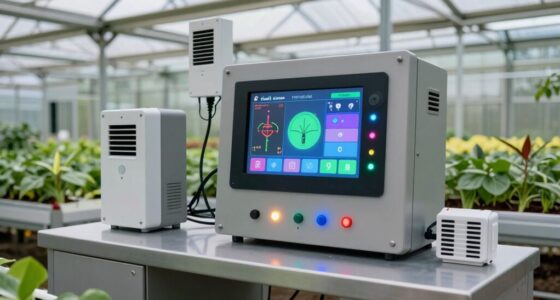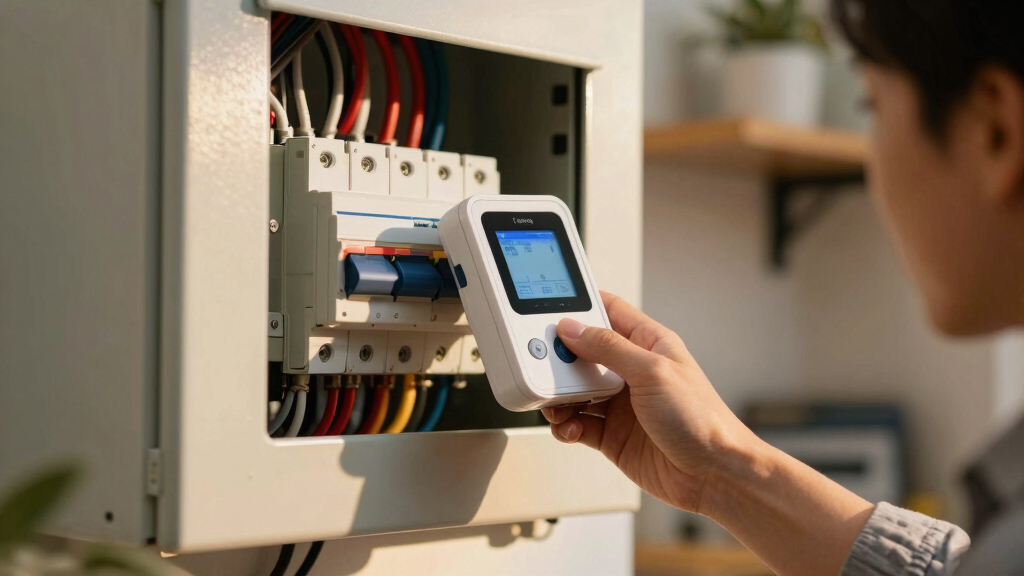

Finding the best smart breaker monitor for home energy tracking can significantly enhance your energy awareness and savings. The Emporia Vue 3 stands out as the overall top choice for its comprehensive features and accuracy. If you’re looking for a budget-friendly option, the Refoss Smart Home Energy Monitor offers solid performance without the high price. For those wanting seamless smart home integration, the Leviton LWHEM-2R provides easy whole-home monitoring through a familiar app interface. Each product in this category balances performance, usability, and smart features, but tradeoffs often involve installation complexity, data privacy, or cost. Keep reading for a detailed comparison to help you select the best fit for your home.
Key Takeaways
- The top monitors combine high sensor count with reliable WiFi or open API connectivity for comprehensive data.
- Ease of installation varies greatly; some models are better suited for DIY setup, while others may require professional help.
- Data privacy and local data storage are important considerations, especially for users wary of cloud-based solutions.
- Smart home integration levels differ; some monitors work seamlessly with platforms like Home Assistant or MQTT, others are standalone.
- Price often correlates with features; more advanced monitoring with solar and net metering support tends to cost more.


More Details on Our Top Picks
This model stands out for its comprehensive circuit-level monitoring capability, supporting up to 16 circuits with clamp-on sensors for a detailed view of home energy use. Unlike the Meross or Emporia Vue models, it offers flexible installation for single-phase, split-phase, and three-phase systems, making it suitable for diverse home setups. The added benefit of running in LAN mode without cloud dependency enhances privacy, a feature not available in most alternatives. However, the setup complexity can be higher, especially for European users, and the extensive configuration options may overwhelm beginners. Compared to the Emporia Vue, it provides more circuit-specific data and local control options, but it requires a more involved installation process. This pick makes the most sense for renters or shared living situations where circuit-level accuracy and privacy are priorities, and the user is comfortable with advanced setup.
Pros:- Supports up to 16 circuits with clamp-on sensors for detailed monitoring.
- Runs locally without internet or cloud, enhancing privacy and security.
- Compatible with Home Assistant for advanced automation.
Cons:- Installation can be complex, especially for non-technical users or in European systems.
- No built-in display or simple app interface for quick insights.
Best for: Renters or property managers seeking detailed circuit-level energy tracking with local control and high privacy.
Not ideal for: Homeowners looking for plug-and-play solutions or those preferring minimal setup with basic whole-home monitoring.
- Supports:Single-phase, split-phase, three-phase systems
- Circuits monitored:16 circuits
- Connectivity:LAN (LAN only mode), WiFi optional
- Monitoring accuracy:Within 1%
- Installation:Clamp-on sensors
- Compatibility:Home Assistant, MQTT
Bottom line: Ideal for tech-savvy renters or property managers needing circuit-specific data with full privacy controls.
Energy Monitor with 16 50A and 2-200A Circuit Level Sensors, Smart Home Real-Time Accurate Energy Consumption Tracking, WiFi Meter Solar/Net Metering, 2.4 GHz WiFi
This device provides a balanced combination of circuit-level and whole-home monitoring with 16 clamp sensors plus two 200A main sensors, making it suitable for detailed energy analysis at an affordable price. Compared to the more complex SEM-Meter, it offers a straightforward WiFi setup compatible with the ‘SmartLife’ app, which is familiar to many users. Unlike the Emporia Vue, which has a more extensive automation ecosystem, this monitor excels in providing real-time data with ±2% accuracy via WiFi, without requiring cloud reliance. However, it lacks the local LAN mode of the SEM-Meter, and the app interface is less customizable. It is well-suited for homeowners who want reliable real-time monitoring and energy management without the need for extensive technical setup or local control. The tradeoff is slightly less privacy control compared to SEM-Meter’s LAN mode, but overall, it offers excellent value.
Pros:- Includes 16 circuit sensors plus two 200A main sensors for comprehensive coverage.
- Supports real-time data with ±2% accuracy via WiFi.
- Compatible with popular ‘SmartLife’ app for easy setup.
Cons:- No LAN-only mode, relying entirely on WiFi and cloud connection.
- Less advanced automation features than more expensive models.
Best for: Homeowners seeking reliable WiFi-based energy monitoring with a good balance of circuit detail and ease of use.
Not ideal for: Users wanting complete privacy with LAN-only operation or those with complex three-phase systems requiring extensive customization.
- Sensors included:16 circuit, 2 main sensors (200A)
- Connectivity:WiFi 2.4 GHz
- Monitoring accuracy:±2%
- Compatibility:‘SmartLife’ app
- Supports solar/net metering:Yes
- Warranty:2 years
Bottom line: Great for homeowners wanting easy WiFi-based circuit and whole-home energy monitoring at a budget-friendly price.
Meross Smart Energy Consumption Monitor with 18 Circuit Monitoring, Electricity Usage Monitor, Real-Time Power Usage Monitor, Home Assistant Support, Smart Alerts, No Subscriptions, 2-Year Warranty
The Meross monitor is praised for its UL certification and solid safety standards, supporting 18 circuits with clamp-on sensors and integrating seamlessly with Home Assistant. Unlike the Emporia Vue, which offers extensive data retention and detailed reporting, Meross provides real-time updates and smart alerts for unusual consumption, making it a practical choice for those who prefer straightforward monitoring. Its installation is quick and simple, with a focus on safety and reliability, but it offers less circuit-specific detail compared to the SEM-Meter or EMV3A. The app interface is user-friendly, though not as customizable, and it lacks LAN-only mode, relying on WiFi for data transmission. This makes it ideal for users who want a dependable, no-subscription solution with excellent safety features and Home Assistant support.
Pros:- UL certified for safety, meeting high standards.
- Supports 18 circuits with clamp-on sensors.
- No subscriptions, with two-year warranty included.
Cons:- Less detailed historical data compared to EMV3A models.
- Requires WiFi connection, no LAN-only mode.
Best for: Homeowners who want a reliable, UL-certified energy monitor with simple app integration and smart alerts.
Not ideal for: Power users needing detailed circuit-level data or those requiring LAN-only operation for privacy reasons.
- Circuits monitored:18
- Connectivity:WiFi 2.4 GHz
- Safety certification:UL Listed
- Monitoring accuracy:±2%
- Supports:Home Assistant, Smart Alerts
- Warranty:2 years
Bottom line: Excellent for users seeking a safe, reliable, and easy-to-install energy monitor with Home Assistant support.
Emporia Vue 3 Home Energy Monitor – Smart Home Automation Module and Real Time Electricity Usage Monitor, Power Consumption Meter, Solar and Net Metering for UL Certified Safe Energy Monitoring
This model excels at whole-home, circuit, and solar monitoring, with UL certification ensuring safety and reliable data collection. Its support for up to 16 branch circuits plus main sensors makes it comparable to the EMPORIA EMV3A-2P-16 but with a focus on automation and data export. Unlike the Meross or SEM-Meter, it offers extensive data retention, export capabilities, and compatibility with automation platforms like Home Assistant and MQTT, making it ideal for energy-savvy users who want to analyze long-term trends. The app provides real-time and historical data, with no subscriptions needed, but the setup may be more involved for non-technical users. The main tradeoff is a higher price point, but its extensive automation integration and safety certification justify the investment for serious energy monitoring enthusiasts.
Pros:- Supports up to 16 circuits plus main sensors for detailed energy analysis.
- Supports long-term data export and automation integration.
- UL Certified for safety, reliable home energy management.
Cons:- Higher price compared to simpler models.
- Installation may require familiarity with home energy systems.
Best for: Homeowners interested in comprehensive automation, long-term data analysis, and solar integration with high safety standards.
Not ideal for: Users seeking minimal setup or basic real-time monitoring without long-term data needs.
- Circuits:16 + main sensors
- Data retention:up to 5 years
- Connectivity:WiFi, MQTT, Home Assistant
- Safety certification:UL Listed
- Supports:Solar, Net Metering
- Monitoring accuracy:±2%
Bottom line: Best suited for users who want detailed, long-term energy data combined with automation and solar monitoring capabilities.
Emporia Vue 3 Home Energy Monitor – Smart Home Automation Module and Real Time Electricity Usage Monitor, Power Consumption Meter, Solar and Net Metering for UL Certified Safe Energy Monitoring
This model emphasizes automation and long-term data retention, supporting detailed circuit and solar monitoring with UL safety certification. It offers 16 branch sensors plus main sensors, like the other Emporia Vue models, but with enhanced focus on automation features, instant real-time reporting, and extensive data export options. Unlike the Meross or SEM-Meter, it provides more flexible data retention and export for detailed analysis over years. The setup is suited for advanced users familiar with home automation platforms, and it integrates seamlessly with Home Assistant, MQTT, and other systems. While the high price can be a barrier, the ability to view historical data and automate based on detailed energy insights makes it the best choice for energy-conscious homeowners with automation interests.
Pros:- Supports 16 circuits plus main sensors for detailed analysis.
- Offers extensive data export and long-term storage.
- Supports automation platforms including Home Assistant and MQTT.
Cons:- Costlier than basic models.
- Requires technical setup for automation integration.
Best for: Home automation enthusiasts seeking detailed long-term data, solar integration, and automation support.
Not ideal for: Casual users or those seeking simple, plug-and-play monitoring solutions.
- Circuits:16 + main sensors
- Data retention:up to 5 years
- Connectivity:WiFi, MQTT, Home Assistant
- Safety certification:UL Listed
- Supports:Solar, Net Metering
- Monitoring accuracy:±2%
Bottom line: Perfect for advanced users wanting long-term, detailed energy data integrated with home automation systems.
Refoss Smart Home Energy Monitor Real-Time Electricity Usage Monitor with 16x60A Circuit Sensor, Energy Meter, Local Data Storage with Open API & Web UI, Home Assistant, Solar Metering, ETL Certified
This pick makes the most sense for homeowners who prioritize local data privacy and seamless integration with home automation systems like Home Assistant. Compared to the SIEMENS Inhab, the Refoss monitor offers a robust open API, MQTT support, and a dedicated web UI that keep data within your network—crucial for security-conscious users. Its ability to monitor 18 circuits with professional ±1% accuracy enables detailed household audits and effective solar surplus management, directly translating to potential savings of 10-20%. However, the installation complexity is higher, requiring working inside the electrical panel, often best handled by an electrician. Its flexible sensor setup allows combining circuits to save on sensor count, but this requires careful planning. The device’s detailed reporting, smart alerts, and 5-year data storage make it ideal for users who want deep insights without subscription fees. The main tradeoff is that the setup process is more involved than plug-and-play options, and initial wiring requires some electrical knowledge.
Pros:- Supports local Web UI, Open API, MQTT for data privacy and integration
- Monitors 18 circuits with professional ±1% accuracy
- Flexible circuit combining for optimized sensor use
- Smart alerts for appliance faults and usage spikes
Cons:- Installation requires working inside the electrical panel, best handled by an electrician
- Initial setup and wiring can be complex and time-consuming
- Bulkier wiring setup may look messy if not carefully organized
Best for: Homeowners with existing smart home setups, solar panels, and a focus on data privacy who are comfortable with technical installation.
Not ideal for: Renters or those seeking a simple, quick-install solution without electrical work or technical setup.
- Circuit sensors:16x60A, 2x200A main sensors
- Data storage:5 years
- Communication:Open API, MQTT, Web UI
- Accuracy:±1%” at 200A
- Supported systems:Single-phase, 3-phase Wye
- Wi-Fi antenna:External high-gain
Bottom line: Ideal for tech-savvy homeowners wanting detailed, local energy insights and solar management, willing to handle a more involved setup.
SIEMENS Inhab Smart Home Energy Monitor with 16-50Amp Circuit Level Sensors and 2-200Amp Main Sensors for Real Time Electricity Monitoring and Metering
This model makes sense for users who want convenient mobile access and install flexibility via common electrical panels. Unlike the Refoss, the Inhab monitor relies on a cloud service, providing real-time data accessible from your smartphone, which is ideal for those who prefer remote monitoring without the need for local API setup. Its ability to directly connect to main and branch circuits with clamp-on sensors offers instant setup in new or existing panels, including smart breakers for detailed circuit insights. While the app provides comprehensive energy tracking and notifications, its reliance on cloud connectivity may concern privacy-focused users. The Inhab supports advanced features like Peak Demand and Time of Use management, making it suitable for households seeking automation and utility savings. A key tradeoff is that its cloud dependency can limit functionality during outages, unlike the fully local Refoss option. The setup is straightforward, but users should be aware of cloud privacy implications.
Pros:- Mobile app for real-time and historical energy data
- Plug-and-play installation at main and circuit levels
- Supports advanced energy management features
- Compatible with smart breakers for circuit-level insights
Cons:- Relies on cloud servers, raising privacy concerns
- Requires internet connection for full functionality
- Potentially higher ongoing data privacy considerations
Best for: Families or individuals who want easy remote monitoring and controls via a mobile app without complex local configurations.
Not ideal for: Homeowners prioritizing data privacy or those with unreliable internet who need local-only control.
- Circuit sensors:16-50A, 2x200A mains
- Data storage:Real-time, cloud-based
- Features:Time of Use, Peak Demand, alerts
- Installation:Clamp-on sensors, plug-in
- Connectivity:Wi-Fi (cloud-based)
- Certifications:CE, UL
Bottom line: Great for users seeking simple remote access and automation features, accepting cloud dependence for convenience.
Refoss Smart Home Energy Monitor, Native Open API & Web UI (No Cloud Required), Real Time Electricity Usage Monitor, Power Consumption Meter Works with Home Assistant & MQTT, Solar Net Metering, ETL
This choice is perfect for tech-savvy homeowners who want full local control and deep customization, especially those using Home Assistant. Compared to the Leviton LWHEM-2R which offers controlled switching but limited monitoring scope, the Refoss monitor provides comprehensive circuit-level data without relying on cloud services, ensuring data privacy and security. Its open API and MQTT support facilitate advanced automation and integration, giving users detailed energy analytics and control. The setup involves selecting circuits and configuring sensors, which can be complex but rewarding for those comfortable with DIY wiring. The device’s ability to support 5-year data storage, detailed circuit monitoring, and smart alerts makes it ideal for energy-conscious users who want maximum control without dependency on cloud services. The tradeoff is a steeper initial setup and wiring complexity, but the payoff is unmatched privacy and customization.
Pros:- Supports local Web UI, Open API, MQTT for full control
- Circuit-level monitoring with 18 circuits possible
- No cloud dependency ensures privacy and offline operation
- Supports Home Assistant integration natively
Cons:- Requires electrical wiring and circuit planning
- Installation can be complex, best for DIY users
- Bulkier wiring setup may look cluttered if not organized
Best for: Home automation enthusiasts who want custom, local energy data with full control over their system.
Not ideal for: Users seeking a plug-and-play solution or those uncomfortable with electrical wiring and configuration.
- Circuit sensors:16x60A, 2x200A mains
- Data storage:up to 5 years
- Communication:Open API, MQTT, Web UI
- Accuracy:±1%” at 200A
- Supported systems:Single-phase, 3-phase Wye
- Installation:Requires electrical panel work
Bottom line: Great for technically skilled users wanting maximum privacy, customization, and local control over energy data.
Leviton LWHEM-2R Whole Home Energy Monitor with One Pair of CTs | Make Your Leviton Load Center Smart | View Whole Home Energy Usage in My Leviton App
This model suits users who want smart control and remote monitoring through the Leviton app and those with compatible Leviton load centers. Unlike the Refoss or SIEMENS Inhab, the Leviton LWHEM-2R is designed for easy integration with existing Leviton smart panels, providing a straightforward way to view whole-home energy consumption and control circuits remotely. The device’s compatibility with Leviton’s ecosystem allows for automatic control of smart breakers and scheduling, making it ideal for users who already have or plan to install Leviton smart devices. Its main limitation is that it offers less circuit-specific detail compared to the Refoss or Inhab options, but it simplifies management via a single app. A notable downside is that it requires Leviton load centers, limiting flexibility if you prefer other brands or panel types.
Pros:- Seamless app control for whole-home monitoring
- Supports remote ON/OFF and scheduling of Leviton smart breakers
- Easy installation in compatible Leviton load centers
- Integration with backup power systems for load shedding
Cons:- Limited circuit-level detail compared to Refoss or SIEMENS Inhab
- Requires Leviton load center, restricting panel compatibility
- Less suitable for users seeking local-only control or open API access
Best for: Leviton smart home users wanting simple, integrated whole-home energy management with remote control via app.
Not ideal for: Homeowners without Leviton panels or those wanting detailed circuit-level data from non-Leviton systems.
- Compatibility:Leviton load centers
- Monitoring:Whole home
- Control:Remote ON/OFF, scheduling
- Connectivity:Wi-Fi
- Circuit sensors:One pair of CTs
- App support:My Leviton
Bottom line: Best for Leviton homeowners wanting integrated remote control and simple monitoring within the Leviton ecosystem.

How We Picked
These products were evaluated based on performance, build quality, ease of installation, and smart home compatibility. We prioritized monitors with a higher number of sensors and accurate real-time data, as these factors directly impact usability and insight quality. Value was a key consideration, balancing features against cost, while local data storage options and privacy were also assessed. The ranking reflects a combination of user flexibility, feature set, and overall reliability, aiming to highlight options suitable for different levels of technical expertise and home automation needs.Factors to Consider When Choosing Best Smart Breaker Monitor For Home Energy Tracking
Choosing the best smart breaker monitor involves understanding several key factors that influence performance, usability, and integration. Beyond basic sensor count, consider how the device fits into your existing smart home ecosystem, your data privacy preferences, and the ease of installation. Making an informed decision also involves weighing cost against features like solar metering or local data storage. Here are the main factors to guide your selection:Sensor Count and Accuracy
The number of sensors and their calibration directly affect how precisely you can track individual circuits and overall energy consumption. Higher sensor counts typically provide more detailed insights, especially in multi-circuit setups. However, more sensors can also mean more complex installation and higher costs. Consider your home’s size and complexity to choose a monitor that offers sufficient granularity without becoming overly complicated.
Smart Home Compatibility
Not all monitors integrate seamlessly with every smart home platform. If you already use systems like Home Assistant, MQTT, or specific apps, prioritize monitors with open APIs or native integrations. Compatibility impacts how easily you can automate or monitor energy data alongside other smart devices. Devices with broad compatibility reduce setup time and increase potential automation options.
Data Privacy and Storage
Some monitors rely on cloud services, which can pose privacy concerns or lead to reliance on internet connectivity. Others offer local data storage or open APIs, giving you more control over your data. Consider your comfort with cloud-based solutions and whether local control or privacy is a priority. This choice can also affect ongoing costs and data security.
Ease of Installation and Maintenance
Installation difficulty varies, from simple plug-and-play units to systems requiring professional wiring. DIY-friendly options often save money but may pose challenges for those unfamiliar with electrical work. Maintenance is another consideration—look for models with reliable build quality and accessible support, especially if you plan to monitor multiple circuits or solar setups.
Cost and Features Balance
Higher-priced monitors generally offer advanced features like solar metering, detailed analytics, and local data storage. However, these may be unnecessary for simple energy tracking. Define your budget and identify must-have features to avoid paying for extras you won’t use. Sometimes, a more affordable model provides all the insight you need without breaking the bank.
Frequently Asked Questions
Can I install a smart breaker monitor myself, or do I need a professional?
Whether you can install a smart breaker monitor yourself depends on your electrical knowledge and the complexity of your home’s wiring. Many models designed for DIY installation come with detailed instructions and require basic electrical skills. However, for multi-circuit setups or if you’re uncomfortable working with electrical panels, hiring a licensed electrician is the safest choice. Professional installation ensures compliance with safety standards and proper functioning, especially for more advanced systems.
Will a smart breaker monitor work with my existing smart home system?
Compatibility varies among models; some monitors integrate seamlessly with platforms like Home Assistant, SmartThings, or Alexa, while others operate independently. Before purchasing, verify the device’s compatibility with your current setup. Open APIs and support for protocols like MQTT make integration easier, offering more flexible automation and data access. If you want centralized control, choose a monitor explicitly compatible with your smart home ecosystem.
Does a higher sensor count always mean better monitoring?
Generally, more sensors provide detailed insights into individual circuits, which is beneficial for complex or large homes. However, the value diminishes if your setup is simple or if the installation becomes overly complicated. Focus on your home’s size and circuit layout to determine the optimal sensor count. In some cases, a balanced number of sensors with reliable data is more practical than an excessively high count that adds complexity.
Is local data storage safer than cloud-based solutions?
Local data storage offers increased privacy because your energy data isn’t stored on external servers. It also reduces dependency on internet connectivity and minimizes potential data breaches. However, it may require more technical setup and maintenance. Cloud solutions often provide easier access and automatic updates but come with privacy tradeoffs. Consider your comfort level with data security and your technical skills when choosing between local and cloud options.
How important is solar and net metering support in a smart breaker monitor?
If your home has solar panels or you participate in net metering, selecting a monitor with dedicated solar metering features can be highly valuable. It allows you to track solar production, consumption, and net energy flow accurately. This insight can optimize your energy use and maximize savings. However, these features usually come at a higher cost, so weigh their importance against your energy goals and budget.
Conclusion
For most users, the Emporia Vue 3 offers the best overall performance with comprehensive features and excellent smart home compatibility. Budget-conscious homeowners will find the Refoss Smart Home Energy Monitor provides reliable tracking without a hefty price tag. Those seeking an easy, plug-and-play solution may prefer the Leviton LWHEM-2R for its straightforward setup and whole-home view. If you have solar or advanced automation needs, investing in monitors with dedicated metering and local data storage makes sense. Ultimately, your choice should match your technical comfort, budget, and specific energy management goals.