
To improve your home’s energy efficiency without violating your lease, start by inspecting around your windows for drafts. Use affordable, removable solutions like adhesive weatherstripping tape or foam sealant to seal gaps, and consider placing draft stoppers or heavy curtains to block leaks. Applying removable window film can boost insulation without permanence. If you want to find more insider tips and easy DIY methods for renters, keep exploring the options available to you.
Key Takeaways
- Use adhesive weatherstripping tape to seal gaps around windows easily and removably.
- Install draft stoppers or draft snakes at window sills and door thresholds for quick draft blocking.
- Hang heavy, insulated curtains or thermal drapes to reduce heat transfer and improve comfort.
- Apply removable window film or DIY insulation kits to enhance insulation without permanent modifications.
- Conduct visual inspections to identify leak points and combine multiple solutions for maximum energy efficiency.
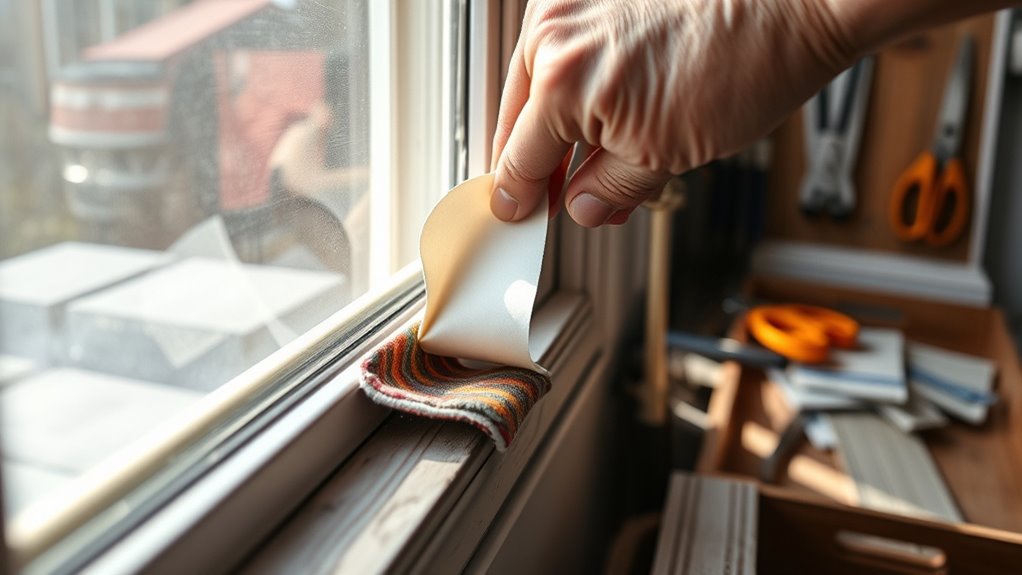
If you’re renting and want to save on energy bills, weatherizing your space is a smart move that doesn’t require landlord approval. One of the most effective ways to do this is by improving your windows. Energy efficient windows aren’t always an option for renters, but you can still make a meaningful difference by employing simple draft proofing methods. These methods can help keep warm air inside during winter and block out hot air in the summer, reducing the workload on your heating and cooling systems.
Start by identifying areas around your windows where drafts sneak in. Common spots include gaps between the window frame and the wall, or along the edges where the window meets the frame. Once you spot these leaks, you can seal them with affordable, renter-friendly solutions like weatherstripping tape or foam sealant. Adhesive weatherstripping is easy to install and remove, making it an ideal draft proofing method for renters who cannot make permanent modifications. Simply cut the material to size, stick it along the window frame, and press firmly to ensure a tight seal. This simple step can cut down drafts considerably and boost your comfort without any major renovations.
Another effective draft proofing method is using draft stoppers or draft snakes. You can easily make one yourself or purchase ready-made options. Place these along the bottom edge of your windows or doors to block cold air from entering. For added insulation, consider hanging heavy curtains or thermal drapes. These can act as an extra barrier against drafts and help retain heat inside during winter months. When choosing curtains, opt for thick, insulated fabrics, and keep them closed at night to maximize energy savings.
While focusing on draft proofing, it’s worth considering how to make your windows more energy efficient within your limits. If your windows are old or single-pane, adding removable film can help improve insulation. Window insulation kits are inexpensive and easy to apply; they create a barrier that reduces heat transfer and improves overall energy efficiency. These DIY solutions don’t alter the windows permanently, so they’re perfect for renters who want to stay within their lease agreements.
Frequently Asked Questions
Can I Legally Modify My Rental Property for Weatherization?
You generally can’t legally modify your rental property for weatherization without landlord permission, as doing so may violate your lease agreement. Check your renters’ rights and review your lease; some landlords might allow minor weatherization efforts if you get approval. Always communicate openly with your landlord before making any modifications, and get written consent to avoid potential issues or violations of your lease terms.
How Do I Get Landlord Approval for DIY Weatherization Projects?
Did you know 85% of tenants who communicate openly with their landlords see more approval? To get landlord approval for DIY weatherization, start with clear tenant communication, explaining your goals and benefits. Provide improvement documentation detailing your plans, materials, and safety measures. Be respectful and open to feedback. This approach shows responsibility, increases trust, and improves your chances of securing permission for your weatherization projects.
Are There Tenant Rights Related to Weatherization Improvements?
Yes, your tenant rights protect you when it comes to weatherization improvements. Weatherization laws often require landlords to maintain a safe, energy-efficient environment, which can include basic upgrades. You have the right to request reasonable modifications to improve insulation or sealing leaks. However, you should check local laws and lease agreements, as some improvements might need landlord approval, and failing to get it could affect your rights.
What Safety Precautions Should I Take During DIY Weatherization?
Think of your home as a fortress; protecting it means guarding its heart. You should wear gloves and goggles when handling insulation or chemicals, keep a fire extinguisher nearby, and make certain proper ventilation to avoid fumes. Watch out for electrical hazards—turn off power before working on outlets or wiring. Always read instructions carefully, and if unsure, consult a professional. Safety first keeps your fortress strong and secure.
How Can I Ensure My Weatherization Efforts Won’T Affect My Security Deposit?
To guarantee your weatherization efforts don’t affect your security deposit, focus on deposit safety by avoiding permanent modifications that might damage the property. Check your lease for modification legality, and stick to non-invasive, removable upgrades like weatherstripping or draft stoppers. Document your work with photos before and after, so you can easily restore anything if needed. Communicate with your landlord beforehand to confirm what’s allowed, preventing disputes later.
Conclusion
Taking steps to weatherize your rental home is like planting seeds for comfort and savings. Even if you’re not the owner, small fixes can make a big difference in keeping drafts out and bills down. Remember, your efforts are the keys to opening a warmer, cozier space. Don’t wait for the perfect moment—start today, because every little improvement is a step toward a better, more comfortable home. Your effort turns a house into a haven.