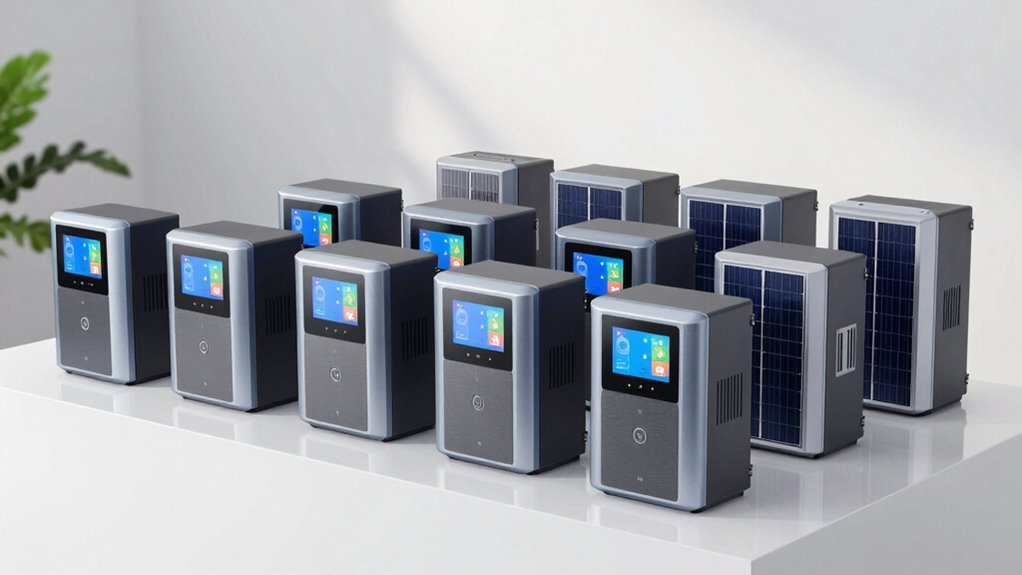

When selecting an all in one solar inverter battery system, the goal is to find a solution that combines inverter power, battery storage, and charging capabilities seamlessly. The best overall pick, the 12000W All-in-One Solar Hybrid Inverter with WiFi, stands out for its high capacity and scalability. For those prioritizing affordability, the SUNGOLDPOWER 5000W Hybrid Solar Inverter offers solid performance at a lower price point. The main tradeoffs in this category often involve balancing capacity, ease of installation, and advanced features like WiFi or parallel support. Continue reading for a detailed breakdown of the top options, their strengths, and their drawbacks.
Complete the kit


Key Takeaways
- Capacity varies significantly, with options from 3600W to 12kW, influencing suitability for different household sizes.
- Parallel support and WiFi connectivity are common features in higher-end models, enhancing scalability and remote management.
- Built-in MPPT chargers are standard in premium picks, offering better solar energy harvesting efficiency.
- Tradeoffs often involve higher upfront costs versus long-term savings and convenience features.
- Choosing between simpler, off-the-shelf systems and more customizable, scalable solutions depends on user technical comfort and future expansion plans.


| all in one solar inverter battery system | Power | Voltage |
|---|---|---|
| 3600W Hybrid Solar Inverter 24 | 3600W (peak 4200W) | — |
| 12000W Hybrid Solar Inverter 4 | 12000W | 48V |
| 12000W All-in-One Solar Hybrid | 12000W | 48V |
| SUNGOLDPOWER 5000W Hybrid Sola | 5000W | 48V DC |
| SUMRY Solar Inverter Charger 3 | 3600W rated / 7200W peak | — |
| SUNGOLDPOWER UL1741 5000W DC 4 | — | — |
| SUNGOLDPOWER 10,000W 48V Solar | 10,000W | 48V |
| VEVOR 6000W Hybrid Solar Inver | — | 48V DC to 220/230V AC |
| Y&H 4000W Hybrid Solar Inverte | 4000W | — |
| LiTime 5000W Pure Sine Wave In | 5000W | — |
| SUNGOLDPOWER 10,000W 48V Solar | 10,000W | 48V |
| ECO-WORTHY 3500W Pure Sine Wav | 3500W | 48V DC |
| POWLAND 3600W Solar Inverter | 3600W | 48V DC |
| 12KW Solar Hybrid Inverter 48V | 12KW | 48V DC to 230V AC |
More Details on Our Top Picks
3600W Hybrid Solar Inverter 24VDC to 110V/120VAC with MPPT Charge Controller
This 3600W inverter stands out for its balanced combination of power and versatility, making it an excellent option for small-scale home backup or off-grid setups. Compared to larger models like the 12000W units, it offers easier installation and lower cost but sacrifices capacity and expandability. Its integrated MPPT charge controller achieves high efficiency, translating to better solar energy harvesting, yet the complex setup process may challenge beginners. The LCD display provides clear system monitoring, which is a plus for DIY enthusiasts, though its weight and size could hinder portability. Overall, this pick makes the most sense for those seeking a reliable, space-efficient system without the need for extensive expansion options.
Pros:- High power capacity suitable for multiple appliances
- Efficient MPPT charge controller with 98% efficiency
- Multiple charging and output modes for versatility
- Includes system monitoring via LCD display
Cons:- Complex setup may require technical knowledge
- Heavy and bulky for portable applications
Best for: Small households or RV owners needing reliable backup power with straightforward setup
Not ideal for: Large homes or farms requiring high power capacity and extensive expandability
- Power:3600W (peak 4200W)
- DC Voltage:24V
- AC Output Voltage:110V/120V
- Max PV Array Power:3600W
- Max DC Voltage:500VDC
- Charge Current:120A
- Frequency:60Hz
- Battery Compatibility:Lead-Acid, Lithium
Our verdict“This inverter is ideal for users who want a reliable, space-conscious hybrid system with straightforward energy management.”
12000W Hybrid Solar Inverter 48V Split Phase 120V/240V with WiFi & BMS Support
This 12000W inverter excels in supporting large-scale, whole-home backup needs, especially for off-grid or grid-tied systems requiring substantial power. Its dual MPPT controllers and expandable design make it more versatile than the single-controller models like the SUNGOLDPOWER 5000W, offering better solar panel configuration options. The WiFi connectivity and BMS support enable remote system management and battery health monitoring, ideal for tech-savvy homeowners. However, its complexity demands a higher technical skill to install and manage, and the initial investment can be significant. Proper ventilation is necessary due to the high power output, but for those needing a scalable, robust solution, this inverter provides unmatched capacity and flexibility.
Pros:- High power output suitable for whole-home backup
- Flexible solar panel configuration with dual MPPT trackers
- Supports multiple battery types with smart BMS communication
- Remote monitoring via WiFi app
Cons:- Complex setup requiring technical expertise
- Higher initial cost for expansion capabilities
Best for: Large households or small commercial setups needing scalable, high-capacity backup power
Not ideal for: Small homes or users with limited technical skills or budget constraints
- Power:12000W
- Voltage:48V
- Output Voltage:120V/240V split-phase
- MPPT Controllers:2
- Max PV Input Voltage:500V
- Battery Compatibility:Lithium, Lead Acid
- Expansion Capability:Up to 6 units
- Connectivity:WiFi, CAN, RS485
Our verdict“This inverter is perfect for those who need a scalable, high-capacity system with remote management features, prepared for a more involved setup.”
12000W All-in-One Solar Hybrid Inverter with WiFi, 48V, Supports Up to 6 Parallel Units, Built-in 2 MPPT Solar Charge Controllers
This 12000W hybrid inverter stands out for its advanced features, including support for up to 6 parallel units, making it highly suitable for large homes or small commercial applications. Its built-in dual MPPT controllers optimize solar energy harvesting, outperforming single-controller models like the SUNGOLDPOWER 5000W. The touch screen interface and WiFi connectivity facilitate custom energy management and remote diagnostics, ideal for users comfortable with technology. The main tradeoff is that its complex setup and high capacity can be overkill for typical households, and no pricing details are provided, which might be a barrier for some buyers. Overall, this model caters to those demanding scalable, high-efficiency power systems with modern control interfaces.
Pros:- Supports up to 6 units in parallel for extensive scalability
- Touch screen interface with customizable management
- High efficiency with real-time MPPT solar controllers
- Reliable power with zero downtime and protection features
Cons:- Setup complexity may require technical support
- High power capacity may be unnecessary for smaller households
Best for: Homeowners with high energy demands or small businesses seeking scalable solar backup
Not ideal for: Casual users or small households with limited budget and simpler needs
- Power:12000W
- Voltage:48V
- Parallel Support:Up to 6 units
- MPPT Solar Charge Controllers:2
- Max PV Input Current:22A x 2
- Max PV Open Circuit Voltage:500Vdc
- Output Type:Split phase 120V/240V or single phase
Our verdict“This inverter is suited for users who require a scalable, high-capacity, and smart energy management system, ready for future expansion.”
SUNGOLDPOWER 5000W Hybrid Solar Inverter 48V DC to 110V/120V AC, All-in-One with MPPT Charger and Battery Support
This 5000W inverter offers a compact, all-in-one design tailored for off-grid systems, combining inverter, MPPT solar charger, and battery charger into one unit. Its straightforward setup and support for multiple battery types make it suitable for small to medium off-grid projects. Compared to larger models like the 12000W units, it’s more accessible for DIY installation but falls short on capacity and expandability. The lack of parallel operation limits scalability, and its off-grid focus means it’s less suitable for grid-tied or hybrid applications. Despite these limitations, it provides a reliable power solution for users prioritizing simplicity and off-grid independence.
Pros:- All-in-one design simplifies installation
- Supports multiple battery types for flexibility
- Uninterruptible power supply ensures continuous operation
- UL1741 certification ensures safety and reliability
Cons:- Does not support parallel operation for scalability
- Limited to off-grid applications only
Best for: Off-grid homeowners or small farms needing a reliable, standalone hybrid inverter
Not ideal for: Urban households with grid connection needs or those requiring high power capacity
- Power:5000W
- Voltage:48V DC
- AC Output Voltage:110V/120V
- Max PV Array:5500W 500V
- Battery Charging Current:80A
- Battery Compatibility:AGM, Sealed, Gel, Flooded, Lithium
- Overload Protection:Yes
- UL Certification:UL1741
Our verdict“This inverter is ideal for off-grid users seeking a compact, reliable, and easy-to-install hybrid solution without expansion needs.”
SUMRY Solar Inverter Charger 3600W DC 24V to AC 110V Hybrid Voltage Converter with 120A MPPT Charge Controller
This 3600W inverter makes a compelling case for budget-conscious users, combining inverter, MPPT solar charger, and AC charger into a single unit. Its 120A MPPT controller offers good efficiency for harvesting solar energy, rivaling higher-end models like the VEVOR 6000W but at a lower cost. The LCD display simplifies monitoring, and its support for multiple battery types adds flexibility. The main tradeoff is that it requires external batteries or grid connection for full functionality, and operating without batteries could lead to increased grid power consumption. This pick is best for small to medium off-grid systems or backup setups where cost savings are a priority.
Pros:- Integrated MPPT solar charge controller for efficient energy harvesting
- Supports multiple battery types for flexibility
- LCD display for easy monitoring and control
- Cost-effective solution for small systems
Cons:- Requires external batteries or grid connection for full operation
- Potential increased grid consumption when operating without batteries
Best for: Budget-conscious homeowners or small-scale off-grid systems
Not ideal for: Large households or users seeking extensive scalability and integrated grid support
- Power:3600W rated / 7200W peak
- Input Voltage:24V DC
- PV Input Voltage Range:60V-500VDC
- Max PV Input Power:4200W
- PV Input Current:16A
- Battery Compatibility:AGM, Gel, Lead-acid, Lithium-ion, LiFePO4
- Display:LCD
- Cooling:Silent fans
Our verdict“This inverter offers a practical, cost-effective solution for small or off-grid systems with moderate power needs.”
SUNGOLDPOWER UL1741 5000W DC 48V Pure Sine Wave Solar Inverter with MPPT Charger and Parallel Support
This inverter stands out for its high power output and support for parallel units, making it ideal for larger off-grid setups or backup systems. Compared with the SUNGOLDPOWER 10,000W model, it offers a more manageable size while still supporting up to 6 parallel units, providing scalability without the overwhelming complexity of larger systems. Its compatibility with multiple battery types, including lithium and sealed lead-acid, adds to its flexibility. However, the setup process can be complex, requiring some technical expertise, and its weight may pose challenges for portable applications. The limited user interface details may also hinder ease of use for beginners. Best suited for those comfortable with technical installation seeking scalable power for off-grid or backup needs.Pros:- High power output suitable for demanding applications
- Supports parallel installation for increased capacity
- Compatible with various battery types for flexibility
- Pure sine wave output ensures safe operation of sensitive appliances
Cons:- Complex setup requiring technical knowledge
- Heavy and potentially bulky for portable use
- Limited detailed user interface information
Best for: Homeowners or small business operators needing reliable backup or off-grid power with room to expand.
Not ideal for: Casual users or those seeking a plug-and-play, portable solution — its setup complexity and weight may be prohibitive.
- Power Output:5000W
- Input Voltage:48V DC
- AC Output:120V AC
- Maximum PV Array:5500W, 500V
- Battery Charging Current:100A
- Parallel Units Support:Up to 6 units
Our verdict“This model is best for users needing scalable, high-capacity power with adaptable battery compatibility and are comfortable with a more involved installation.”
SUNGOLDPOWER 10,000W 48V Solar Inverter with Dual MPPT, WiFi, and BMS Communication
This 10,000W inverter delivers immense power with dual MPPT controllers, making it ideal for large, complex solar setups. It surpasses the 5000W models in capacity, providing ample power for extensive off-grid or grid-tied systems, while its WiFi connectivity allows for remote system monitoring—a feature missing in the smaller units. The inclusion of multiple charging modes and BMS communication supports advanced system management. However, its complexity and size mean it’s best suited for experienced users or professional installations, as setup can be challenging without technical skills. Its higher cost may also be a barrier for smaller projects. Best for large-scale solar installations where remote monitoring and high capacity are priorities.Pros:- Massive power capacity with stable pure sine wave
- Dual MPPT controllers optimize solar harvesting
- WiFi and BMS communication for advanced remote management
- Supports multiple battery types and flexible output options
Cons:- Complex setup requiring technical expertise
- Larger physical footprint demanding substantial space
- Higher price point for smaller projects
Best for: Solar installers or energy enthusiasts managing large off-grid or grid-connected systems with remote control needs.
Not ideal for: Casual or small-scale users who prefer simple, plug-and-play solutions due to its size and setup complexity.
- Power:10,000W
- Voltage:48V
- MPPTs:2
- Max Battery Charging:200A
- Peak Power:20,000W
- Communication:WiFi, RS485, USB
Our verdict“Ideal for large, sophisticated solar systems where remote monitoring and high capacity are critical and the user has technical proficiency.”
VEVOR 6000W Hybrid Solar Inverter, All-in-One Pure Sine Wave Power Inverter Charger, 48V DC to 220/230V AC, with 120A MPPT Controller
This 6000W hybrid inverter offers a balanced mix of power, flexibility, and integrated features, making it suitable for larger off-grid or backup systems. Its all-in-one design simplifies setup by combining inverter and MPPT functions, unlike separate units that require more wiring and configuration. The remote WiFi monitoring enhances system oversight, although the app’s data might not be real-time, which can be a drawback for critical applications. Its support for multiple battery types and comprehensive protections add to its appeal, but the complexity of installation and sizeable footprint may deter those seeking a straightforward, portable solution. This pick suits users who need high power with integrated control and are prepared for a more involved setup process.Pros:- High power output suitable for demanding loads
- All-in-one design simplifies installation
- Supports multiple battery types including lithium and lead-acid
- Remote WiFi monitoring for system oversight
Cons:- App data collection not real-time
- Setup can be complex for non-experts
- Relatively large and heavy
Best for: Homeowners or small businesses needing high-capacity, integrated solar power solutions with remote monitoring capabilities.
Not ideal for: Users seeking a simple, lightweight inverter for portable or occasional use due to its installation complexity and size.
- Power Output:6000W
- Voltage:48V DC to 220/230V AC
- MPPT Current:120A
- Maximum Power:6500W
- Supported Battery Types:Lithium, Lead-Acid
- Protection Features:Over-voltage, over-current, over-load
Our verdict“Best for those needing a high-capacity, integrated inverter with remote management, willing to handle a more complex installation.”
Y&H 4000W Hybrid Solar Inverter DC24V 120VAC Pure Sine Wave with Touch LCD and MPPT Charger
This 4000W hybrid inverter combines a user-friendly touch LCD with reliable pure sine wave output, making it appealing for small-scale off-grid setups. Its built-in MPPT charger maximizes solar harvesting efficiency, and multiple operation modes add versatility. Compared to larger units like the VEVOR 6000W, this model offers a more manageable size and simpler interface, ideal for DIY enthusiasts or smaller installations. On the downside, setup complexity might challenge beginners, and limited user feedback suggests it’s still gaining trust in the market. The heavy build and lack of extensive reviews could be drawbacks for those prioritizing ease of maintenance. Perfect for users wanting an easy-to-operate, compact hybrid inverter with decent power capacity.Pros:- Pure sine wave output for sensitive electronics
- Touch LCD interface simplifies operation
- Built-in MPPT charger boosts solar efficiency
- Multiple modes for flexible use
Cons:- Setup may be complex for non-experts
- Relatively heavy and bulky
- Limited detailed user reviews at present
Best for: Solar hobbyists or small off-grid households seeking straightforward operation and integrated MPPT charging.
Not ideal for: Large-scale or high-demand applications where higher capacity and advanced features are necessary, due to its moderate power rating.
- Power:4000W
- Surge Capacity:8000W
- Input Voltage:DC24V
- AC Output:120VAC
- Max PV Input Power:5600W
- Display:6.25″ Touch LCD
Our verdict“Ideal for small to medium off-grid projects where user-friendly operation and integrated features matter most.”
LiTime 5000W Pure Sine Wave Inverter, 48V DC to 120V AC Solar Hybrid Inverter Charger with Parallel Support and MPPT Controller
The LiTime 5000W hybrid inverter excels at combining inverter, MPPT charger, and battery management in a single package, supporting parallel operation of up to six units, which makes it suitable for larger home backup or farm applications. Its support for both lithium and lead-acid batteries adds to its adaptability. The multiple charging modes and safety protections provide a comprehensive solution, especially for users with evolving energy needs. Compared to the VEVOR model, it offers more flexibility in battery choices and parallel scalability, but the setup can be complex, and remote monitoring features are limited. Its high capacity may be overkill for small households. This model suits users seeking a scalable, high-capacity hybrid system with multi-battery compatibility.Pros:- Integrates inverter, MPPT charger, and battery management
- Supports parallel connection of up to six units
- Compatible with lithium and lead-acid batteries
- Multiple charging and output modes for flexibility
Cons:- Setup may require professional installation
- Remote monitoring and app control are limited
- High capacity may be excessive for small-scale needs
Best for: Farmers or large households looking for long-term backup solutions with room to expand and multiple battery options.
Not ideal for: Users with small systems or those preferring plug-and-play simplicity, due to complex setup and higher capacity that may be unnecessary.
- Power:5000W
- Input Voltage:48V DC
- Output Voltage:120V AC
- Peak Surge Power:10000W
- Parallel Support:Up to 6 units
- Protection Features:Overload, overheat, short circuit
Our verdict“Best suited for large, expandable backup systems where flexibility, scalability, and multi-battery support are priorities.”
SUNGOLDPOWER 10,000W 48V Solar Inverter with WiFi and BMS Communication, Split Phase, Pure Sine Wave, UL1741
This inverter stands out for its impressive 10,000W capacity and split-phase output, making it ideal for large homes or small commercial setups. Compared to the POWLAND 3600W model, it offers significantly more power and dual MPPT controllers for better solar energy harvesting, but this comes with a larger size and higher price. The WiFi and BMS communication features provide comprehensive remote management and battery status updates, appealing for users who want detailed system oversight. However, its complex setup and weight could challenge those with limited technical skills or space constraints. This pick makes the most sense for large households or businesses needing reliable, high-capacity energy without frequent upgrades.Pros:- High power output with pure sine wave for sensitive electronics
- Dual MPPT controllers maximize solar energy capture
- WiFi and BMS communication enable advanced remote monitoring
Cons:- Complex setup requiring technical knowledge
- Large size and weight make installation challenging
- Higher cost compared to simpler inverters
Best for: Large households or small commercial operations demanding high power and remote monitoring capabilities
Not ideal for: Home users with limited space or technical expertise, due to its size and setup complexity
- Power:10,000W
- Voltage:48V
- Output Phases:Split phase (120V/240V) or Single phase (120V)
- MPPT Controllers:2
- Max Battery Charging:200A
- Protection Features:PV over-voltage/current, AC over-voltage, Battery over-voltage, Over-load
Our verdict“Best suited for large-scale applications where power capacity and detailed system management are priorities.”
ECO-WORTHY 3500W Pure Sine Wave Solar Inverter Charger, 48V DC to 120V AC, All-in-One Off-Grid Solar Power System with MPPT Controller
This 3.5kW inverter combines inverter, charger, and MPPT solar controller into a compact all-in-one unit, making it ideal for off-grid setups or small home energy needs. Compared to the POWLAND 3600W, it offers a slightly lower power output but supports parallel connection for increased capacity, which is advantageous for expanding systems. Its support for multiple battery types and remote monitoring via phone app offers versatility, though installation typically requires professional help due to its complexity. The absence of detailed price info makes it less transparent for budget-conscious buyers. This system is perfect for users seeking a reliable, integrated solution without the need for multiple separate components.Pros:- Versatile with multiple charging and operation modes
- Supports parallel connection for higher power demands
- Remote monitoring via mobile app
Cons:- Installation may require professional expertise
- Setup complexity could deter casual users
- No specific pricing details available
Best for: Off-grid homeowners or small-scale energy users wanting an integrated, expandable system
Not ideal for: Large households or commercial users needing very high power output or easy DIY installation
- Power:3500W
- Voltage:48V DC
- AC Output:120V
- Max Battery Charging:120A
- Max PV Input Power:4400W
- Parallel Connection:Up to 6 devices
Our verdict“Ideal for off-grid or small home systems requiring an all-in-one, expandable solution with remote monitoring.”
POWLAND 3600W Solar Inverter, Pure Sine Wave, 48V to 110V/120V, Built-in 80A MPPT Controller for Off-Grid Systems
This 3600W inverter provides reliable pure sine wave output suitable for off-grid homes, RVs, or industrial applications. Its built-in MPPT controller with up to 99% efficiency ensures maximum solar energy utilization, surpassing many competitors lacking integrated MPPT. It supports multiple charging modes and remote WiFi monitoring, but the setup can be intricate, especially since it requires additional WiFi modules for remote access and only functions when connected to both solar and batteries. Its dimensions and weight are manageable for most installations, though the complexity might deter less experienced users. This model balances efficiency and flexibility, making it a good choice for those comfortable with technical setup.Pros:- High efficiency with up to 99% max efficiency
- Built-in MPPT controller optimizes solar energy capture
- Multiple charging modes for versatility
Cons:- Requires additional WiFi device for remote monitoring
- Complex setup that may challenge beginners
- Limited to connection with both solar panel and battery
Best for: Off-grid users seeking a highly efficient, flexible inverter with integrated MPPT for solar harvesting
Not ideal for: Users seeking plug-and-play simplicity or those with limited technical skills
- Power:3600W
- Voltage:48V DC
- Input Power:4500W
- Max PV Open Circuit Voltage:300V
- MPPT Voltage Range:90-260V
- Dimensions:17.1″L x 14.1″W x 7.4″H
Our verdict“Best for technically proficient users wanting high efficiency and integrated solar management in an off-grid setup.”
12KW Solar Hybrid Inverter 48V DC to 230V AC All-in-One Pure Sine Wave with MPPT Charge Controller
This 12KW hybrid inverter supports both off-grid and grid-tied applications, making it a flexible choice for sizable households or small businesses. Its dual MPPT inputs optimize solar harvesting from multiple arrays, surpassing single-input models like the SUNGOLDPOWER 10,000W in capacity. The remote monitoring via Wi-Fi or GPRS adds convenience for managing larger systems remotely. However, it’s limited to 230V operation, which complicates use in 120V regions without additional conversion equipment. Its high power and dual PV inputs are its strengths, but the need for extra modules and regional restrictions could be drawbacks for some buyers. This unit fits well where large-scale, adaptable power solutions are required.Pros:- Supports dual MPPT inputs for maximum solar harvesting
- Remote monitoring via Wi-Fi/GPRS for system management
- Multiple charging and output modes for flexibility
Cons:- Requires additional remote monitoring modules (sold separately)
- Limited to 230V applications in many regions
- Complex installation and regional compatibility considerations
Best for: Large households or offices needing high capacity and flexible power modes with remote oversight
Not ideal for: US users without 230V infrastructure or those seeking simple plug-and-play setups
- Power:12KW
- Voltage:48V DC to 230V AC
- MPPT Charge Controller:160A
- Maximum PV Input Power:15000W
- Dual PV Inputs:Yes
- Remote Monitoring:Supported (Wi-Fi/GPRS, module sold separately)
Our verdict“Ideal for large-scale applications needing high capacity, dual-input solar management, and remote control in compatible regions.”

How We Picked
To evaluate these systems, I focused on key factors that matter most to buyers: overall performance, build quality, ease of installation, scalability, and value for money. I also considered the inclusion of features like WiFi, BMS communication, MPPT charging, and parallel support, which influence long-term usability and flexibility. The products are ranked based on their capacity to deliver reliable power, ease of integration into existing setups, and how well they balance cost with features. Systems that excel in multiple areas or offer significant advantages for specific user needs earned higher positions in the lineup.Factors to Consider When Choosing All In One Solar Inverter Battery System
Choosing the right all in one solar inverter battery system requires balancing several factors to match your specific energy needs and budget. It’s important to consider not only the system’s capacity but also its scalability, compatibility with solar panels, and ease of maintenance. Investing in features like WiFi or BMS communication can add convenience but may increase initial costs. Being aware of common pitfalls such as undersizing your system or overlooking future expansion plans can help prevent costly mistakes. The following sections break down the key considerations to help you make a well-informed decision.Capacity and Power Output
Determining the right capacity is essential; too small and you’ll struggle with power needs, too large and you’ll pay extra for unused capacity. Consider your peak power requirements and future growth plans. In this roundup, systems range from 3600W to over 12kW, suitable for small homes to larger setups. Remember, larger systems often come with better scalability and longer-term flexibility, but they also involve higher upfront costs. Matching capacity to your actual energy demand ensures efficient operation and cost savings over time.
Scalability and Parallel Support
If you anticipate expanding your solar setup or increasing battery storage, systems with parallel support are worth prioritizing. This feature allows stacking multiple units, boosting total capacity without replacing your entire system. Higher-end models in this list support up to six units, offering significant scalability. However, adding more units can complicate installation and maintenance, so it’s important to evaluate your technical comfort and future needs before committing to a scalable system.
Features and Connectivity
Features like WiFi, BMS communication, and remote monitoring enhance system management and troubleshooting. They are especially valuable for users who want to oversee performance via smartphone apps or integrate with home automation. While these features add convenience, they often come at a higher price. For basic needs, simpler units without these extras can still provide reliable power, but for tech-savvy users or larger installations, investing in connectivity features makes sense in the long run.
Build Quality and Reliability
Durability and brand reputation matter since these systems are long-term investments. Look for products with certified components, good reviews, and proven track records. Premium brands tend to offer better warranties and customer support, reducing potential downtime. However, lower-cost options can be tempting but may compromise on longevity or efficiency. Balancing quality with your budget is key to ensuring reliable performance over years of use.
Cost and Long-term Value
While higher-capacity and feature-rich systems cost more upfront, they can provide better long-term value through efficiency and scalability. Avoid the temptation to overspend on features you won’t use, but also recognize that cheap systems might lead to higher maintenance costs or early replacement. Consider your total budget, including future expansion, and weigh the initial expense against potential savings from improved energy management and system longevity.
Frequently Asked Questions
Can I upgrade my all in one solar inverter system later?
Many modern systems support parallel expansion, allowing you to add more batteries or inverters over time. However, compatibility depends on the specific model and its support for scaling features. It’s wise to choose a system with clear parallel support if you anticipate future expansion. Keep in mind that upgrading may involve additional costs and technical considerations, so planning ahead helps ensure smooth scalability.
What’s the difference between hybrid and pure sine wave inverters in these systems?
Pure sine wave inverters produce cleaner power that is safer for sensitive electronics and appliances, making them a preferred choice for most home setups. Hybrid systems combine the inverter with batteries and solar charge controllers, managing power flow efficiently. When selecting an all-in-one system, opting for pure sine wave technology ensures reliability and reduces the risk of damage to your devices, especially for critical or delicate electronics.
Are all-in-one systems easier to install than separate components?
Yes, all-in-one systems are generally designed for simplified installation, often coming as pre-assembled units with integrated components. This reduces the complexity compared to configuring separate inverter, battery, and charge controller units. However, proper site preparation and understanding of electrical connections remain important. For most homeowners, these units offer a more straightforward setup, but professional installation is recommended to ensure safety and compliance with local regulations.
How do I choose the right capacity for my household?
Calculating your household’s total energy consumption and peak power needs is the first step. Review your monthly electricity usage and identify high-demand appliances. Larger families or those with high power appliances require bigger systems, while small homes or part-time setups can opt for more modest capacities. Remember to include a buffer for future expansion or unexpected surges, which helps avoid underperformance and ensures continuous power supply.
What maintenance is required for these systems?
Most all-in-one solar inverter battery systems are low-maintenance but benefit from periodic checks. Regularly inspect connections, clean solar panels, and monitor system performance via integrated apps if available. Battery health and inverter functionality should be tested annually, and firmware updates can improve efficiency or add features. Proper maintenance extends the lifespan of your system and maintains peak performance, so staying proactive is recommended.
Conclusion
For most homeowners seeking a reliable, scalable solution, the 12000W All-in-One Solar Hybrid Inverter with WiFi offers a well-balanced combination of capacity, features, and future-proofing. Those on a tighter budget will find the SUNGOLDPOWER 5000W Hybrid Solar Inverter to be a capable, cost-effective choice. Beginners or small-scale users should consider simpler, plug-and-play models, while large or expanding households benefit from systems supporting multiple units and advanced connectivity. Ultimately, matching your current and future energy needs with your budget will guide you to the best fit.