Eating seasonally and locally helps lower your environmental impact by reducing transportation emissions and energy use. It also means fresher, more nutritious food that’s harvested at peak ripeness, enhancing flavor and safety. Supporting local farms boosts your community’s economy and encourages sustainable farming practices. Plus, buying during harvest times can be more affordable. Keep exploring to discover how aligning your diet with seasons can make a bigger difference for you and the planet.
Key Takeaways
- Eating seasonal and local foods reduces transportation emissions and energy use, lowering your diet’s carbon footprint.
- Consuming fresh, locally harvested produce enhances food quality, safety, and nutrient content.
- Supporting local farms boosts community economies and promotes sustainable agricultural practices.
- Buying in season often lowers costs and encourages healthier eating habits with more affordable, nutritious options.
- Aligning your diet with seasonal cycles fosters environmentally responsible food choices and resilient local food systems.
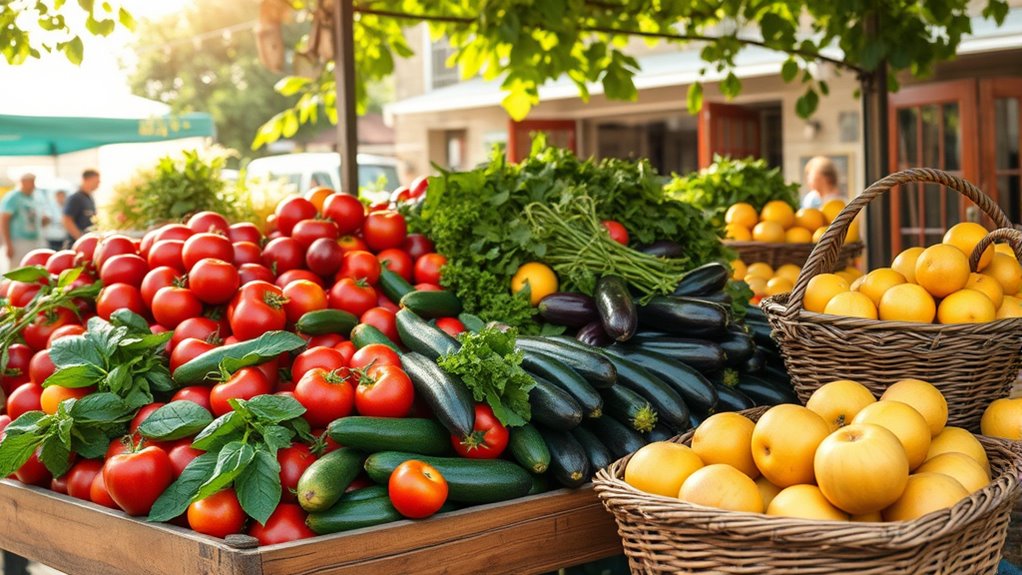
Have you ever noticed how eating seasonally and locally can transform your meals? When you choose foods that are in season and sourced nearby, you’re not just enjoying fresher, tastier produce — you’re also making a positive impact on the supply chain. By reducing the distance food travels from farm to plate, you minimize the environmental footprint associated with transportation, packaging, and storage. This shift can notably cut down greenhouse gas emissions, conserve energy, and lower your overall carbon footprint. The supply chain impact becomes clear: shorter, more direct routes mean less reliance on fossil fuels and fewer emissions, helping combat climate change. Plus, supporting local farms keeps money within your community, strengthening local economies and fostering sustainable agricultural practices. These farm to table benefits extend beyond environmental factors; they also improve food quality and safety. Local farmers often harvest produce at peak ripeness, ensuring you get more nutrients and better flavor compared to mass-produced, shipped produce that may sit in transit for days. This freshness makes a noticeable difference in your meals, elevating simple dishes to something truly special. Additionally, choosing seasonal and local foods can be more cost-effective, especially when buying in bulk or during peak harvest times. As demand for these products increases, prices tend to become more competitive, making it easier for you to eat well without overspending. Moreover, eating locally often encourages sustainable farming practices, which are vital for maintaining healthy ecosystems and soil quality. Incorporating energy-efficient transportation methods in the supply chain can further reduce the environmental impact of local food systems, making your choices even more sustainable. Supporting community-based food systems also fosters local entrepreneurship, contributing to resilient local economies and diverse agricultural landscapes. In addition, choosing small-scale producers often means supporting ethical farming, which prioritizes animal welfare and environmentally responsible methods. Recognizing the importance of the AI Bifurcation can also help consumers and producers alike make more informed decisions about adopting sustainable and innovative practices in food production.

Greenhouse Heater 1500W with APP Remote Control, Greenhouse Heater With Thermostat, Portable Outdoor Heater for Plants Vegetables Flowers,Smart Electric Safe Heater for Green house,Grow Tents,Garage
Remote Control, Convenient and Smart: Our greenhouse heater can be connected to your smartphone by downloading the "Smart...
As an affiliate, we earn on qualifying purchases.
Frequently Asked Questions
How Can I Find Local Seasonal Produce in My Area?
To find local seasonal produce, start by exploring urban markets in your area, which often feature fresh, locally grown items. You can also join farm share programs or community-supported agriculture (CSA) to get regular deliveries of seasonal produce directly from farmers. These options help you access fresh, local foods while supporting your community. Keep an eye out for farmers’ markets and online directories that list nearby sources of seasonal produce.
What Are the Environmental Benefits of Eating Locally?
Eating locally reduces your carbon footprint since food travels shorter distances, lowering greenhouse gas emissions. It also supports biodiversity preservation by encouraging diverse, region-specific crops and farming practices. When you choose local foods, you help sustain local ecosystems and reduce reliance on intensive transportation methods. This way, you contribute to a healthier environment, promoting sustainable farming and protecting natural habitats for future generations.
How Does Seasonal Eating Impact Food Prices?
When you eat seasonally, you often see lower food prices because of reduced food transportation costs. Local, seasonal foods don’t need to travel far, which cuts expenses and keeps prices stable. Additionally, supply and demand naturally balance out during peak seasons, making food more affordable. So, by choosing seasonal options, you help lower costs and support a more sustainable, efficient food system.
Are There Any Health Risks With Seasonal or Local Foods?
You might wonder if seasonal or local foods pose health risks. While they often have fewer pesticides due to less need for preservation, there’s still some pesticide exposure to contemplate. Additionally, nutrient variability can occur depending on harvest timing and storage. However, eating seasonal and local foods generally supports better health, as they tend to be fresher and more nutrient-rich. Just wash produce thoroughly to reduce pesticide residues.
How Can I Store Seasonal Produce to Extend Its Freshness?
Did you know proper food preservation can cut waste by 30%? To extend the freshness of seasonal produce, use effective storage techniques like refrigerating leafy greens in damp paper towels or storing root vegetables in a cool, dark place. Keep strawberries in a breathable container, and wash only before eating. These methods help maintain flavor and nutrients, ensuring your produce stays fresh longer and reduces unnecessary trips to the store.

LHUKSGF Greenhouse Heater with Digital Thermostat, Grow Tent Heaters, Overheat Protection, Fast Heating for Green House, Flower Room, Yellow
【Greenhouse Heater】: The greenhouse heater is equipped with a thermostat that easily heats up to 150 ft ²...
As an affiliate, we earn on qualifying purchases.
Conclusion
Think of your plate as a garden in bloom, each season offering a new, vibrant chapter. By choosing seasonal and local foods, you become the gardener, nurturing your well-being while tending to the planet’s health. Just as a garden flourishes with mindful care, your diet thrives when aligned with nature’s rhythms. Embrace this harmony, and watch your impact grow as beautifully as the seasons change around you.

Greenhouse Heater with Thermostat, Auto Temperature Control Kit with Digital Display, Fast Heating, Overheat Protection, for Grow Tent, Greenhouse, Flower Room, Patio, Winter Plants
Auto Temperature Control Kit: This kit includes a reliable greenhouse heater and a precise digital thermostat, designed to...
As an affiliate, we earn on qualifying purchases.

GNRZZT Greenhouse Heater with Digital Thermostat, Green House Heater for Plants,1500W Electric Grow Tent Heaters, Overheat Protection, Fast Heating for Green House, Flower Room, Yellow
EFFICIENT HEATING: The stainless steel greenhouse heater, equipped with a digtial thermostat, efficiently heats up to 160 ft²...
As an affiliate, we earn on qualifying purchases.