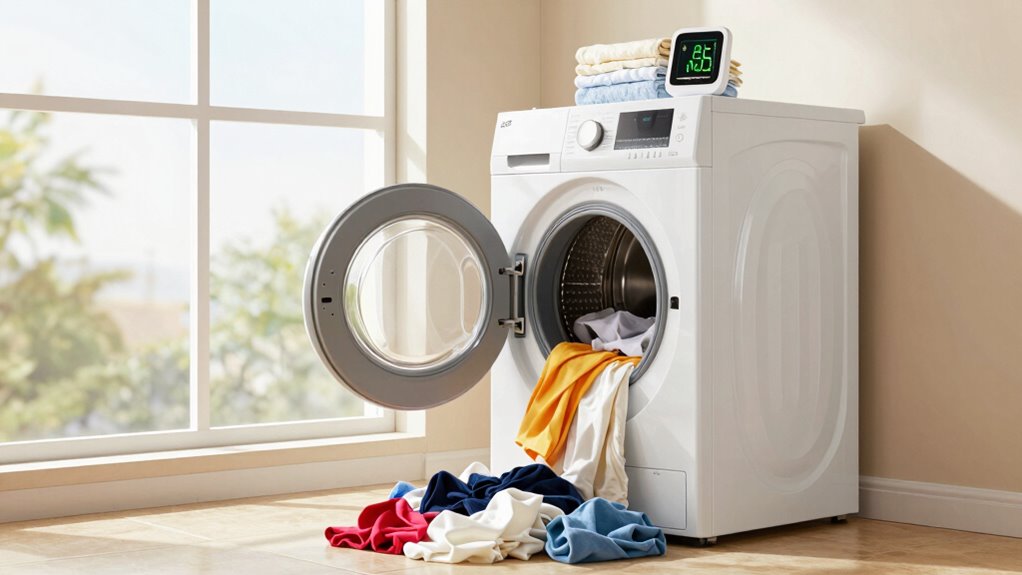

Your laundry habits impact your energy bills and environmental footprint more than you think. Choosing cold water detergents and using cold washes reduce the energy needed for water heating, saving you money. Keeping your laundry room organized helps you avoid unnecessary loads and longer cycles. Regularly maintaining appliances ensures they operate efficiently. Small changes in how you do laundry can add up to big savings and eco benefits—if you adhere to good habits, you’ll discover even more ways to optimize your routine.

Get garden gear delivered free with Prime
- Fast, free delivery on millions of items
- Prime Video, Amazon Music and more included
- Member-only deals all year
Key Takeaways
- Choosing cold water detergents reduces the energy needed to heat water during laundry.
- Properly organizing and sorting laundry prevents unnecessary long or hot cycles.
- Regular appliance maintenance ensures optimal efficiency and energy savings.
- Using energy-efficient appliances and smart settings minimizes overall household energy consumption.
- Small habits like batching loads and maintaining a laundry schedule significantly lower utility bills.

Laundry habits play a vital role in how much energy you use each week, often without realizing it. The way you approach your laundry routine can lead to considerable differences in energy consumption, especially when it comes to detergent choices and how you organize your laundry space. Small changes in these areas can add up to noticeable savings on your energy bills over time.
First, your detergent choices matter more than you might think. Using cold water detergent or switching to eco-friendly options can markedly cut down on the energy needed to heat water. Many traditional detergents are designed for warm or hot water washes, but most clothes can be cleaned just as effectively in cold water. By making this switch, you reduce the amount of energy your water heater uses, which is often one of the largest energy consumers in laundry routines. Additionally, choosing concentrated detergents means you can use less per load, decreasing both the amount of product you buy and the energy used during washing. Your choice of detergent directly impacts not only water and product consumption but also the energy footprint of each laundry cycle. Energy-efficient practices can further enhance your savings by optimizing your entire laundry process. Using energy-efficient appliances can also contribute significantly to reducing overall energy consumption. Incorporating smart laundry devices that adjust settings based on load size and fabric type can maximize efficiency and minimize waste.
Using cold water or eco-friendly detergents reduces energy use and environmental impact.
Next, laundry room organization influences how efficiently you complete your laundry tasks. When your laundry space is cluttered or poorly arranged, you tend to run more loads than necessary, simply because it’s harder to keep track of what needs washing or to batch similar items together. An organized laundry room allows you to plan your loads better, washing full loads instead of half-empty ones, which maximizes energy efficiency. Properly sorting clothes by color, fabric, and washing requirements also helps you select the right cycle, preventing unnecessary energy use on longer or hotter washes when they aren’t needed. Keeping detergents, fabric softeners, and other supplies neatly stored and easily accessible minimizes delays and frustration, making it more likely you’ll stick to energy-conscious habits. Implementing a laundry schedule can help you stay on top of your laundry routine and avoid unnecessary cycles. Regularly maintaining your washing machine and dryer, such as cleaning filters and vents, can also improve performance and save energy. Maintaining your appliances according to manufacturer guidelines ensures they operate at peak efficiency, further reducing your energy consumption.
Ultimately, your laundry habits—down to your detergent choices and how you organize your laundry room—play a key role in controlling your energy use. Small adjustments, like opting for cold water detergents and maintaining a tidy space, can lead to less energy consumption and lower utility bills. It’s about working smarter, not harder, ensuring you get clean clothes while minimizing your environmental impact. By paying attention to these details, you’re not just saving money; you’re also making a positive difference for the planet.
As an affiliate, we earn on qualifying purchases.
Frequently Asked Questions
Does Using Cold Water Save More Energy Than Warm or Hot Water?
Using cold water saves more energy than warm or hot water because it requires less energy to heat. Water temperature considerably impacts your energy use, and cold water is effective for most laundry loads, especially with the right detergent. Modern detergents work well in cold water, maintaining cleaning effectiveness. Switching to cold water not only reduces energy consumption but also extends your clothes’ lifespan and lowers your utility bills.
How Often Should I Wash Clothes to Conserve Energy?
Think of your laundry routine like tending a garden; overwatering can harm the plants, just like washing clothes too often wears out fabrics. To conserve energy and extend clothing lifespan, wash only when necessary—usually after 3-4 wears for casual wear and more often for activewear. Proper fabric care and avoiding over-washing help your clothes last longer, saving both money and energy in the long run.
Do Different Laundry Detergents Impact Energy Consumption?
Different laundry detergents can impact energy use, especially depending on their formulation. Detergents with heavy scent additives often require more rinsing, leading to longer wash cycles and higher energy consumption. Choose a detergent with a simple, efficient formulation to reduce rinse cycles and save energy. Additionally, eco-friendly options tend to be more concentrated, meaning you use less per load, helping you conserve both water and energy.
Can Drying Clothes Outside Reduce Energy Use Significantly?
Drying clothes outside can considerably reduce your energy use by harnessing the sun’s natural power. Sun drying takes advantage of outdoor benefits like fresh air and sunlight, which help clothes dry faster without the need for a dryer. Not only does this save electricity, but it also extends your clothes’ lifespan. Plus, you get fresh-smelling laundry, making outdoor drying a simple, eco-friendly choice for your routine.
Are Newer Washing Machines More Energy-Efficient Than Older Models?
Yes, newer washing machines are more energy-efficient than older models. They come with advanced energy-efficient features like low water and electricity consumption, which help reduce your utility bills. Plus, their improved design often extends the machine’s lifespan, making them a smart investment. By upgrading, you not only save energy but also guarantee your machine lasts longer, minimizing the need for frequent replacements and supporting eco-friendly laundry habits.
Conclusion
Your laundry habits have a bigger impact on energy consumption than you might realize. For instance, using a full load can save up to 5,000 gallons of water annually, and washing clothes in cold water can cut energy use by about 75%. Every small change you make—like washing fewer loads or adjusting water temperature—adds up. By being mindful, you not only save money but also help protect the environment for future generations.
Fall Picks
fall essentials
As an affiliate, we earn on qualifying purchases.