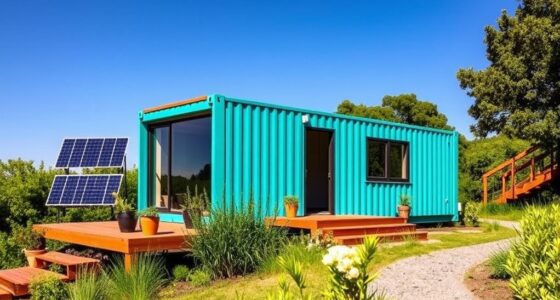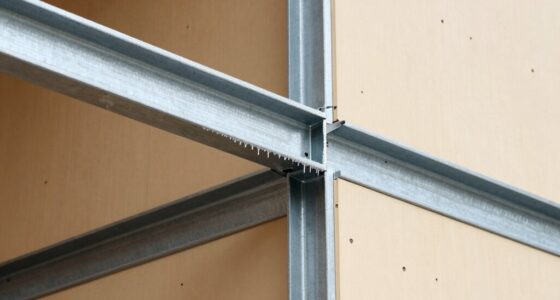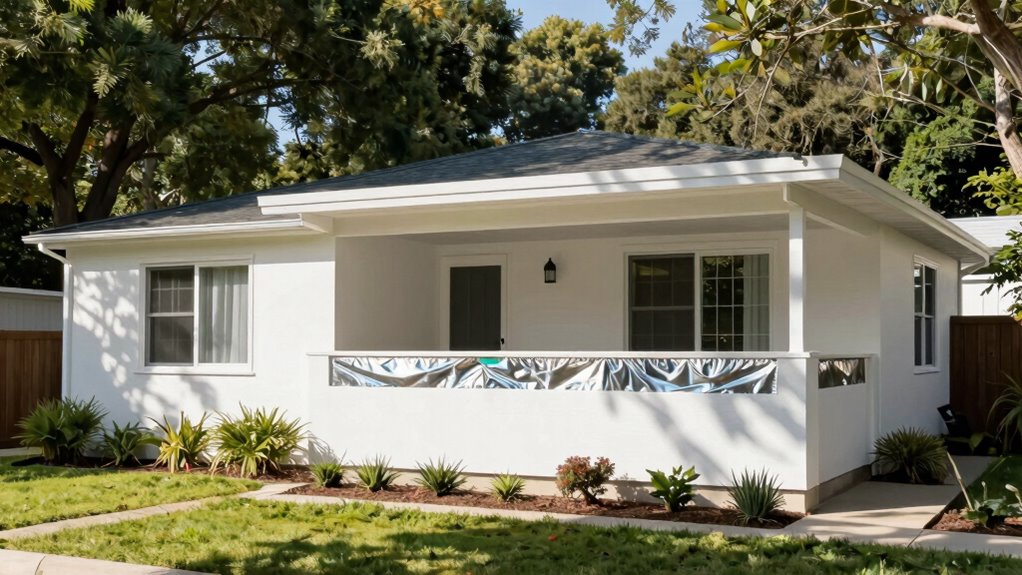

Passive cooling works in homes by using design features like thick, high thermal mass walls to absorb and release heat slowly, keeping indoor temperatures stable. You can also improve airflow by strategically placing windows for cross-ventilation and shading with overhangs or landscaped areas to block direct sunlight. Combining insulation and natural ventilation creates a cycle that cools your space naturally. Keep exploring to discover more ways to make your home more comfortable and energy-efficient.

Get garden gear delivered free with Prime
- Fast, free delivery on millions of items
- Prime Video, Amazon Music and more included
- Member-only deals all year
Key Takeaways
- Passive cooling uses natural ventilation and airflow to remove heat and cool indoor spaces without mechanical systems.
- Proper home orientation and shading devices minimize solar heat gain during hot periods.
- Thick, high thermal mass walls absorb heat during the day and release it at night, regulating indoor temperature.
- Strategically placed windows, shutters, and vents optimize cross-ventilation for natural cooling.
- Green roofs and shaded outdoor areas contribute to overall cooling by reducing heat absorption.
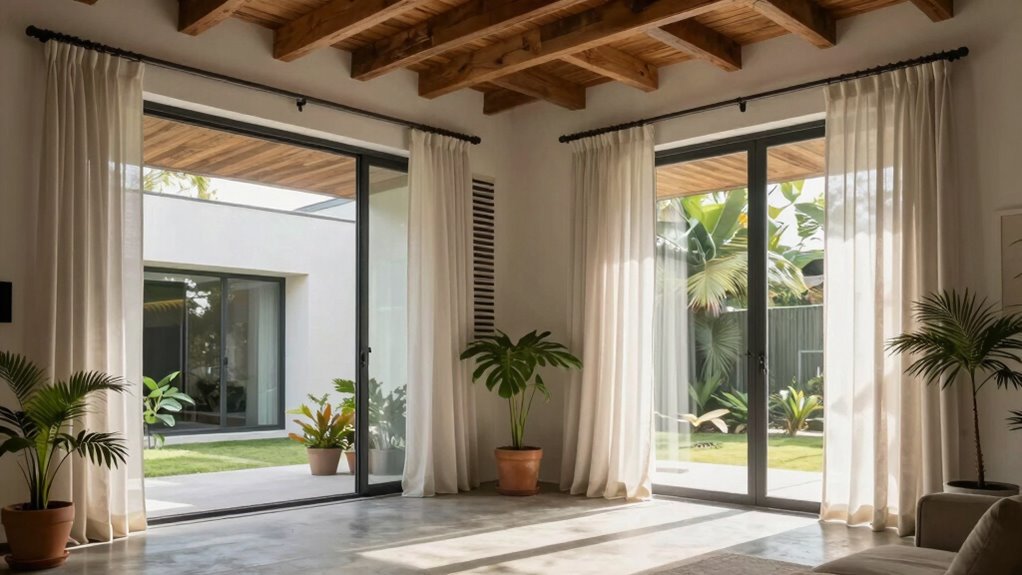
Have you ever wondered how some homes stay cool without relying on air conditioning? It often comes down to smart design choices that harness passive cooling techniques. One key element is thermal insulation, which helps keep the heat out during hot days and retains warmth during cooler nights. Instead of letting external heat seep inside, well-installed thermal insulation acts as a barrier, maintaining a comfortable indoor temperature naturally. This means your home can stay cooler for longer without the need for energy-consuming cooling systems.
Alongside thermal insulation, natural ventilation plays an essential role. When designed properly, your home can facilitate airflow that naturally flushes out hot air and pulls in cooler breezes. Windows placed strategically—such as on opposite sides of a room—allow for cross-ventilation, creating a steady breeze that cools the interior. Overhangs and shading devices also prevent direct sunlight from heating up the indoor space, complementing natural ventilation and reducing the reliance on mechanical cooling.
In real homes, you’ll see this combination of thermal insulation and natural ventilation working together. For example, thick walls made from materials with high thermal mass, like brick or concrete, absorb heat during the day and slowly release it at night, moderating indoor temperatures. When combined with operable windows and vents placed to maximize airflow, you create a natural cooling cycle that reduces indoor heat buildup. These homes often feature window shutters or louvers that can be adjusted depending on the time of day, controlling how much heat enters and how much air circulates.
Designing for passive cooling also involves considering the home’s orientation and landscape. Positioning living spaces to face prevailing breezes and shading windows from the intense afternoon sun helps minimize heat gain. You might notice that many passive homes incorporate courtyards, green roofs, or shaded outdoor areas that help cool the surrounding environment, further reducing indoor temperatures. Additionally, incorporating thermal mass, such as thick walls or floors, helps moderate indoor temperatures by absorbing and releasing heat gradually. Implementing passive solar design strategies can significantly enhance the effectiveness of these cooling methods. Emphasizing building orientation and landscape features can optimize airflow and shade, making passive cooling even more effective. Understanding how thermal insulation interacts with other design elements is crucial for creating a truly sustainable and comfortable home.
All these strategies work together seamlessly—thermal insulation keeps the heat out, while natural ventilation ensures a steady flow of cooler air inside. This approach not only creates a comfortable living environment but also drastically reduces energy consumption and costs. When you embrace passive cooling in your home design, you’re making a wise choice for both comfort and sustainability, harnessing natural forces instead of fighting against them.
thermal mass walls for passive cooling
As an affiliate, we earn on qualifying purchases.
As an affiliate, we earn on qualifying purchases.
Frequently Asked Questions
Can Passive Cooling Replace All Air Conditioning Systems?
Passive cooling can’t fully replace all air conditioning systems because it depends on your home’s design and climate. By using passive design strategies like proper insulation, shading, and natural ventilation, you can boost energy efficiency and reduce cooling costs. However, during extremely hot weather, supplemental active cooling may still be necessary to maintain comfort. So, integrating passive cooling methods enhances energy efficiency but might not fully eliminate the need for traditional A/C.
How Much Does Passive Cooling Installation Typically Cost?
You’ll find that passive cooling installation costs vary based on your home’s thermal insulation, building orientation, and design choices. Expect expenses ranging from a few hundred to several thousand dollars, depending on modifications like shading, ventilation, and insulation upgrades. Investing in good thermal insulation and optimizing building orientation can reduce long-term cooling costs. While initial costs might seem high, the savings on energy bills and environmental impact make passive cooling a smart, cost-effective choice.
Is Passive Cooling Effective in Extremely Hot Climates?
Passive cooling can be effective in extremely hot climates if you harness thermal mass and implement proper ventilation strategies. Thermal mass absorbs heat during the day and releases it at night, helping maintain cooler indoor temperatures. Good ventilation strategies, like cross-ventilation and stack effect, enhance airflow and cooling. While it might not eliminate all heat, combining these techniques considerably reduces indoor temperatures, making your home more comfortable without relying heavily on active cooling systems.
What Are the Best Materials for Passive Cooling?
You should choose materials with low thermal conductivity, like straw bale, clay, or adobe, to maximize passive cooling. These materials act as insulators, trapping cool air inside while blocking heat from outside. Imagine thick walls that absorb daytime warmth but release it at night, creating a natural temperature swing. Material selection is essential; natural, breathable materials help you stay comfortable without relying on active cooling systems.
How Long Does Passive Cooling Take to Show Results?
Passive cooling can show results within a few hours to a day, depending on your home’s design and external conditions. You’ll notice the thermal mass absorbing heat during the day, gradually releasing it at night, which keeps interiors cooler. Natural ventilation also plays an essential role, allowing cool breezes to flow through and enhance cooling effects. Properly implemented, you’ll feel a noticeable difference in comfort relatively quickly.
Conclusion
So, next time you marvel at those seemingly magical passive cooling tricks in homes, remember—you’re just witnessing centuries of clever humans outsmarting the sun. Who knew that simple strategies like shading and natural ventilation could beat high-tech air conditioners? It’s almost as if nature’s way is cheaper, healthier, and, dare I say, more stylish. So, embrace those passive tricks, and let’s give Mother Nature a round of applause—she’s the real cooling genius.
Halloween Picks
halloween
As an affiliate, we earn on qualifying purchases.