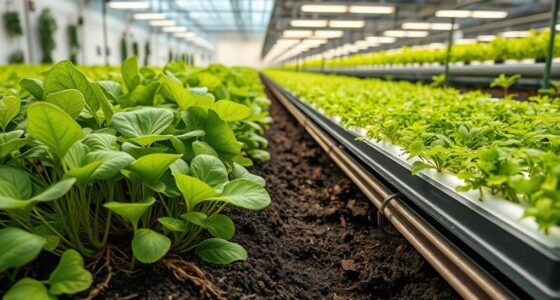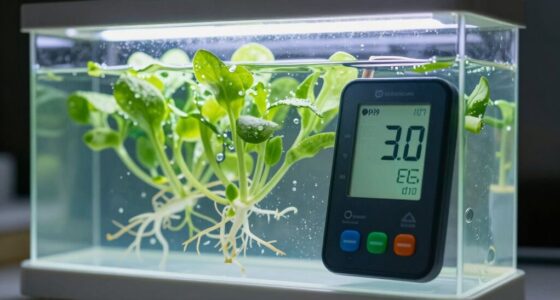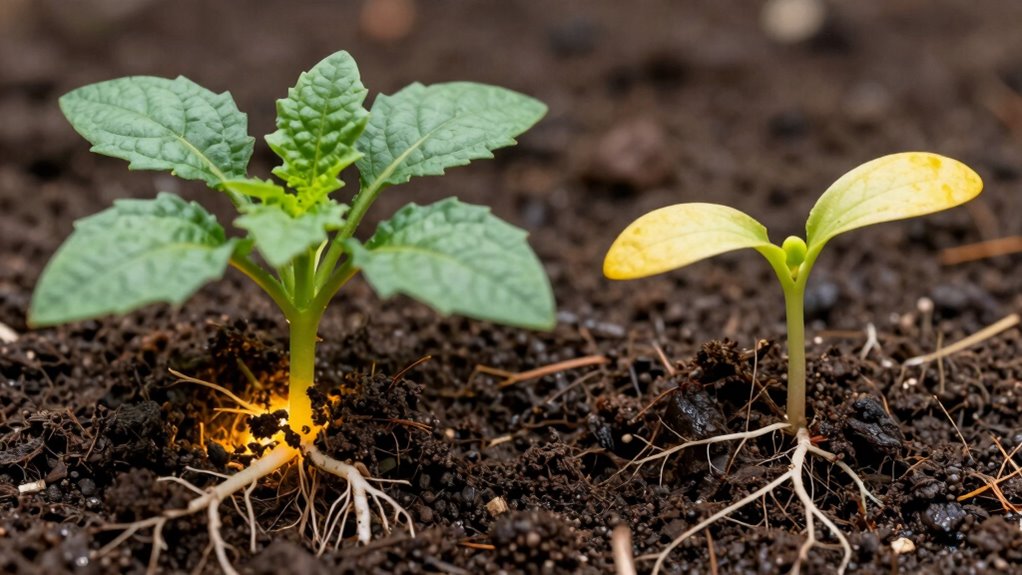

Root-zone heating can dramatically change your seedling outcomes by maintaining consistent soil warmth, which promotes healthy root growth and early establishment. It helps your plants develop stronger roots, absorb water and nutrients more efficiently, and stay resilient in cooler or unpredictable weather. This creates an ideal environment for vigorous growth and reduces the risk of root problems like rot or stunting. Want to discover how this simple technique can boost your success even further?

Get garden gear delivered free with Prime
- Fast, free delivery on millions of items
- Prime Video, Amazon Music and more included
- Member-only deals all year
Key Takeaways
- Maintains optimal soil temperature for healthy root growth and seedling establishment.
- Enhances microbial activity, improving nutrient availability and uptake.
- Accelerates root system development, leading to stronger, more resilient plants.
- Provides consistent warmth in cooler climates or early seasons, reducing stress.
- Promotes faster growth, better vigor, and improved overall seedling health.
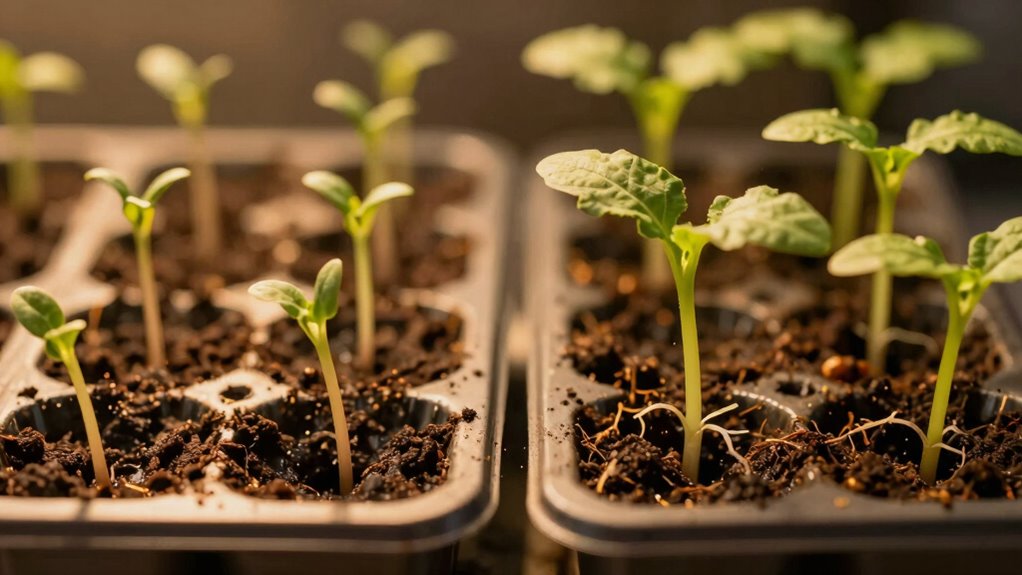
Root-zone heating offers a highly efficient way to nurture your plants by directly warming the soil around their roots. This technique plays a vital role in regulating soil temperature, which directly influences root growth and overall seedling health. When the soil stays consistently warm, it creates an ideal environment for roots to develop vigorously, giving your seedlings a strong foundation to thrive. Without ideal soil temperature, roots can become sluggish or stunted, limiting their ability to absorb water and nutrients efficiently. By using root-zone heating, you guarantee that the soil remains at the perfect temperature, encouraging faster and more robust root development.
Root-zone heating ensures consistent soil warmth, promoting strong root growth and healthier seedlings.
Maintaining consistent soil temperature is essential because it helps seedlings establish a healthy root system early on. When the soil is too cold, root growth slows dramatically, delaying seedling establishment and making them more vulnerable to stress or disease. Conversely, if the soil becomes too warm, it can lead to oxygen depletion and root rot. Root-zone heating balances these extremes by providing a controlled environment where roots can breathe and grow without interruption. This stability not only accelerates initial growth but also improves the overall resilience of your seedlings as they mature. Additionally, soil temperature regulation helps prevent sudden temperature swings that can shock delicate roots.
Active soil temperature regulation also supports microbial activity, which enhances nutrient availability and uptake. By actively controlling soil temperature through root-zone heating, you also influence the availability of nutrients. Warm soil enhances microbial activity, which in turn improves nutrient breakdown and absorption. This means your seedlings get the nourishment they need more quickly, resulting in healthier, faster-growing plants. Additionally, healthier roots foster better water uptake, reducing the risk of drought stress and promoting uniform growth across your seedlings. When roots are thriving, you’ll notice that your plants develop stronger stems, better foliage, and a greater ability to withstand environmental challenges.
Using root-zone heating can dramatically improve seedling outcomes, especially in cooler climates or during early planting seasons. It provides a consistent environment that minimizes the negative effects of temperature fluctuations, giving your plants a competitive edge from the start. This method is particularly beneficial for sensitive plants or those requiring specific soil conditions to flourish. By investing in root-zone heating, you’re giving your seedlings a much-needed boost, guaranteeing they establish quickly and grow into healthy, vigorous plants. This proactive approach not only enhances growth rates but also reduces the time and resources needed to achieve successful cultivation.
As an affiliate, we earn on qualifying purchases.
Frequently Asked Questions
How Does Root-Zone Heating Impact Seedling Disease Resistance?
Root-zone heating boosts seedling disease resistance by promoting better root health and enhancing disease suppression. When roots stay warm, they develop stronger structures and more active defenses against pathogens. This reduces the chance of infections and helps seedlings recover quickly if they do get infected. As a result, healthier roots lead to more resilient plants, ensuring better growth and higher survival rates in challenging conditions.
Can Root-Zone Heating Be Used With All Plant Types?
Not all plant types are compatible with root-zone heating, as plant compatibility varies. You should consider each plant’s specific needs for temperature regulation before using this method. Some plants thrive with heated roots, while others may suffer or become stressed. To guarantee success, research your plant’s requirements and test carefully. Properly evaluating temperature regulation and plant compatibility helps maximize growth and prevent potential damage.
What Are the Initial Setup Costs for Root-Zone Heating Systems?
The initial setup costs for root-zone heating systems vary, but generally, you’ll face a moderate investment compared to traditional heating. A cost comparison shows higher upfront costs due to equipment and installation challenges, especially with integrating into existing setups. However, these expenses can be offset over time through improved seedling growth and higher yields. Be prepared for potential installation challenges like system integration and ensuring even heat distribution.
How Does Root-Zone Heating Affect Water Usage Efficiency?
Root-zone heating acts like a gentle hand guiding water to where it’s needed most, greatly boosting water conservation and energy efficiency. By maintaining ideal soil temperatures, you reduce water waste from overwatering and minimize energy consumption for heating. This precise control ensures seedlings get just the right amount of moisture, leading to healthier growth while conserving resources. Fundamentally, it transforms your watering approach into a smart, efficient system.
Are There Specific Soil Types That Benefit Most From Root-Zone Heating?
You’ll find that sandy soils benefit most from root-zone heating because their loose structure promotes moisture retention and allows heat to penetrate effectively. Conversely, clay soils, which retain water too well, might not see as much benefit. By adjusting soil composition—adding organic matter or sand—you enhance moisture retention and heat transfer, creating an ideal environment that supports healthy seedling growth and boosts overall plant vigor.
Conclusion
Think of root-zone heating as the gardener’s secret recipe, transforming a simple seedling into a thriving plant. By warming the roots, you create a cozy bed that encourages strong growth and healthy development. Just like a warm blanket nurtures comfort, root heating provides the perfect environment to release your seedlings’ full potential. Embrace this technique, and watch your plants flourish as if they’re basking in a gentle, life-giving sunrise.
Fall yard work Picks
leaf blowers
As an affiliate, we earn on qualifying purchases.