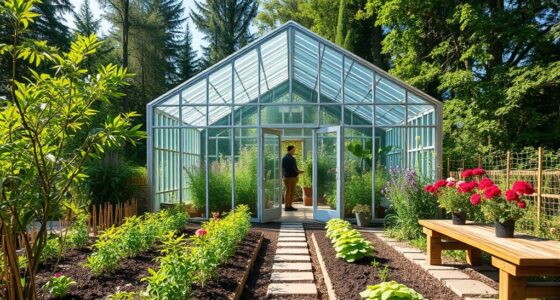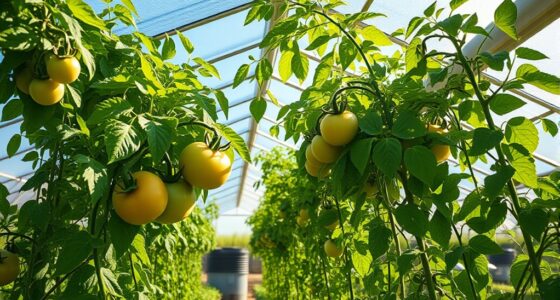
Switching from soil to soilless systems allows you to gain better control over your crops, resulting in faster growth, higher yields, and fewer pests. You’ll replace traditional amendments with customized nutrient solutions, making plant health easier to manage. Using inert media like coconut coir or rockwool reduces soil-related issues and resource waste. This change enhances sustainability and profitability. If you continue, you’ll discover more about making this transition smoothly and maximizing your success.
Get ready for Prime Big Deal Days — try Prime free
Exclusive member deals on October 6–7, plus fast free delivery. Cancel anytime.
As an affiliate, we earn on qualifying purchases.
Key Takeaways
- Understand the advantages of soilless systems, such as higher yields, faster growth, and pest reduction.
- Replace traditional soil amendments with tailored nutrient solutions for optimal plant nutrition.
- Select appropriate growing media like coconut coir, perlite, or rockwool to support root stability and health.
- Develop a management plan for monitoring and adjusting nutrient levels to ensure consistent plant performance.
- Invest in training and equipment to facilitate a smooth transition and maximize the benefits of soilless cultivation.
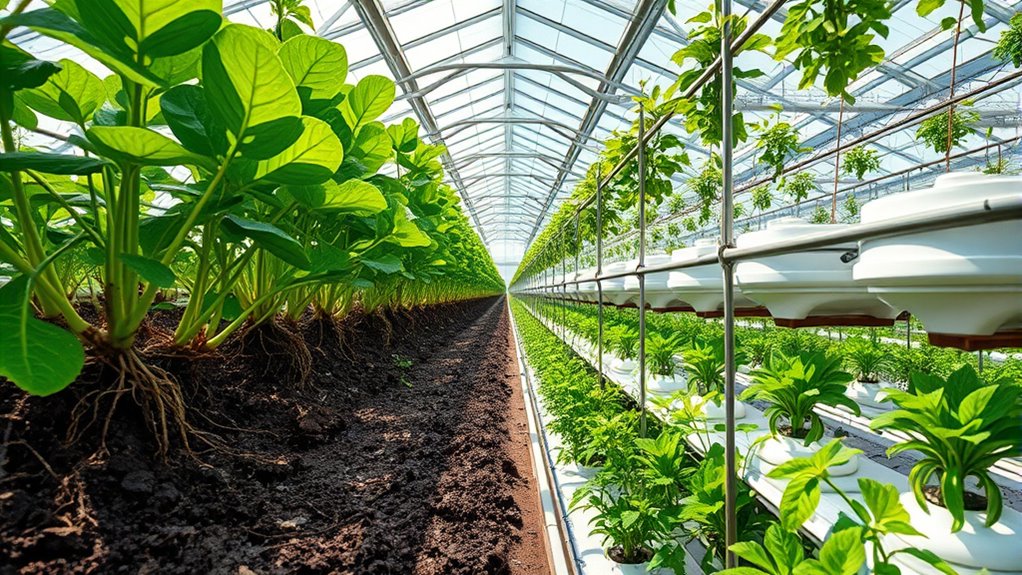
Switching from traditional soil-based growing to soilless systems can seem intimidating at first, but it offers many advantages for modern growers. One of the key reasons to consider this transition is the numerous hydroponic benefits. Hydroponic systems allow you to control every aspect of plant nutrition, leading to faster growth rates, higher yields, and improved plant health. Without soil, you eliminate many common issues like pests and soil-borne diseases, reducing the need for chemical treatments and making your operation cleaner and more sustainable. Additionally, hydroponics uses considerably less water than conventional soil gardening because it recycles nutrient solutions, making it an environmentally friendly choice.
Switching to soilless systems offers faster growth, higher yields, pest control, and water efficiency for modern growers.
When moving away from soil, you might wonder about how to replace the natural soil amendment process. Soil amendments, such as compost and organic matter, improve soil structure and fertility by providing essential nutrients and beneficial microbes. In soilless systems, you replace these natural amendments with carefully formulated nutrient solutions that supply plants with everything they need directly through the water. This means you can customize nutrient levels to suit specific crops and growth stages, optimizing plant health and productivity. Since you control the nutrient delivery, you’re less likely to encounter deficiencies or nutrient imbalances that can occur with soil-based growing.
Adapting to a soilless system also means investing in the right growing medium. Unlike soil, which naturally contains nutrients and supports microbial life, soilless media like coconut coir, perlite, or rockwool provide a stable environment for roots while holding moisture and air. These mediums are inert and free from pests and diseases, making them more predictable and easier to manage. You’ll need to monitor and adjust your nutrient solutions regularly to keep plants thriving, but the process offers precision that soil amendments rarely can match. Incorporating soil amendments in your setup is replaced by precise nutrient management in soilless systems, giving you better control over plant growth.
Transitioning to soilless cultivation might require a learning curve, but the benefits far outweigh the initial effort. You’ll gain more control over your growing environment, reduce resource waste, and produce healthier, faster-growing plants. Incorporating hydroponic benefits and replacing traditional soil amendments with tailored nutrient solutions allows you to optimize your yields and maintain a cleaner, more sustainable operation. Over time, many growers find that the efficiency and consistency of soilless systems lead to better profitability and less hassle, making it a smart choice for modern agriculture.
hydroponic nutrient solution kit
As an affiliate, we earn on qualifying purchases.
As an affiliate, we earn on qualifying purchases.
Frequently Asked Questions
How Do I Select the Best Soilless Growing Medium for My Crops?
When choosing growing mediums, you need to consider your crop’s needs and your growing conditions. Compare organic vs. synthetic mediums for nutrient content, water retention, and pH stability. Organic options like coconut coir or peat are eco-friendly, while synthetic mediums like rockwool offer consistent quality. Test different mediums, observe your plants’ responses, and select the one that promotes healthy growth and fits your budget.
What Are Common Challenges Faced During the Transition Process?
Imagine your roots throwing a tantrum, refusing to adapt to a new world. You’ll face challenges like adapting root systems, which may struggle to find stability, and managing water quality to prevent issues like nutrient imbalances or disease. Expect surprises, as your plants might resist change. Stay vigilant, monitor closely, and adjust your techniques; this shift isn’t a walk in the park but a carefully choreographed dance with nature’s quirks.
How Does Nutrient Management Differ Between Soil and Soilless Systems?
In soilless systems, you focus on maintaining precise nutrient balance, ensuring your plants get the right mix of macronutrients and micronutrients. Unlike soil, you need to regularly adjust the pH to keep nutrients available, often through pH adjustment solutions. You control nutrient delivery directly via irrigation, making it easier to fine-tune but requiring diligent monitoring and adjustments to prevent deficiencies or toxicities.
What Equipment Is Essential for Starting a Soilless Cultivation Setup?
Think of your setup as a symphony—each piece must play perfectly. You’ll need basic equipment like a growing tray, nutrient reservoir, and pumps. Hydroponic automation helps you control nutrient delivery, while lighting optimization guarantees healthy growth. Invest in quality grow lights, timers, pH meters, and water filters. With these essentials, you’ll set the stage for thriving, soilless cultivation—your garden’s grand debut.
How Can I Ensure Pest and Disease Control in Soilless Systems?
To guarantee pest and disease control in soilless systems, you should implement biological control methods like beneficial insects and microbial agents. Maintain strict sanitation, regularly monitor for signs of pests or disease, and prevent issues by using disease-resistant plant varieties. Keep proper environmental conditions, such as ideal humidity and airflow, to reduce stress on plants and make them less susceptible to infections, ensuring a healthy, pest-free system.
Conclusion
Switching from traditional soil to soilless systems can boost your gardening game and open new possibilities. It might seem intimidating at first, but with patience and learning, you’ll see the benefits grow. Are you ready to embrace this innovative approach and watch your plants thrive like never before? Remember, every new method is a step toward a more sustainable and productive garden. So why not take that leap and enjoy the journey ahead?
Fall yard work Picks
leaf blowers
As an affiliate, we earn on qualifying purchases.