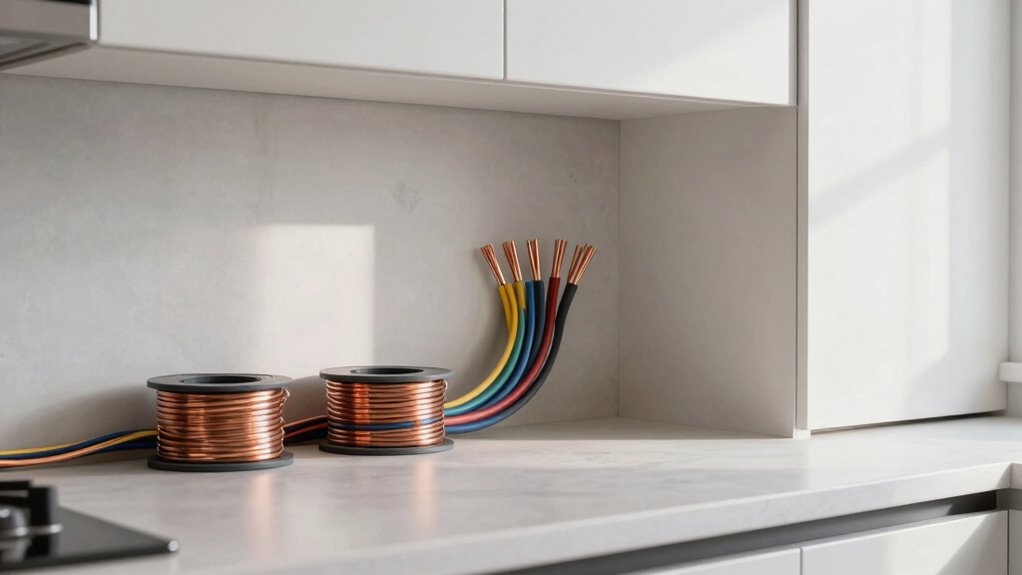

You start with wiring because it sets the essential safety and capacity framework for your kitchen. Proper wiring guarantees your appliances operate smoothly, reduces the risk of overloads or fires, and allows for safe outlet placement and lighting. Without a solid wiring plan, adding appliances later can cause hazards or circuit failures. Getting this foundation right means your kitchen will function efficiently now and be ready for future upgrades—if you’re interested, you’ll find out more below.
Listen free for 30 days with Audible
Thousands of audiobooks and originals — cancel anytime.
As an affiliate, we earn on qualifying purchases.
Key Takeaways
- Proper wiring ensures safe, reliable power delivery to all appliances, preventing overloads and electrical hazards.
- Wiring layout determines the placement and functionality of outlets and lighting, affecting overall kitchen usability.
- Dedicated circuits for appliances reduce the risk of tripped breakers and electrical fires.
- Adequate wiring capacity accommodates current and future appliance demands seamlessly.
- Well-planned wiring provides flexibility for upgrades and ensures long-term safety and efficiency.
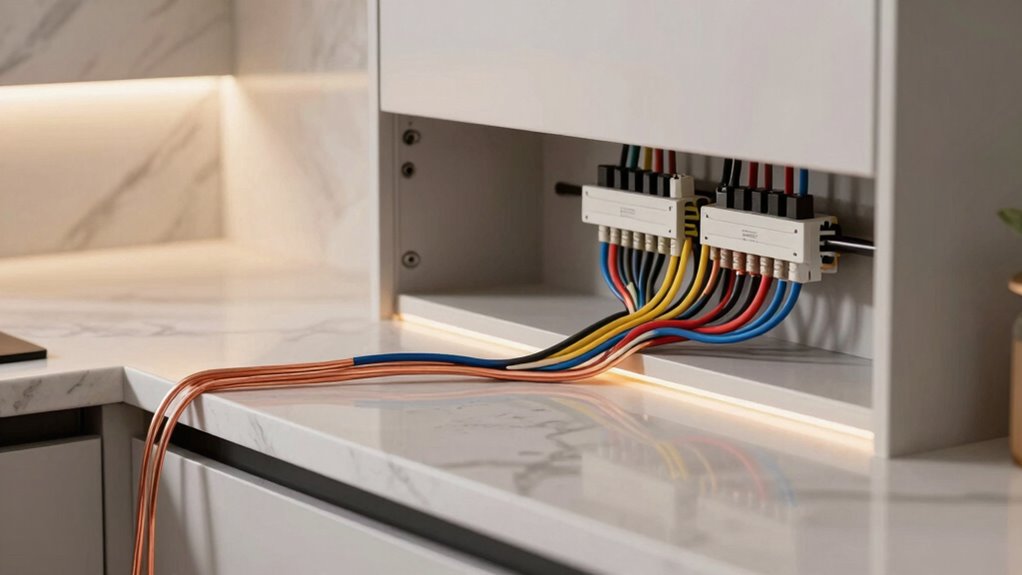
When planning a kitchen renovation or new build, understanding the basics of wiring is essential because it sets the foundation for safety and functionality. Proper wiring ensures your kitchen operates smoothly and prevents hazards down the line. It’s tempting to focus on appliances or stylish fixtures, but without solid wiring, those upgrades won’t matter. Your first step should be to carefully plan lighting upgrades and outlet placement, which are vital for everyday use. Good wiring makes sure your lighting is bright enough for cooking and cleaning, while outlets are conveniently located for appliances and gadgets.
Lighting upgrades aren’t just about aesthetics; they’re about practicality. You want enough light in key areas like over the countertops, sink, and dining space. When wiring your kitchen, think about where you’ll need task lighting versus ambient lighting. This means installing dedicated circuits for specific fixtures, reducing the risk of overloads and flickering. You also want to consider dimmer switches for mood lighting, but these require proper wiring connections to work safely. Don’t forget that under-cabinet lighting needs its own wiring plan to ensure it’s evenly powered and easy to control. Additionally, planning for electrical safety measures during wiring helps prevent future hazards. Incorporating circuit capacity considerations during the planning phase ensures your wiring can handle current and future electrical loads. Proper planning also involves understanding circuit design, which helps distribute power efficiently and safely throughout your kitchen. Recognizing the importance of home electrical standards can guide you in meeting local codes and ensuring safety. Paying attention to wire gauge during installation is crucial for preventing overheating and ensuring long-term durability.
Outlet placement is just as critical. It’s not enough to have a few outlets scattered randomly; they need to be strategically positioned for convenience and code compliance. You should have outlets within easy reach of every countertop workspace, ideally every 4 feet, and no more than 20 inches above the surface. This way, you can plug in small appliances without stretching cords or creating safety hazards. Remember, GFCI outlets are mandatory near sinks and water sources—they help prevent shocks. When wiring outlets, think about future needs too. If you plan to add a microwave, toaster, or coffee maker later, ensure your wiring can handle those extra loads. Properly planning circuit loads allows for flexibility in your appliance choices without risking overloads or tripped breakers.
Starting with wiring also means planning for circuits that can handle the power demands of your appliances. Overloading circuits can cause breakers to trip or, worse, electrical fires. Proper wiring ensures each appliance has a dedicated or appropriately shared circuit, reducing risks. When you prioritize lighting upgrades and outlet placement during the wiring phase, you’re investing in a safer, more efficient kitchen. It might seem like a small detail compared to choosing cabinets or countertops, but a well-wired kitchen makes everything else work seamlessly. Ultimately, your kitchen’s safety, convenience, and ability to accommodate future upgrades hinge on the wiring you lay down now.
As an affiliate, we earn on qualifying purchases.
Frequently Asked Questions
How Do I Determine the Correct Wiring Gauge for My Kitchen?
To determine the correct wiring gauge for your kitchen, first consider the circuit capacity needed for your appliances, ensuring the wire can handle the load. Check the manufacturer’s specifications for amperage requirements. Use wiring with appropriate insulation to prevent overheating and electrical hazards. For most kitchen appliances, a heavier gauge like 12 or 10 AWG is recommended, but always verify your circuit’s capacity and consult local electrical codes for safety.
What Safety Precautions Are Necessary During Kitchen Wiring Installation?
You should prioritize electrical safety by turning off the power supply before starting. Make certain wiring insulation is intact and properly rated for kitchen use to prevent shorts or shocks. Use insulated tools and wear rubber-soled shoes for added protection. Avoid working alone, and if unsure, consult a professional electrician. Following these precautions helps prevent accidents, keeps your wiring secure, and guarantees a safe, efficient kitchen upgrade.
Can Existing Wiring Support New High-Powered Appliances?
They say, “Don’t count your chickens before they hatch,” but when it comes to appliances, count on your wiring first. Existing wiring might not support new high-powered appliances, so appliance compatibility is key. You need wiring upgrades to handle increased power loads safely. Before installing, have a professional evaluate whether your current wiring can support the new appliances, ensuring safety and performance.
How Long Does It Take to Rewire a Kitchen Properly?
Rewiring a kitchen typically takes about one to three days, depending on the complexity and size. You’ll want to guarantee appliance compatibility with the new wiring to avoid future issues. Proper wiring also improves wiring aesthetics, making your kitchen safer and more organized. Rushing can lead to mistakes, so hiring a professional ensures the work is done correctly, efficiently, and safely, giving you peace of mind.
What Are Common Wiring Mistakes to Avoid in Kitchen Upgrades?
Think of your kitchen wiring as the nervous system—mistakes here can cause chaos. Avoid poor appliance placement that strains circuits and leads to overloads. Never forget to balance circuits properly; overloading one can blow a fuse and halt your culinary adventures. Use dedicated circuits for high-power appliances, and double-check wiring connections. By sidestepping these common errors, you’ll keep your kitchen powered smoothly and safely.
Conclusion
By focusing on wiring first, you’re laying the foundation of a kitchen that’s safer, smarter, and ready for anything. Skipping this step is like building a castle on sand—sure to crumble when faced with the chaos of daily life. Think of wiring as the secret superpower behind every sleek appliance and flawless meal. Get it right now, and you’ll never have to worry about sparks flying or appliances failing when you need them most—your kitchen’s true hero starts beneath the surface.
NFL season / tailgating Picks
team gear
As an affiliate, we earn on qualifying purchases.