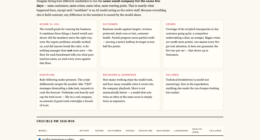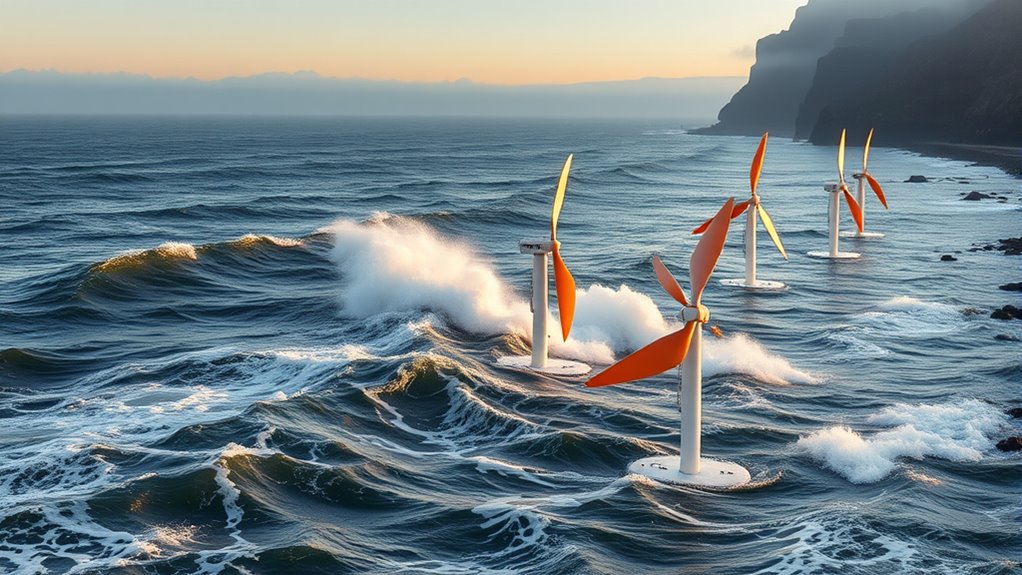

Tidal and wave energy harness the ocean’s natural movements to generate clean, sustainable power, making them promising alternatives to fossil fuels. By capturing the energy of tides and waves, you can tap into a renewable source that has huge potential, especially in areas with strong ocean activity. Although initial costs are high, advancements are reducing expenses and boosting efficiency. To discover how these innovative solutions are shaping the future of renewables, explore further.

Get garden gear delivered free — and shop member deals
- Fast, free delivery on millions of items
- Access to Prime Big Deal Days deals on October 6–7
- Prime Video, Amazon Music and more included
Key Takeaways
- Tidal and wave energy harness the ocean’s natural movement for sustainable electricity generation.
- Advances in technology aim to reduce ecological impacts and improve cost-efficiency.
- These renewable sources offer high energy potential in coastal areas with strong tidal or wave activity.
- Environmental assessments and careful planning are essential to protect marine ecosystems.
- With ongoing innovation, tidal and wave power could become integral to future renewable energy portfolios.
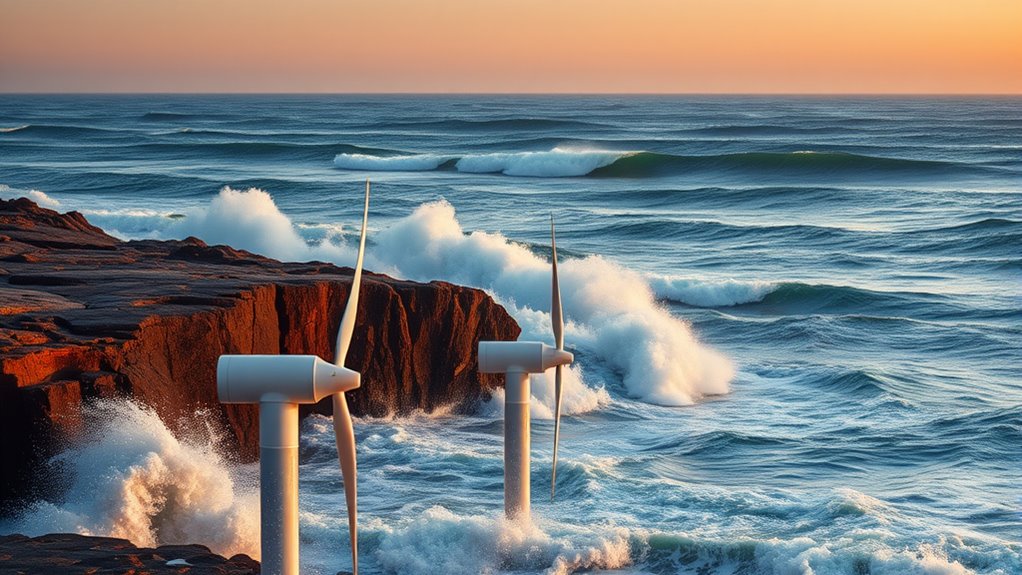
Have you ever wondered how the ocean’s powerful movements can generate clean energy? Tidal and wave energy harness the natural motion of the sea to produce electricity, offering a promising alternative to fossil fuels. But before diving into the technology’s potential, it’s essential to understand the complex balance between marine ecosystem impacts and economic viability. These factors play a crucial role in determining whether tidal and wave energy can become mainstream solutions for our energy needs.
When you think about installing tidal or wave energy devices, one concern that naturally arises is how they might affect marine ecosystems. These ecosystems are delicate, thriving with diverse species that depend on specific conditions. If turbines or wave converters disturb migration patterns, breeding grounds, or feeding areas, they could cause disruptions that ripple through the entire ecosystem. For example, large turbines placed near coastlines might interfere with the movement of fish or marine mammals, potentially harming populations and biodiversity. That’s why careful planning and environmental assessments are vital: to guarantee that energy projects don’t inadvertently cause long-term harm to the marine environment. Developers are working to design systems that minimize these impacts, such as placing devices in areas with less ecological sensitivity or using technologies that are less intrusive.
Careful planning and assessments are essential to protect marine ecosystems from tidal and wave energy devices.
On the other hand, you might wonder whether tidal and wave energy are economically viable. These sources have the potential to generate significant amounts of power, especially in areas with strong tidal flows or consistent wave activity. The initial costs for infrastructure—installing turbines or wave converters—are high, but the operational costs tend to be low once systems are in place. Over time, the energy produced can offset expenses, making it competitive with other renewable sources. Moreover, as technology advances, prices are expected to drop, making tidal and wave energy more accessible and economically attractive. Additionally, the development of specialized energy conversion technologies is helping to improve efficiency and reduce costs. Governments and private investors are increasingly aware of its potential, providing funding and incentives to promote development. The long-term benefits include reduced reliance on fossil fuels, lower greenhouse gas emissions, and energy security for coastal communities.
While challenges remain, particularly around environmental impacts and upfront costs, the prospects for tidal and wave energy are promising. If the industry continues to innovate and prioritize sustainability, it could become a vital part of our renewable energy portfolio. You can be optimistic about a future where the ocean’s natural force powers your home, all while preserving marine ecosystems and supporting economic growth. By balancing ecological considerations with financial practicality, tidal and wave energy can truly become the next big thing in renewables, revealing the ocean’s full potential without compromising its health.
As an affiliate, we earn on qualifying purchases.
Frequently Asked Questions
How Does Tidal and Wave Energy Compare Cost-Wise to Solar and Wind?
You’re wondering about the cost comparison and economic feasibility of tidal and wave energy versus solar and wind. Tidal and wave projects typically have higher upfront costs and more complex installation, making them less immediately cost-effective. However, they offer consistent energy generation, which can improve their long-term viability. While solar and wind are currently cheaper and more established, tidal and wave energy have potential as a reliable renewable source as technology advances.
What Are the Environmental Impacts of Tidal and Wave Energy Installations?
Imagine casting a stone into a calm ocean, ripples spreading outward. Tidal and wave energy installations gently tap into the ocean’s power, but you must consider their environmental impacts. They can alter marine habitats, disrupting ecosystems like an uninvited guest at a dance. Additionally, they might create navigational hazards for boats, much like hidden rocks beneath the surface. Careful planning helps balance energy gains with preserving ocean life and safety.
How Reliable Are Tidal and Wave Energy Sources Year-Round?
You might wonder how reliable tidal flow and wave patterns are year-round. Tidal energy depends on predictable lunar cycles, so it’s quite consistent, though affected by weather and seasonal changes. Wave energy varies with weather conditions, making it less predictable. Overall, tidal flow offers steady power, while wave patterns can fluctuate, but advancements in technology are helping improve reliability for both sources.
What Technological Advancements Are Needed for Commercial Viability?
Imagine harnessing the unstoppable power of ocean waves—sounds incredible, right? To make this happen, you need breakthroughs in marine infrastructure that can withstand the fiercest storms and innovations in energy storage to guarantee a steady supply. These advancements will turn tidal and wave energy into a reliable, commercial force, transforming our energy landscape and unearth the ocean’s full potential. It’s a challenging leap, but the rewards are limitless.
Are There Any Successful Large-Scale Tidal or Wave Energy Projects?
You’ll find that successful large-scale tidal and wave energy projects are still limited, mainly due to challenges like marine ecosystem impacts and project scalability. While some projects, like the MeyGen tidal farm in Scotland, show promise, widespread implementation remains elusive. You should consider how environmental effects and scalable technology are critical factors for future success, and ongoing research aims to address these issues for broader adoption.
Conclusion
As you stand on the shoreline, imagine harnessing the endless dance of the tides and the rhythmic roll of waves, turning nature’s power into clean energy. Tidal and wave energy offer a future where coastlines become giants of innovation, their currents fueling a sustainable world. With each ebb and flow, you’re witnessing the birth of a renewable revolution—where the ocean’s heartbeat drives us toward a brighter, greener tomorrow. The ocean’s energy is ready to propel us forward.
Fall yard work Picks
leaf blowers
As an affiliate, we earn on qualifying purchases.