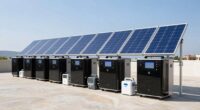
To safely match your solar panels with your solar generator, first check the generator’s input voltage and wattage limits. Choose panels that stay within these specifications, avoiding overvoltage or excessive wattage that could damage the system. Use proper wiring, like series or parallel connections, based on your setup’s needs. Regularly measure voltage and current during installation to guarantee safe operation. If you keep exploring, you’ll learn more about creating a reliable, efficient solar power setup.
Key Takeaways
- Match solar panel voltage and wattage with the generator’s input specifications to prevent overloads or damage.
- Use panels that stay within the generator’s recommended voltage and wattage limits for safe and efficient charging.
- Verify wiring configuration (series or parallel) to keep voltage and current within safe ranges per manufacturer guidelines.
- Measure actual voltage and current during setup to ensure they do not exceed generator and battery thresholds.
- Properly ground and insulate all connections to reduce electrical risks and ensure system safety.
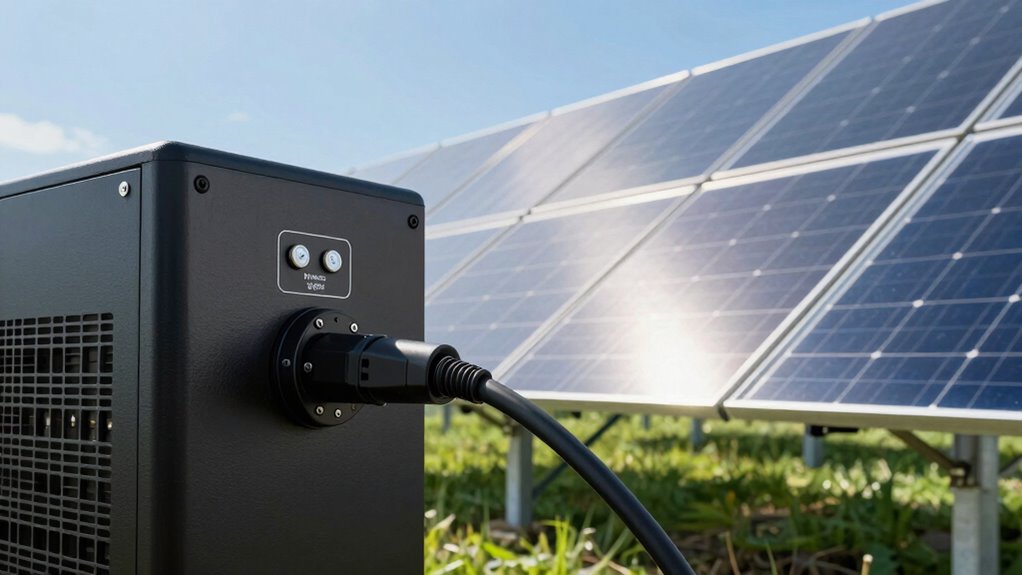
Are you looking for an efficient way to harness renewable energy for your home or outdoor adventures? When it comes to connecting a solar generator with solar panels, understanding how to match voltage and watts safely is essential. The first step is ensuring compatibility between your solar panels and the solar generator, especially regarding battery compatibility. Your generator’s battery specifications determine the voltage and wattage it can handle. If your panels produce too much voltage or wattage, you risk damaging the battery or causing unsafe conditions. Conversely, if they produce too little, you won’t efficiently charge the battery or power your devices. Always check the manufacturer’s recommended input voltage and wattage for your generator and select panels that stay within those limits. This guarantees the system operates safely and effectively.
Wiring safety is another key aspect. Proper wiring prevents short circuits, overheating, or fire hazards. Use the correct gauge wire for the current your system will carry; thicker wires are necessary for higher currents. When connecting solar panels in series, voltages add up, so make sure the combined voltage doesn’t surpass your generator’s maximum input. If you connect panels in parallel, the voltage remains the same, but the current increases, which also needs to stay within safe limits. Always verify your wiring connections are secure, insulated, and free from damage. Use appropriate connectors and follow the manufacturer’s wiring diagrams meticulously. Avoid makeshift or substandard wiring practices, as they compromise wiring safety and system reliability. Properly grounded systems further reduce risks and ensure safety during operation.
Additionally, consider the type of solar panels you’re using. Monocrystalline panels tend to have higher efficiency and can provide more power in a smaller space, but they often have higher voltage ratings. Polycrystalline panels are usually more affordable but might require a larger area to produce the same wattage. Matching these panels with your generator’s capacity requires careful calculation: determine the total wattage output and voltage of your panels and compare that with your generator’s specifications. Use a multimeter to measure voltage and current during setup, confirming the values align with your system’s limits. This proactive step helps prevent overloading your generator and ensures safe, efficient energy transfer.
In short, matching voltage and watts between your solar panels and generator isn’t just about getting the most power; it’s about doing so securely. Prioritize checking battery compatibility, selecting the right wiring gauge, and following best wiring safety practices. When you do this, you’ll create a reliable, efficient setup that harnesses renewable energy safely—whether for powering your home or supporting your outdoor adventures.

UYGALAXY 100W Greenhouse Film Roll Up Motor with Limit Switch, Waterproof Electric Film Curtain Roller Frame Shed DC 24V 2.8RPM for Greenhouse Automatic Ventilation(with Pivot Set)
【 Longer Travel】Curtain travel width can be max 19ft of hoop house top.
As an affiliate, we earn on qualifying purchases.
Frequently Asked Questions
Can I Connect Multiple Solar Panels to One Generator?
Yes, you can connect multiple solar panels to one generator, but you need to ensure proper solar panel wiring and voltage regulation. Series wiring increases voltage, while parallel wiring boosts current. Always match your panels’ combined voltage and wattage to your generator’s input specifications. Use appropriate connectors and a charge controller to prevent overloads. This approach guarantees safe, efficient power transfer and protects your generator from damage.
What Happens if the Voltage Mismatch Is Too High?
If your voltage mismatch is too high, you risk a catastrophic voltage overload that could blow your system apart. This overload can cause severe system damage, frying your solar generator and panels alike. Don’t underestimate this risk—an incompatible voltage can lead to permanent failure, costly repairs, or even electrical fires. Always verify your solar panels’ voltage matches your generator’s specifications to keep your setup safe and functional.
How Do I Calculate the Total Wattage for My Setup?
To calculate your setup’s total wattage, add up the wattages of all your solar panels, considering their solar panel efficiency. Then, compare that to your battery capacity to guarantee it can store enough energy. Keep in mind, higher efficiency panels generate more power with less sunlight, so choose panels that match your energy needs and battery capacity for ideal performance. Always verify the combined wattage aligns with your generator’s capacity.
Is It Safe to Use Different Brand Solar Panels Together?
Imagine connecting panels from different brands—sounds risky, right? Mixing brands can threaten your setup’s safety and panel longevity. While some brands might work together, compatibility issues with voltage and wiring could cause damage or reduce efficiency. To keep your system safe, it’s best to stick with the same brand or make sure they match in voltage, wattage, and quality. This way, you’ll protect your investment and enjoy reliable power longer.
How Often Should I Check the Voltage and Wattage Compatibility?
You should check the voltage and wattage compatibility regularly, ideally every few months, to prevent issues caused by voltage fluctuations and guarantee wattage stability. Frequent inspections help you spot any mismatches early, avoiding potential damage to your solar setup or generator. If you notice any inconsistencies or unusual performance, check the connections and readings immediately, and consult your system’s guidelines to keep everything working safely and efficiently.
Automatic pH Controller with Dosing Pump & Dual Relay Output for pH Up and Down Dispense, Wall Mounted Aquariums pH Temperature Monitor with Data Chart Display for Hydroponic Nutrient Reservoir
PH UP AND DOWN CONTROLLER: Landtek digital ph controller equiped with dosing pumps for ph level measurement and...
As an affiliate, we earn on qualifying purchases.
Conclusion
By matching your solar generator and solar panels’ voltage and wattage wisely, you’ll prevent problems and promote performance. Prioritize proper pairing, plan your power needs, and protect your equipment. Patience and preparation pave the path to a powerful, problem-free solar setup. When you prioritize precision and patience, you’ll enjoy a safer, smarter solar system that serves your needs smoothly and sustainably. Stay savvy, stay safe, and solar smart!
Large Hydroponics Growing System Kit, 48 Pods Vertical Hydroponic Garden, with 48 Large Buckets, 40L Indoor Garden System for Herb Vegetable Fruit, with 2 Light Modes, Auto Circulating Water System
3-Tier Large Hydroponics Growing System: Boasting 48 pods paired with 48 large 3-inch planting buckets. Growell vertical hydroponics...
As an affiliate, we earn on qualifying purchases.

LYCereal Hydroponics Growing System, 30-Plant Indoor Hydroponic Tower with Timer and Pump System, Plants Germination Kit, Vertical Hydroponic System for Gardening Lover (No Seed)
Easy, Low Maintenance: Just minutes a week to add water and nutrients - our advanced hydroponics system does...
As an affiliate, we earn on qualifying purchases.