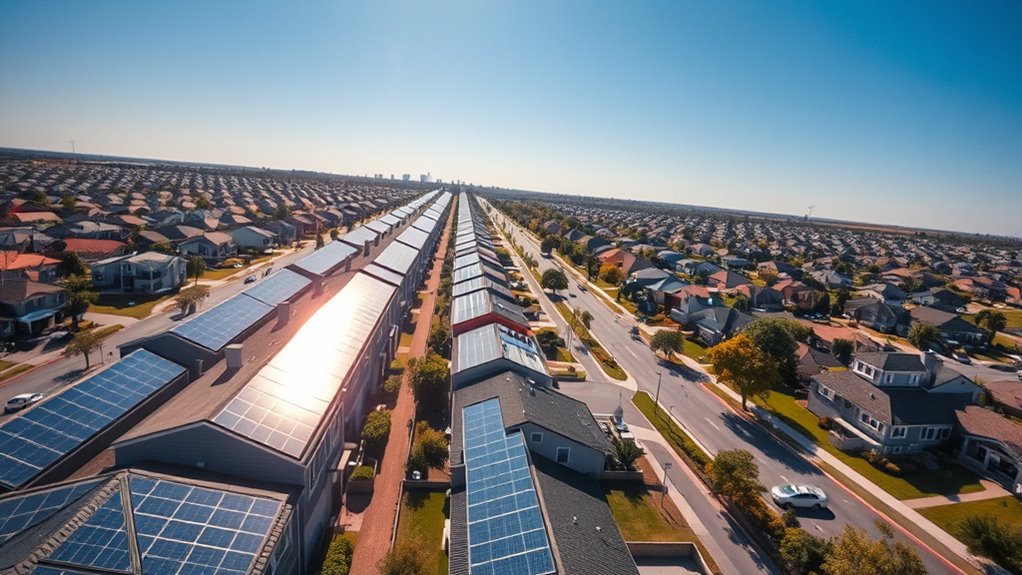
To understand local solar and zoning rules, you need to obtain permits and follow community regulations to guarantee safety and compliance. These rules cover things like system size, appearance, setbacks, and height restrictions, which can vary widely depending on your area. Roof-mounted panels are usually easier to approve, while ground systems often face stricter rules. Knowing and following these guidelines helps avoid delays, fines, or having to modify your system later. Keep going to learn more.
Open a free Amazon Business account
Business pricing, bulk buying and tax-exempt orders.
As an affiliate, we earn on qualifying purchases.
Key Takeaways
- Obtain a solar permit before installation to ensure compliance with safety and electrical standards.
- Zoning laws regulate solar panel placement, size, height, and appearance to preserve neighborhood aesthetics.
- Roof-mounted systems are generally easier to approve than ground-mounted installations, which face stricter rules.
- Contact local planning departments or visit official websites for specific zoning restrictions and permit requirements.
- Ignoring local regulations can cause delays, fines, or removal of panels, compromising safety and project success.
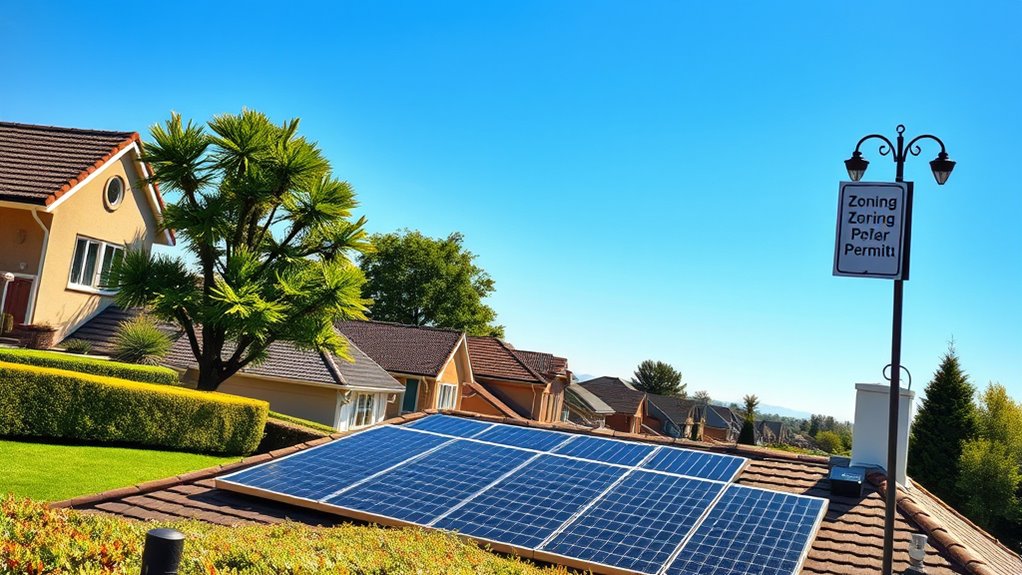
Local solar and zoning rules can considerably impact your ability to install solar panels on your property. Before you start, it’s vital to understand that local regulations often require you to obtain a solar permit. This permit guarantees your installation meets safety standards, electrical codes, and local ordinances. Without it, your system might not be approved, and you could face fines or be forced to remove the panels later. The process typically involves submitting detailed plans, including system specifications, site diagrams, and electrical wiring details. Once approved, the permit confirms your project complies with local rules, making the installation smoother and less risky.
Getting a solar permit ensures your system meets safety, electrical, and local standards for a smooth installation.
Zoning restrictions further influence where and how you can install solar panels. These restrictions are designed to preserve neighborhood aesthetics, comply with historic district guidelines, and prevent overshadowing neighbors’ properties. For example, some areas have setback rules, which specify how far your panels must be from property lines or structures. Other zones might limit the height or size of solar arrays to maintain a certain look or prevent obstruction of views. It’s vital to check your local zoning codes before planning your system because violating these restrictions can lead to penalties or the need to modify or remove your panels.
Many communities have specific rules regarding roof-mounted versus ground-mounted solar systems. Roof-mounted panels are generally easier to approve, but even then, you need to guarantee they don’t violate height or shading restrictions. Ground-mounted systems often face stricter zoning requirements, especially in suburban or historic districts. Some areas also have regulations around the appearance of solar equipment, requiring screens or landscaping to hide panels from street view or neighbors’ windows. Additionally, understanding solar permitting procedures can help streamline your installation process and avoid unnecessary delays.
The permitting and zoning process can seem overwhelming initially, but most local governments provide resources to help you navigate it. Contact your city or county planning department or visit their website to review zoning maps, restrictions, and permit applications. Often, they also offer guidance on what documentation you’ll need and the steps to secure approval. Ignoring these rules can delay your project, increase costs, or even result in legal issues. By understanding and following local solar permit requirements and zoning restrictions, you guarantee your installation is compliant, safe, and efficient, allowing you to enjoy the benefits of solar energy without unnecessary complications.
As an affiliate, we earn on qualifying purchases.
Frequently Asked Questions
How Often Do Local Solar and Zoning Regulations Change?
You should stay aware that local solar and zoning regulations typically change infrequently, with policy updates happening once every few years. Enforcement frequency varies by municipality, so some areas might review rules annually, while others do so less often. To stay compliant, regularly check for updates from your local government or zoning board, as staying informed helps you avoid penalties and ensures your solar project aligns with current regulations.
Can I Install Solar Panels Without Zoning Approval?
You might be able to install solar panels without zoning approval, but it depends on your local regulations. Some areas have relaxed rules for small, residential systems, especially when you’re eligible for solar tax incentives. However, you should verify if your municipality requires panel installation permits, as certain zoning codes might restrict or specify conditions for solar panel placement. Always check with local authorities to guarantee compliance and avoid potential fines or rework.
Are There Specific Setbacks for Solar Panel Installation?
Yes, there are setback requirements for solar panel installation. Typically, you need to keep panels a certain distance from property lines, but setback exceptions may apply if your panels are mounted on your roof. Keep in mind that building height restrictions can influence where you place panels, especially for ground-mounted systems. Always check local zoning rules, as these can vary and impact your installation plans.
Do Zoning Rules Vary Between Residential and Commercial Areas?
Yes, zoning rules do vary between residential and commercial areas. You’ll find zoning variations that often impose stricter residential restrictions, such as setback requirements, height limits, and aesthetic guidelines. In commercial zones, rules tend to be more flexible, prioritizing energy efficiency and accessibility. Understanding these differences helps you plan your solar installation effectively, ensuring compliance with local regulations and maximizing your system’s potential in both types of zones.
What Penalties Exist for Non-Compliance With Solar Zoning Laws?
If you don’t acquire the necessary solar panel permits, you could face fines for violations, which may include hefty monetary penalties or orders to remove unpermitted installations. Local authorities take compliance seriously to ensure safety and aesthetic standards. Penalties vary by location but generally aim to discourage non-compliance. To avoid these issues, always follow zoning laws, secure permits beforehand, and adhere to all regulations related to solar panel installations.
Conclusion
Understanding local solar and zoning rules helps you navigate installing panels smoothly. Did you know that nearly 70% of U.S. jurisdictions now have policies supporting solar? Knowing these regulations can save you time and prevent surprises. By staying informed, you guarantee your solar project complies with local laws and maximizes your energy savings. So, take the time to research your area’s rules—you’ll be glad you did when your system is up and running hassle-free.
NFL season / tailgating Picks
team gear
As an affiliate, we earn on qualifying purchases.