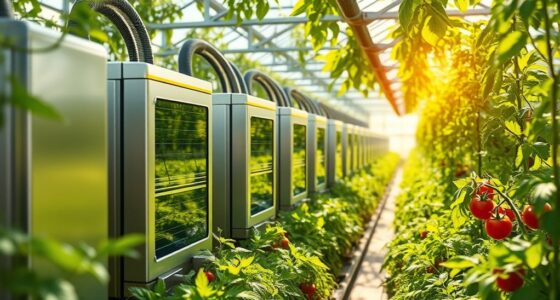
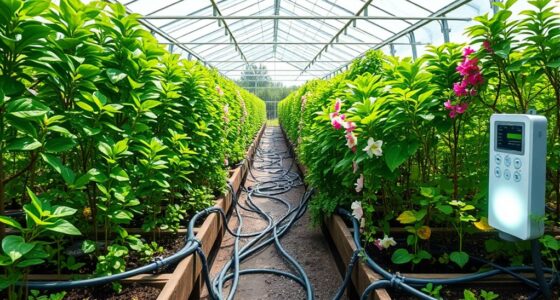
Backup power is essential for your greenhouse because it keeps critical systems like temperature control, lighting, and irrigation running without interruption. Power outages can cause temperature swings, humidity issues, and system failures that stress your crops and lower yields. Having dependable backup solutions guarantees your operations stay stable and productive, even during outages. You’ll discover how integrating renewable energy can boost your system’s resilience and sustainability as you explore further.
Get ready for Prime Big Deal Days — try Prime free
Exclusive member deals on October 6–7, plus fast free delivery. Cancel anytime.
As an affiliate, we earn on qualifying purchases.
Key Takeaways
- Ensures continuous operation of critical systems like temperature, irrigation, and lighting during power outages.
- Prevents crop stress and damage caused by temperature swings and humidity fluctuations.
- Maintains consistent growing conditions, optimizing crop quality and yield.
- Enhances system resilience with seamless power transition and extended backup capabilities.
- Supports sustainable practices by integrating renewable energy, reducing reliance on fossil fuels, and lowering costs.
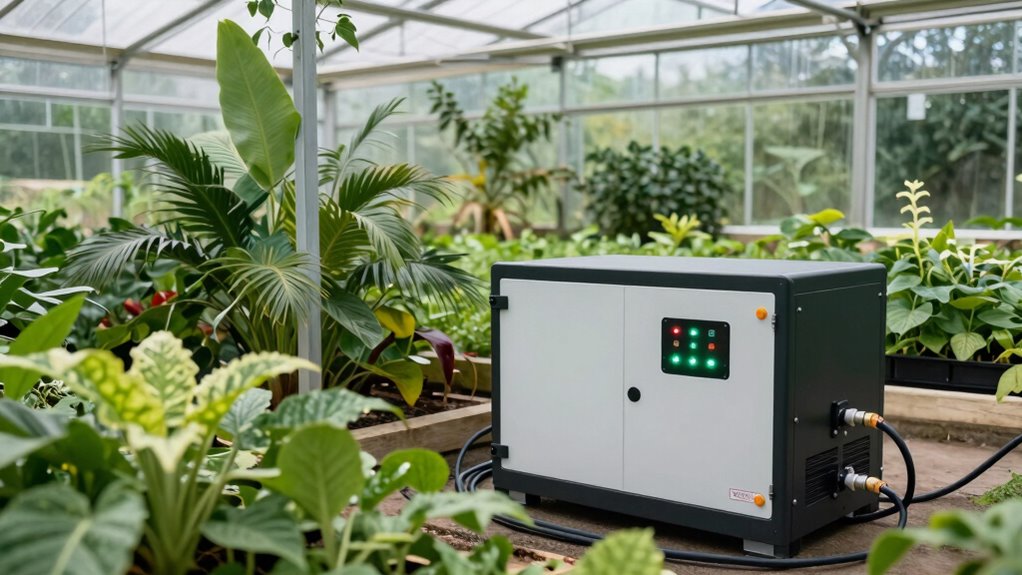
Greenhouses rely heavily on consistent power to maintain ideal growing conditions, so backup power systems are essential for preventing disruptions during outages. Without a reliable power source, temperature controls, irrigation systems, and lighting can fail, risking crop health and yield quality. This is where backup power becomes a crucial part of your greenhouse operation, ensuring that even during unexpected outages, your plants continue to thrive. In recent years, integrating renewable energy sources like solar panels into backup systems has gained popularity. Not only does this reduce reliance on grid power, but it also promotes sustainability and can lower operational costs over time. By combining renewable energy with traditional backup solutions, you create a resilient system that enhances overall power stability—crucial for maintaining consistent growing conditions year-round.
Power stability is central to successful greenhouse management. Fluctuations or interruptions in power can cause temperature swings, humidity issues, or failures in automated systems, all of which stress plants and compromise productivity. When your backup power system is well-designed, it guarantees seamless transitions during outages, keeping essential systems operational without delay. This stability allows you to focus on growth and productivity instead of troubleshooting power issues. Renewable energy-powered backup systems offer additional advantages here, as they can be scaled and tailored to your specific needs. For example, solar-powered battery storage can provide clean, silent, and sustainable energy, reducing the environmental footprint of your greenhouse while boosting reliability. Additionally, power reliability is critical to ensure that your systems function smoothly without interruption, especially during extended outages. Incorporating energy storage solutions can further enhance your system’s resilience by providing stored energy when sunlight or wind is insufficient.
Moreover, backup power isn’t just about preventing crop losses; it also supports your operational efficiency and long-term sustainability goals. Using renewable energy sources, such as solar or wind, helps you decrease dependence on fossil fuels and minimizes greenhouse gas emissions. This aligns your operation with eco-friendly practices and can improve your reputation among environmentally conscious consumers. Implementing renewable energy systems also prepares your greenhouse for future energy regulations, which are increasingly favoring clean energy solutions. Additionally, backup systems that utilize renewable energy often have lower maintenance costs, further improving the financial viability of your operation.
solar backup power system for greenhouse
As an affiliate, we earn on qualifying purchases.
As an affiliate, we earn on qualifying purchases.
Frequently Asked Questions
How Long Can Backup Power Sustain a Greenhouse During Outages?
Backup power can typically sustain your greenhouse for a few hours to several days, depending on your system’s power duration and capacity. This resilience during outages guarantees your plants continue to thrive without disruption. To maximize outage resilience, you should assess your energy needs, choose reliable backup solutions, and regularly test your system. Proper planning guarantees your greenhouse remains productive, even during extended power interruptions.
What Are the Cost Implications of Installing Backup Power Systems?
The cost implications of installing backup power systems include upfront installation expenses and ongoing maintenance costs. You should conduct a thorough cost analysis to evaluate these expenses against the benefits of uninterrupted operations. While installation costs can be significant, investing in reliable backup power minimizes crop loss and energy disruptions, ultimately saving you money in the long run. Proper planning guarantees you balance initial investments with operational resilience.
Are There Eco-Friendly Backup Power Options Suitable for Greenhouses?
Yes, eco-friendly backup power options like solar batteries and wind turbines suit greenhouses perfectly. Imagine maintaining ideal temperatures and humidity even during outages, all while reducing your carbon footprint. Solar batteries store energy from the sun, powering your operations sustainably, while wind turbines harness natural air currents. These options provide clean, renewable power, ensuring your greenhouse stays productive without harming the environment.
How Often Should Backup Power Systems Be Maintained or Tested?
You should test your backup power systems monthly and follow a regular maintenance schedule, typically every three to six months. This guarantee your batteries stay within their lifespan and operate reliably when needed. Regular inspections help identify issues early, preventing failures during outages. Keep detailed records of maintenance activities, and replace batteries as recommended by manufacturers to maintain peak performance and protect your greenhouse’s essential environment.
Can Backup Power Systems Support All Greenhouse Equipment Simultaneously?
Yes, backup power systems can support all greenhouse equipment simultaneously, but it depends on the solar batteries and generator capacity. You need to guarantee your solar batteries store enough energy and your generator can handle the total load. Properly sizing these components allows you to run critical systems like climate control, irrigation, and lighting at the same time, preventing disruptions and maintaining ideal growing conditions during outages.
Conclusion
Just like a lighthouse guides ships safely through storms, backup power keeps your greenhouse thriving during outages. It guarantees your plants stay healthy, your systems run smoothly, and your investment remains protected. Without it, a sudden power loss can be as disruptive as a gust of wind toppling a delicate tower. So, don’t leave your greenhouse vulnerable—invest in reliable backup power to keep your green oasis resilient, no matter what surprises come your way.
Fall yard work Picks
leaf blowers
As an affiliate, we earn on qualifying purchases.