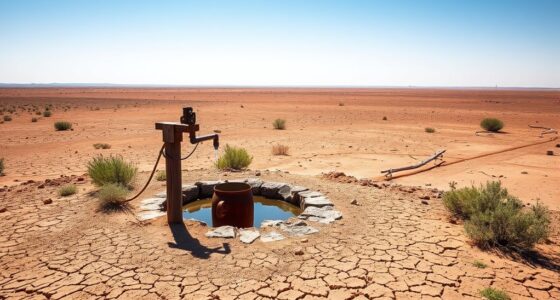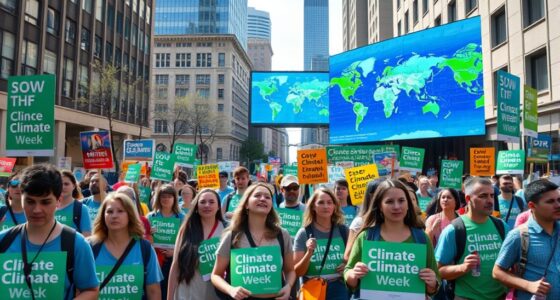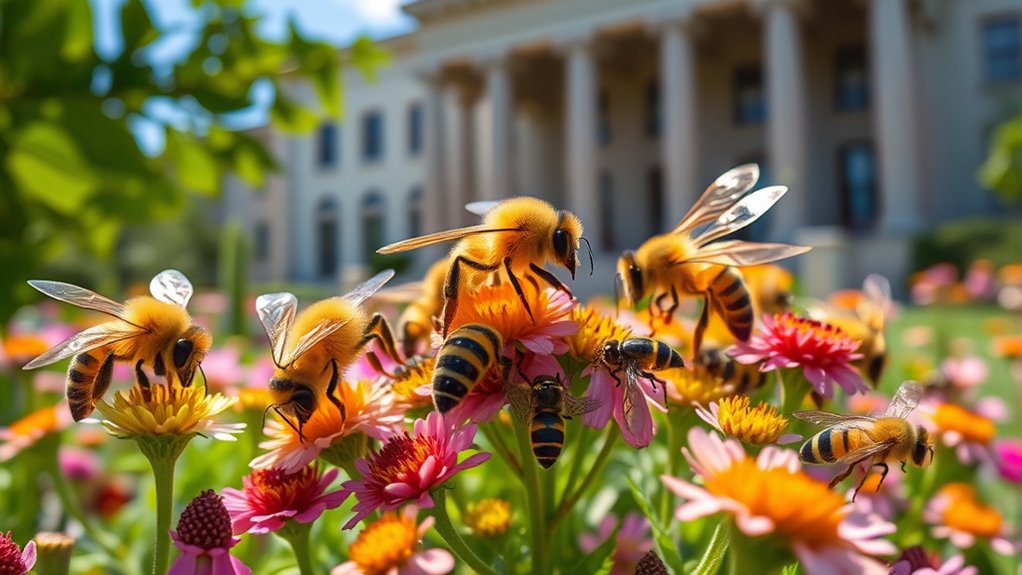

Protecting pollinators through policy involves supporting practices like integrated pest management, habitat restoration, and community involvement. These policies reduce harmful pesticide use, promote native flowering plants, and create safe habitats for pollinators to thrive. By advocating for legislation and sustainable agriculture, you can help guarantee healthier ecosystems and food security. Continued efforts in policy can make a real difference, and you’ll discover more ways to contribute when you explore further.
Get ready for Prime Big Deal Days — try Prime free
Exclusive member deals on October 6–7, plus fast free delivery. Cancel anytime.
As an affiliate, we earn on qualifying purchases.
Key Takeaways
- Implement policies that promote Integrated Pest Management to minimize harmful pesticide use affecting pollinators.
- Enact habitat restoration policies encouraging planting native flowering plants and conserving natural habitats.
- Provide incentives for farmers and landowners adopting pollinator-friendly agricultural and urban practices.
- Support community programs and legislation that raise awareness and protect pollinator habitats.
- Enforce regulations that reduce chemical exposure and promote sustainable land management for pollinator health.

Pollinators like bees, butterflies, and other insects play a critical role in our ecosystems and food supply, yet their populations are declining at an alarming rate. This decline threatens the stability of natural habitats and the availability of many crops we rely on daily. As someone concerned about protecting these essential creatures, you can support policies that promote integrated pest management and habitat restoration. These strategies are essential in creating a safer environment for pollinators and ensuring their survival.
Integrated pest management (IPM) offers an effective way to reduce the use of harmful pesticides that can harm pollinators. By promoting policies that encourage IPM, you help shift agricultural practices toward more sustainable methods. Instead of blanket pesticide applications, IPM focuses on targeted control, using biological controls, crop rotation, and other techniques that minimize chemical exposure. When policymakers back these practices, farmers are more likely to adopt them, which directly benefits pollinator health. You can advocate for legislation that provides education and incentives for farmers to implement IPM, ensuring that pest control doesn’t come at the expense of pollinator populations.
Habitat restoration is another essential element in protecting pollinators. Policies that support planting native flowering plants, creating green corridors, and conserving natural habitats directly contribute to food sources and nesting sites for these insects. You can push for government and community initiatives that prioritize habitat restoration projects, especially in urban and agricultural areas where habitats have been destroyed or fragmented. Restoring healthy habitats not only supplies pollinators with the resources they need but also enhances biodiversity overall. When these policies are in place, you’re helping to rebuild the ecosystems that pollinators depend on, making them more resilient to environmental stresses. Additionally, research indicates that increasing flowering plant diversity within these habitats can significantly boost pollinator populations and health.
Supporting these policies also involves raising awareness about the importance of pollinator-friendly practices. Educating others about integrated pest management and habitat restoration encourages community involvement and fosters a collective effort. You can participate in or organize local planting drives, advocate for protected natural areas, and lobby for policies that prioritize pollinator health. Your voice matters in shaping legislation that balances agricultural needs with ecological preservation. When communities unite behind these initiatives, the cumulative impact greatly boosts pollinator populations and safeguards our food systems.
In essence, your support for policies endorsing integrated pest management and habitat restoration is essential. These strategies directly influence the health of pollinators by reducing harmful chemicals and increasing available habitats. By actively advocating for and participating in these policy initiatives, you help create a sustainable future where pollinators thrive, ensuring the resilience of ecosystems and food security for generations to come.
pollinator friendly native flowering plants
As an affiliate, we earn on qualifying purchases.
As an affiliate, we earn on qualifying purchases.
Frequently Asked Questions
How Do Pesticides Specifically Harm Pollinator Populations?
Pesticides harm pollinator populations by exposing them to pesticide toxicity, which can impair their navigation, feeding, and reproduction. When bees and other pollinators encounter these chemicals, their immune systems weaken, making them more vulnerable to diseases and parasites. This exposure contributes to pollinator decline, as fewer healthy pollinators are available to pollinate crops and wild plants. Reducing pesticide use and choosing safer options can help protect these essential creatures.
What Roles Do Native Plants Play in Pollinator Health?
Native plants are crucial for pollinator health, acting as their lifeline in a world overwhelmed by monocultures. By planting native species, you create essential habitat restoration and native plantings that provide abundant nectar and pollen year-round. These plants support pollinators’ survival, helping them thrive amidst environmental threats. Your efforts in fostering native plantings can truly turn landscapes into thriving pollinator sanctuaries, safeguarding their future and ours.
How Can Individuals Contribute to Pollinator Protection?
You can contribute to pollinator protection by engaging your community in habitat restoration projects and spreading awareness about native plants. Plant bee-friendly flowers, avoid pesticides, and create pollinator-friendly spaces in your yard or neighborhood. Join local initiatives or organize events that promote habitat restoration. Your active participation helps build healthier ecosystems, supports native pollinators, and encourages others to get involved, making a tangible difference in pollinator conservation efforts.
Are There Successful International Policies for Pollinator Conservation?
Yes, there are successful international policies for pollinator conservation. You can support initiatives like Pollinator legislation and international treaties that promote habitat preservation and pesticide regulation. These policies foster collaboration among countries, helping protect pollinators globally. By staying informed and advocating for such policies, you contribute to their success. Your involvement helps guarantee that governments prioritize pollinator health, making a meaningful difference in conserving these essential species worldwide.
What Economic Benefits Do Healthy Pollinator Populations Provide?
Healthy pollinator populations boost your economy by supporting biodiversity preservation, which enhances crop yields and food security. Economic incentives encourage farmers and landowners to protect pollinators, leading to more sustainable practices. By maintaining diverse ecosystems, you guarantee pollinators thrive, which benefits agriculture, reduces costs, and promotes long-term environmental health. Protecting pollinators through effective policies ultimately strengthens your community’s resilience and economic stability.
Conclusion
By supporting policies that protect pollinators, you become a gardener of the Earth’s delicate ecosystem. Think of pollinators as the tiny keys opening nature’s vibrant symphony; without them, the melody falters. Your actions help guarantee these vital creatures thrive, keeping the garden of life flourishing. Together, we can nurture this vital network, safeguarding pollinators so they continue to weave their magic, ensuring a resilient future for all who depend on nature’s pollinating touch.
NFL season / tailgating Picks
team gear
As an affiliate, we earn on qualifying purchases.