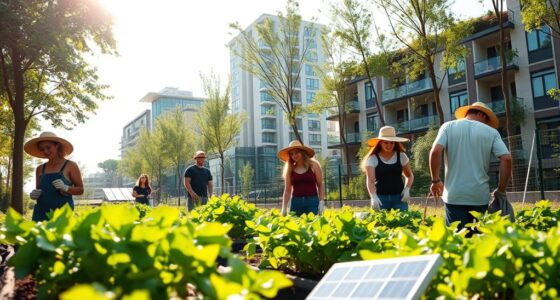
A just shift is a fair approach to moving from fossil fuels to renewable energy that puts communities and workers first. It involves social programs, retraining, and economic diversification to guarantee no one gets left behind. By engaging local residents and investing in sustainable infrastructure, you can support both environmental goals and community wellbeing. If you’re interested, you’ll discover how these strategies work together to create a more equitable and green future.

Get garden gear delivered free with Prime
- Fast, free delivery on millions of items
- Prime Video, Amazon Music and more included
- Member-only deals all year
Key Takeaways
- A just transition ensures no community is left behind during the shift to renewable energy.
- It involves community engagement, stakeholder involvement, and tailored policies to address local needs.
- Focuses on supporting affected workers through retraining, economic diversification, and social programs.
- Promotes equitable distribution of benefits and investments in renewable infrastructure for local growth.
- Builds trust and transparency through honest communication and inclusive decision-making processes.

Have you ever wondered how we can shift to a greener economy without leaving behind workers and communities reliant on fossil fuels? This is where the concept of a just transition comes into play. It’s about making sure that as we move toward renewable energy sources, no one gets left behind or faces economic hardship. Moving to renewable energy isn’t just about installing solar panels or wind turbines; it’s about creating a detailed plan that considers the social and economic impacts on communities dependent on fossil fuel industries. A just transition aims to support these communities through job retraining, economic diversification, and social programs, ensuring that the shift benefits everyone, not just the environment.
A just transition ensures no community is left behind as we shift to renewable energy.
Community engagement is critical in this process. You need to involve local residents, workers, and stakeholders in decision-making to understand their concerns, needs, and aspirations. When communities have a voice in shaping the transition, it becomes more effective and equitable. This involvement helps build trust and fosters collaboration, making it easier to implement new projects and policies. For example, by consulting workers in coal mines or oil fields, you can develop tailored retraining programs that equip them with skills for jobs in renewable energy sectors like solar installation, wind maintenance, or energy efficiency. This approach not only preserves livelihoods but also encourages community ownership of the transition.
Investing in renewable energy infrastructure is a key part of this process. It creates new opportunities for economic growth and sustainable development. But it’s essential that these investments are paired with community engagement strategies that ensure local populations benefit directly. When residents participate in planning and decision-making, they’re more likely to support new projects, which accelerates the transition and reduces resistance. Additionally, fostering partnerships among governments, businesses, and community organizations can provide the necessary resources and expertise to facilitate a smooth and inclusive shift.
A just transition isn’t a one-size-fits-all solution; it requires tailored approaches that respect local contexts. You need policies that prioritize social equity, environmental sustainability, and economic resilience. This means investing in education and training programs, creating new job opportunities, and ensuring fair distribution of benefits. When communities are actively involved and supported through the transition, it becomes a shared journey toward a cleaner, greener future that uplifts everyone. Ultimately, by blending renewable energy initiatives with genuine community engagement, we can build a more equitable and sustainable economy for generations to come. Additionally, understanding the importance of affiliate disclosures can help ensure transparency and trust in the initiatives and resources supporting this transition.
As an affiliate, we earn on qualifying purchases.
Frequently Asked Questions
How Is a Just Transition Funded?
You fund a just shift through a mix of green investments, government grants, and private sector support. These funds often come from policies aimed at promoting sustainable growth. Community involvement is key, so you guarantee local voices guide funding decisions. By prioritizing green investments, you create jobs and support affected communities, making sure the transition benefits everyone while aligning economic growth with environmental sustainability.
Which Industries Are Most Affected by a Just Transition?
You’ll find that industries like fossil fuels are most affected by a just shift, as they shift toward renewable energy sources. This change impacts coal, oil, and natural gas sectors, requiring them to adapt or reinvent themselves. You might see job losses in traditional fossil fuel industries, but new opportunities arise in renewable energy, making the transition both a challenge and a chance for growth and sustainability.
How Do Workers Benefit From a Just Transition?
Imagine you’re planting a tree that’s destined to grow stronger with each season. A just shift helps you, worker, by providing retraining opportunities, so your skills flourish in new industries. It also boosts community resilience, ensuring everyone benefits from sustainable growth. You gain job security and a pathway to a brighter future, turning challenges into opportunities, much like tending a tree that thrives and sustains everyone around it.
What Policies Support a Successful Just Transition?
You can support a successful just shift through policies that prioritize worker retraining programs and foster community engagement. These policies guarantee workers gain new skills for emerging industries, reducing job loss impact. By involving communities in decision-making, you create tailored solutions that address local needs. Investing in education, job placement services, and local development initiatives helps foster a smooth transition, benefiting workers, communities, and the environment alike.
How Long Does a Just Transition Typically Take?
A just shift usually takes several years, depending on the scope and community engagement efforts. You’ll face training challenges, as workers need new skills, and it’s essential to involve communities early on. The process can be quicker with strong policies and cooperation, but patience is key. Your active involvement in planning and addressing training challenges will help make certain a smoother, more equitable transition for everyone involved.
Conclusion
A just transition isn’t just about moving to cleaner energy; it’s about ensuring no one gets left behind. By supporting workers and communities through the shift, we create a fairer, more sustainable future. Can we afford to ignore the human side of this change? Embracing a just transition means taking responsibility for the social impacts of our environmental goals. After all, true progress respects both people and the planet.
Halloween Picks
halloween
As an affiliate, we earn on qualifying purchases.