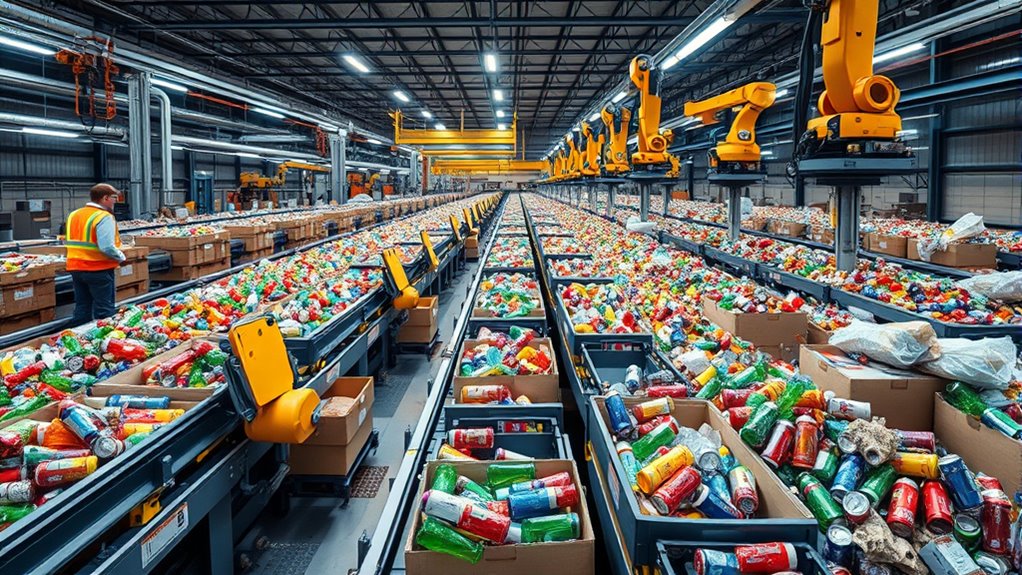

Extended Producer Responsibility makes manufacturers responsible for their products’ end-of-life management. You’ll see them handling waste, designing recyclable and durable items, and implementing take-back programs, often at no extra cost to you. These policies aim to reduce landfill waste, promote eco-friendly packaging, and encourage sustainable manufacturing. By shifting waste responsibility, manufacturers are motivated to create environmentally conscious products. To discover how these changes can impact you and the environment, keep exploring this important topic.
Key Takeaways
- EPR shifts waste management duties from governments to manufacturers, incentivizing sustainable product design.
- Manufacturers are responsible for proper disposal, recycling, and end-of-life handling of their products.
- Recycling policies set standards for waste collection, promote recycling, and require take-back programs.
- Companies often implement free take-back initiatives and collaborate with recyclers to ensure proper disposal.
- Incorporating sustainable design under EPR enhances recyclability, reduces environmental impact, and supports waste reduction goals.

Have you ever wondered who’s responsible for managing the waste created by products after you’re done using them? It’s a good question, and one that’s increasingly important as waste piles up and environmental concerns grow. This is where extended producer responsibility (EPR) steps in. EPR shifts the burden of waste management from local governments to the manufacturers themselves. Instead of taxpayers covering cleanup costs, companies now have a direct role in ensuring their products are disposed of or recycled properly. This approach encourages manufacturers to design products with sustainability in mind, making them easier to recycle or dispose of responsibly.
Manufacturers’ responsibilities under EPR aren’t just about handling waste after the product’s life cycle ends; they also involve designing products that minimize environmental impact. This means using fewer hazardous materials, opting for recyclable components, and creating products that last longer. These responsibilities are often outlined in specific recycling policies that manufacturers must follow. Recycling policies set the standards for how companies must manage their waste, including collection, recycling, and disposal procedures. These policies can vary by region but generally aim to promote waste reduction, increase recycling rates, and reduce landfill reliance. Incorporating sustainable design practices can significantly improve a product’s recyclability and reduce environmental footprint.
As a consumer, you might not see all the behind-the-scenes work, but it’s these manufacturer responsibilities that shape the products you buy and how they’re disposed of. For example, a company might be required to take back used electronics or packaging for recycling, at no extra cost to you. They may have to establish take-back programs or partner with recycling facilities to ensure proper disposal. These policies also push manufacturers to innovate, creating more eco-friendly packaging or designing products that are easier to disassemble and recycle.
recyclable electronics take-back program
As an affiliate, we earn on qualifying purchases.
As an affiliate, we earn on qualifying purchases.
Frequently Asked Questions
How Do EPR Costs Affect Product Prices for Consumers?
EPR costs often lead to higher product prices for you because manufacturers transfer these costs to consumers through cost transfer. When producers face increased expenses from recycling or waste management, they typically include these costs in consumer pricing. As a result, you may pay more for products, but this also encourages more sustainable practices and better waste management, aligning your purchase decisions with environmental responsibility.
Which Industries Are Most Impacted by EPR Policies?
Ever wonder which industries bear the brunt of EPR policies? Electronics manufacturing and packaging industries are most impacted, as they must now manage waste and recycling responsibilities. These policies push companies to improve sustainability, but also increase costs. You’ll notice changes in product design, packaging, and disposal processes. Are you prepared for these shifts? EPR drives innovation but also challenges industries to adapt quickly to greener practices.
How Is Compliance With EPR Regulations Monitored?
You monitor compliance with EPR regulations by analyzing recycling data submitted by producers and retailers. Enforcement mechanisms, such as audits, penalties, and reporting requirements, help guarantee adherence. Regulatory agencies review recycling data regularly, identify discrepancies, and conduct inspections. When violations occur, authorities enforce penalties or corrective actions. This proactive approach keeps producers accountable, maintains fair competition, and promotes effective waste management, ultimately supporting the goals of EPR policies.
What Are Common Challenges Companies Face Implementing EPR?
You might struggle with implementing EPR due to limited recycling infrastructure, making proper waste management difficult. Engaging stakeholders can be challenging, as aligning interests and responsibilities takes effort. Additionally, companies often face costs and logistical hurdles in setting up recycling programs. You need to coordinate with regulators, suppliers, and consumers, which can be complex. Overcoming these challenges requires strategic planning, investing in infrastructure, and fostering strong stakeholder engagement to guarantee successful EPR implementation.
How Does EPR Contribute to Reducing Overall Waste?
Sure, because who doesn’t love a good guilt trip, EPR makes you responsible for your waste. By boosting recycling incentives, you’re encouraged to design products that are easier to recycle, reducing landfill overflow. Producer accountability pushes companies to minimize waste upfront, leading to smarter packaging and less trash. So, instead of piling up guilt, you’re actively helping cut waste and protect the planet—one responsible choice at a time.

Honeycomb Packing Paper 12" x 150ft with Rope & 20 Fragile Stickers|Shipping & Moving Supplies|Small Business Packaging Supplies|Eco Friendly Bubble Wrap Packing Boxes for Moving Certified FSC C204227
Certified FSC C204227 Eco Friendly Shipping Supplies: Say goodbye to large bubble wrap roll! Our honeycomb wrapping paper…
As an affiliate, we earn on qualifying purchases.
As an affiliate, we earn on qualifying purchases.
Conclusion
By now, you see how extended producer responsibility holds companies accountable for their products’ entire lifecycle. It encourages eco-friendly designs and reduces waste, benefiting everyone. But will consumers demand more accountability from brands? Ultimately, embracing EPR shifts the burden from waste management to producers, fostering a more sustainable future. So, aren’t we all responsible for making better choices and supporting policies that protect our environment?

Eco-Friendly Skincare, Natural Exfoliation, Cotton Bathroom Accessories, Sustainable soap Storage, Zero Waste Shower Products, Biodegradable soap Pouch
Crafted from natural cotton, our Soap Bags provide the ideal texture for cleansing and exfoliating skin, ensuring a…
As an affiliate, we earn on qualifying purchases.
As an affiliate, we earn on qualifying purchases.

Rubbermaid Commercial Products, Recycling Bin/Box, Stackable, 14 GAL, Blue, for Indoors/Outdoors/Garages/Homes/Commercial Facilities
PCR: Made of post-consumer recycled resin for commercial recycling use
As an affiliate, we earn on qualifying purchases.
As an affiliate, we earn on qualifying purchases.