
When installing an EV charging station, you’ll need permits from your local building or planning department, which involves submitting detailed electrical plans and station specifics. An inspection typically follows installation to make certain wiring, grounding, and mounting meet safety standards and local codes. If issues are found, you’ll need to address them before receiving approval. Following these steps, you ensure your station is safe and compliant—if you continue, you’ll learn more about the process and what to expect at each stage.
Key Takeaways
- Submit a permit application detailing station location, electrical needs, and plans to the local building department.
- Expect an approval process that confirms compliance with local codes before installation begins.
- Hire licensed electricians to ensure wiring and installation meet safety standards and manufacturer specifications.
- Schedule inspections after installation to verify proper wiring, grounding, and weatherproofing if outdoors.
- Address any issues identified during inspection promptly and obtain certification before using the station legally.

Installing an electric vehicle (EV) charging station at your property isn’t just about plugging in your car; it also involves obtaining the necessary permits and passing inspections to guarantee safety and code compliance. The installation process begins with understanding local regulations, which can vary depending on your city or county. Typically, you’ll need to submit an application to your local building or planning department, providing details about the station’s location, power requirements, and electrical system. Once approved, you’ll proceed with the installation, often hiring a licensed electrician who is familiar with EVSE (Electric Vehicle Supply Equipment) installation standards. They’ll ensure the wiring, circuit breaker, and outlet meet local electrical codes and manufacturer specifications.
Installing an EV charging station requires permits, inspections, and adherence to local electrical codes.
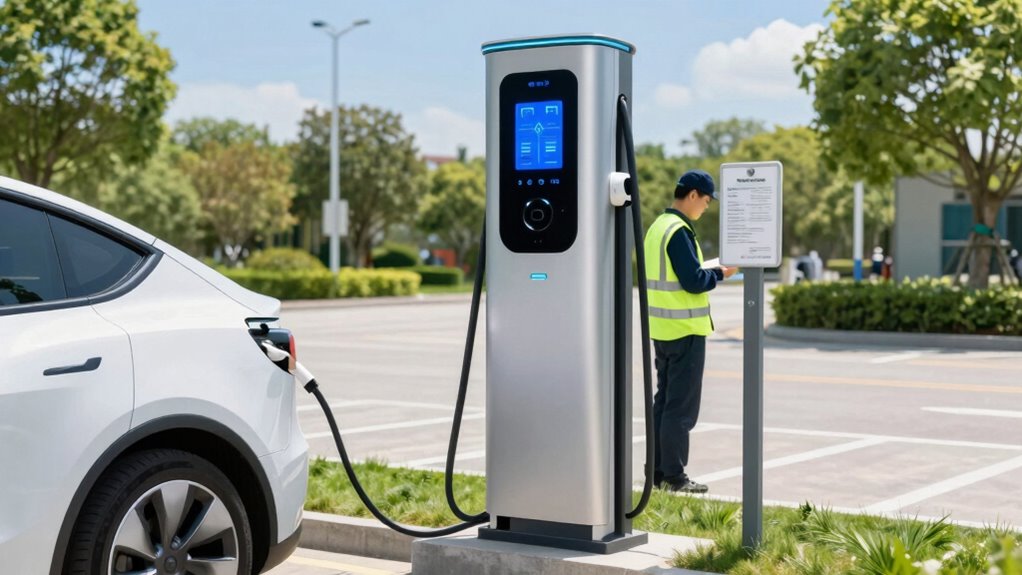
As you move through the installation process, it’s crucial to keep in mind the inspection requirements. Most jurisdictions will require an inspection before you can start using your EV charging station. The inspection aims to verify that the installation is safe, compliant with code, and properly grounded. Your electrician will typically coordinate with the local inspector to schedule a visit once the installation is complete. During this inspection, the official will examine the wiring, circuit protection, and connection points, ensuring everything adheres to the National Electrical Code (NEC) and any local amendments.
Expect the inspection to focus on several key areas. First, they’ll check that the electrical panel can support the additional load without overloading. Next, they’ll verify that the wiring is correctly installed, with proper grounding and conduit protection where necessary. The inspector will also ensure that the charging station is mounted securely and that the outlet or hardwired connection is properly sealed and weatherproof if installed outdoors. If the station is integrated into a new or existing circuit, the inspector will confirm that the circuit breaker matches the station’s power requirements. Additionally, understanding the field‑of‑view and proper placement of the station can facilitate easier inspections and safer operation.
If any issues are flagged during the inspection, you’ll need to address them promptly. This might mean adjusting wiring, adding protective devices, or fixing grounding issues. Once all inspection requirements are met and approved, you’ll receive a certificate or sign-off that confirms your station is compliant. Only then can you legally use your EV charging station.
Taking the time to follow the proper installation process and meet inspection requirements is vital to ensure your EV charging station is safe, reliable, and compliant with all relevant codes. It might seem like a hassle, but it’s a critical step to protect your property, your vehicle, and your safety.
Frequently Asked Questions
How Long Does the Permit Approval Process Typically Take?
The permit approval process usually takes between one to four weeks, depending on your local jurisdiction. You should expect the permit timeline to be faster if your application is complete and meets all regulations. During this period, authorities review your plans, inspect the site if needed, and approve your permit. To speed things up, guarantee you submit all required documents accurately and promptly, reducing delays in the approval process.
Are There Specific Requirements for Different Types of EV Chargers?
You might find it surprising, but different EV chargers do have specific requirements. For example, Level 2 chargers need certain charger specifications and dedicated circuits, while DC fast chargers require more robust installation procedures. Before you start, check local codes and manufacturer guidelines to guarantee your setup meets all requirements. This way, you streamline the approval process and avoid surprises during installation, making your EV charging experience smoother.
What Are the Common Reasons for Permit Application Delays?
Permit application delays often happen because of permit application errors, like incomplete or incorrect paperwork, which slow down approval processes. Contractor delays can also cause issues, especially if inspections or work are behind schedule. To avoid these problems, double-check your application details and communicate clearly with your contractor to guarantee timely submissions and inspections. Staying proactive helps keep your EV charging project on track and reduces unnecessary delays.
Do Inspections Incur Additional Costs or Fees?
Inspections for your EV charging station typically do incur additional costs, which are part of the overall fee structure. You’ll want to check with your local permitting office to understand the specific inspection costs, as these can vary by location. The fees cover the inspector’s time and any necessary testing or certification. Expect to pay these fees separately from your permit application, so budget accordingly for a smooth approval process.
Can Permits Be Expedited in Urgent Situations?
Yes, permits can be expedited in urgent situations through emergency permits. If you have a permit urgency, contact your local permitting authority and explain your situation. They often prioritize emergency permits to help you meet urgent needs quickly. Be prepared to provide detailed reasons for the urgency and any supporting documentation. This process aims to accelerate approvals and inspections, so you can proceed with your EV charging project without unnecessary delays.
Conclusion
Finding EV charging permits and inspections might seem overwhelming, but understanding the process makes it manageable. You’ll guarantee your installation is safe, compliant, and ready to power your electric vehicle. Staying proactive and informed helps avoid delays and surprises. So, aren’t you glad you’re taking the right steps to support clean energy and future-proof your home? With proper planning, you’ll enjoy seamless charging and peace of mind knowing everything’s up to code.