
The EU’s Green Deal aims to boost renewable energy, which may cause your energy bills to rise temporarily as infrastructure is built and fossil fuels are phased out. However, in the long run, using cleaner energy sources and innovative tech should lower costs and make energy more stable. Better managing these changes will determine how much your bills change. If you keep exploring, you’ll discover more about how these shifts could benefit you over time.
Key Takeaways
- In the short term, energy bills may rise due to investments in renewable infrastructure and phasing out fossil fuel plants.
- Carbon pricing mechanisms increase costs for fossil fuels, potentially passing higher prices to consumers.
- Long-term, renewable investments aim to reduce energy costs and enhance price stability.
- Innovation in energy tech improves grid efficiency and reliability, supporting more affordable energy.
- The overall goal is to transition to a sustainable, stable energy market that benefits consumers over time.
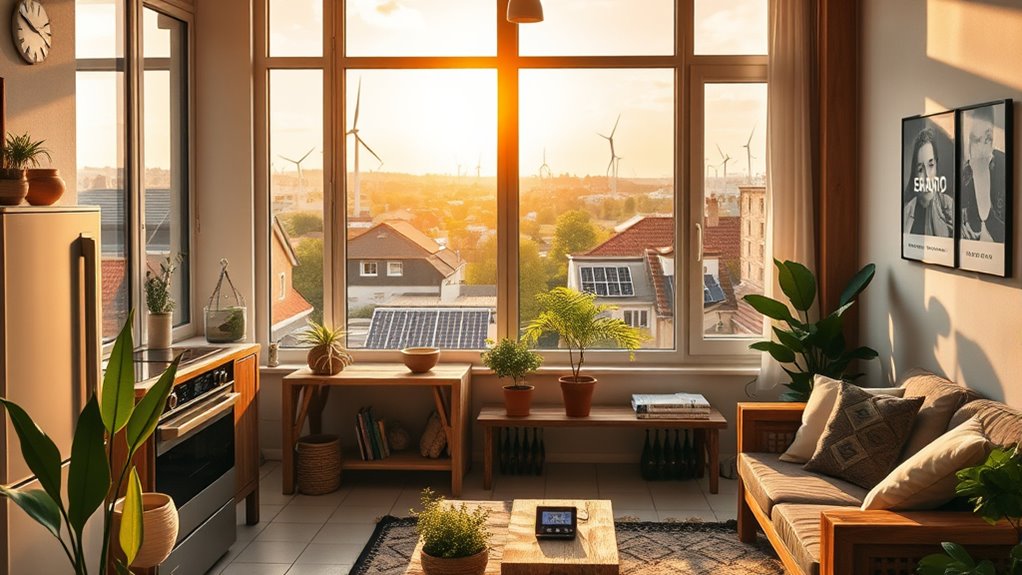
Have you ever wondered how the EU Green Deal impacts your energy bills? It’s a good question, especially since the initiative aims to make Europe more sustainable and reduce carbon emissions. One of the main ways it influences your costs is through policies that encourage renewable investments. By prioritizing renewable energy sources like wind, solar, and hydro, the EU plans to shift away from fossil fuels. This progression means that, in the short term, you might see some increases in energy prices as new infrastructure is built and old facilities are phased out. However, in the long run, investing in renewables aims to lower the costs of energy production. These investments help create a more competitive market and drive innovation, which can eventually lead to more affordable energy for consumers.
Additionally, vertical storage solutions and other innovative technologies are being promoted to enhance energy efficiency and stability within the grid. Another key element affecting your bills is carbon pricing. The EU has introduced mechanisms such as carbon taxes and cap-and-trade systems to put a price on emissions. The idea is simple: when companies are required to pay for their carbon footprint, they’re incentivized to reduce emissions and switch to cleaner energy sources. This can lead to higher costs for fossil fuel-based energy, which might trickle down to your bills. But the goal is to push the entire energy sector toward cleaner options, making renewables more economically attractive. As a result, the increased costs for carbon-intensive energy are partly offset by the growth of renewable energy sources that don’t produce emissions and aren’t subject to carbon pricing.
The impact on your energy bills also depends on how quickly these policies are implemented and how effectively they’re managed. If renewable investments accelerate and carbon pricing is set at a level that encourages significant change, you could see a shift in energy prices. While some costs might rise initially, the long-term benefits include a more sustainable energy system with less reliance on imported fossil fuels and more stability in energy prices.
Frequently Asked Questions
Will the Green Deal Create New Job Opportunities in Energy Sectors?
You’re likely to see new job opportunities emerge in the renewable sector due to green job creation initiatives. The Green Deal aims to boost the renewable sector’s growth, leading to more positions in clean energy, technology, and infrastructure. As the EU invests in sustainable projects, you’ll find yourself in a thriving job market focused on green energy solutions, helping to shape a more sustainable future and supporting economic growth.
How Will the Green Deal Impact Energy Prices in the Short Term?
In the short term, you might notice some fluctuations in your energy prices due to changes in the energy market. The Green Deal could cause price fluctuations as investments shift toward renewable sources and infrastructure upgrades. While these adjustments may lead to temporary increases, the long-term goal is to stabilize and potentially lower your energy costs. Stay informed about market trends to better understand how these price fluctuations could affect you.
Are There Any Government Subsidies Available for Renewable Energy Upgrades?
You might think subsidies aren’t worth the effort, but many governments offer solar incentives and tax credits that can substantially cut your costs. These programs make renewable energy upgrades more affordable, helping you save money long-term. Don’t overlook these opportunities—by taking advantage of available subsidies, you can reduce your upfront expenses and contribute to a greener future while lowering your energy bills.
Will Low-Income Households Benefit From the Green Deal Initiatives?
You might wonder if low-income households will benefit from Green Deal initiatives. These programs aim to improve energy affordability by funding housing improvements, making homes more energy-efficient. If you’re in a low-income bracket, you could see reduced energy costs and better heating or cooling. The goal is to guarantee everyone benefits from cleaner energy and affordable bills, making housing improvements accessible to those who need them most.
How Can Consumers Track the Progress of Green Deal Implementation?
You can stay informed about green deal progress by regularly checking official government websites and renewable tracking platforms, where they post the latest policy updates. Subscribing to newsletters or alerts guarantees you receive timely information. Attending public consultations and following reputable news sources also helps you understand how policies are evolving. This way, you stay aware of how your energy sector is transforming, and how it might impact your bills and environment.
Conclusion
As the EU Green Deal unfolds, your energy bills are set to change—like a storm shaping the landscape, it might be intimidating now but promises a greener future. Remember, every effort you make today plants seeds for tomorrow’s cleaner, sustainable world. So, stay informed and adaptable, because in the end, your choices are the wind that can steer this transformation. Will you harness the storm or let it pass you by?