

Circular economy laws are reshaping construction by encouraging you to use recycled and renewable materials, reducing reliance on finite resources. They enforce responsible waste management, promoting recycling and reuse throughout projects. These rules push industry standards toward sustainability, driving innovation and investment in eco-friendly practices. As a result, construction becomes more circular, efficient, and environmentally responsible. To fully understand how these laws could transform your industry, continue exploring their impact and future potential.
Key Takeaways
- Laws incentivize the use of recycled and renewable materials, reducing reliance on finite resources in construction.
- Strict waste management regulations promote recycling, reuse, and responsible handling of construction debris.
- Policies encourage industry-wide adoption of sustainable practices, transforming norms toward environmental responsibility.
- Governments fund research and innovation, accelerating the development of eco-friendly materials and waste diversion technologies.
- Legislation drives the shift toward a circular economy, making construction more sustainable, resilient, and aligned with environmental goals.
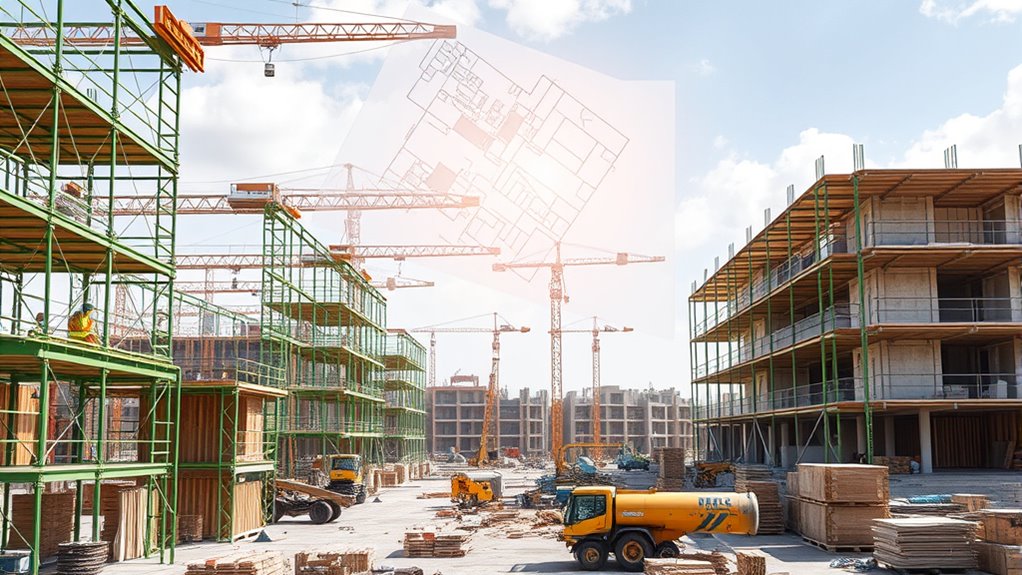
Have you ever wondered how laws can promote sustainability in construction? It’s a compelling question, especially as the industry faces mounting pressure to reduce environmental impacts. The answer often lies in innovative policies that encourage the use of sustainable materials and effective waste management strategies. When laws prioritize these aspects, they steer construction practices toward more eco-friendly options that benefit both the environment and the economy. For example, regulations can incentivize the use of recycled or renewable materials, reducing reliance on finite resources and cutting down on waste. This not only helps conserve natural resources but also supports the development of more circular construction processes, where materials are reused and repurposed instead of discarded.
By implementing strict requirements for waste management strategies, laws ensure that construction debris is handled responsibly. Instead of ending up in landfills, waste materials are sorted, recycled, or repurposed to the greatest extent possible. Such regulations push companies to adopt innovative waste diversion techniques and to design buildings with end-of-life reuse in mind. This shift markedly reduces the environmental footprint of construction projects and promotes a closed-loop system where materials stay in use longer. When waste is minimized through these strategies, it directly contributes to sustainability goals, helping cities and communities meet environmental standards.
Furthermore, laws that promote sustainable materials and waste management can stimulate market demand for eco-conscious products. Contractors and developers are more likely to invest in green materials when regulations create a level playing field. This can lead to a broader availability of sustainable options, making it easier for everyone involved in construction to choose environmentally responsible solutions. Over time, these policies help reshape industry norms, establishing sustainability as a core principle rather than an optional add-on.
In addition, legal frameworks can support innovation by funding research into new sustainable materials and waste management technologies. When governments or regulatory bodies set clear targets and standards, they encourage companies to develop creative solutions that meet these benchmarks. This proactive approach accelerates the transition toward a circular economy in construction, where materials are continuously reused, and waste is minimized from the initial design phase through to demolition. Moreover, integrating raw food principles into construction—such as using naturally sourced and minimally processed materials—can further enhance sustainability and reduce environmental impact.
Ultimately, laws that focus on sustainable materials and waste management strategies hold the power to transform construction into a more sustainable, efficient, and resilient industry. They serve as catalysts for change, guiding practices toward a future where buildings are not just structures but integral parts of a circular economy that benefits everyone.
Frequently Asked Questions
How Will Circular Economy Laws Impact Construction Project Costs?
You’ll find construction project costs may initially rise due to new requirements for sustainable financing and materials. However, embracing circular economy laws can improve material lifecycle management, reducing waste and long-term expenses. These laws encourage reuse and recycling, which can lower material costs over time. While upfront investments might be higher, the overall savings and environmental benefits make projects more efficient and sustainable in the long run.
What Are the Biggest Challenges in Implementing These Laws?
Implementing circular economy laws faces significant challenges, such as regulatory hurdles that slow down adoption and create confusion. You’ll also encounter industry resistance, as many stakeholders hesitate to change traditional practices. Overcoming these obstacles requires clear guidelines, education, and collaboration. If you stay proactive and adaptable, you can help navigate these challenges, making the shift smoother and ensuring sustainable construction practices become a standard part of your projects.
How Do Circular Laws Influence Construction Material Sourcing?
Like a well-tuned orchestra, circular laws harmonize construction material sourcing by emphasizing material recovery and sourcing transparency. You’re prompted to prioritize recycled and reclaimed materials, reducing waste and environmental impact. These laws encourage you to trace supply chains, ensuring ethical and sustainable practices. As a result, you’ll foster a more resilient, eco-friendly construction process, turning the industry into a symphony of responsible resource use and innovative material management.
Will Existing Buildings Need to Be Retrofitted Under New Laws?
You’ll likely need to consider building retrofits under new laws, especially to improve energy efficiency and sustainability. These retrofits focus on material reuse, allowing you to upgrade existing structures instead of demolishing and rebuilding. Laws promoting circular economy principles encourage you to prioritize material reuse during retrofits, reducing waste and conserving resources. Staying ahead means embracing building retrofits now, aligning with future regulations and sustainability goals.
How Do These Laws Promote Innovation in Construction Practices?
Did you know that 70% of construction waste can be recycled? These laws promote innovation by encouraging sustainable design and modular construction, making projects more efficient and eco-friendly. You’ll find new materials and techniques emerging that reduce waste and environmental impact, pushing builders to rethink traditional methods. As a result, you can deliver smarter, greener structures faster, setting new standards for a more sustainable future in construction.
Conclusion
As these circular economy laws take hold, imagine a future where construction sites hum with efficiency, materials endlessly reused, and waste no longer dominates. You might see buildings that breathe and adapt, their components designed for renewal. The transformation isn’t just possible—it’s on the horizon. Will these laws be the catalyst for that change? The answer could redefine how we build forever, if you’re ready to embrace the shift. The future of construction is waiting to be shaped.