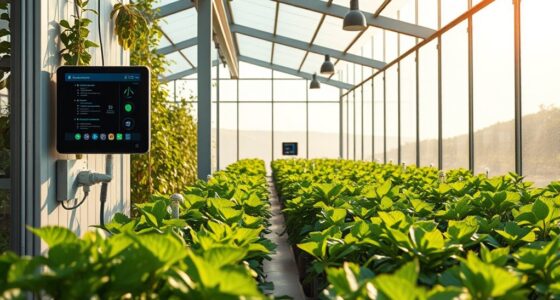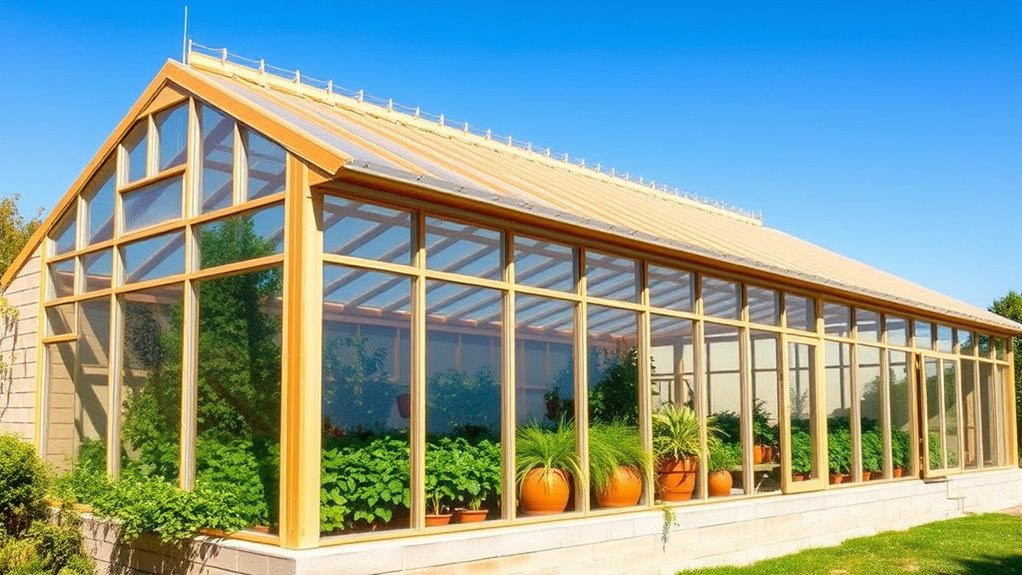

Passive solar greenhouse design uses your building’s layout, glazing, and thermal mass to naturally heat and light the space. You should focus on positioning windows south-facing to maximize sunlight, while insulation and thermal mass materials like concrete or water help store heat for cooler times. Overhangs or shading prevent overheating during summer. By balancing glazing, thermal mass, and layout, you create an energy-efficient environment. Keep exploring to discover how these principles work together for ideal greenhouse performance.

Get garden gear delivered free — and shop member deals
- Fast, free delivery on millions of items
- Access to Prime Big Deal Days deals on October 6–7
- Prime Video, Amazon Music and more included
Key Takeaways
- Use south-facing windows and glazing to maximize sunlight entry and heat absorption.
- Incorporate thermal mass materials like concrete or water to store and release heat gradually.
- Select glazing options such as double-pane glass or polycarbonate to balance light transmission and insulation.
- Design overhangs or shading devices to prevent overheating during summer months.
- Optimize layout for natural airflow and sun exposure to enhance passive solar heating efficiency.
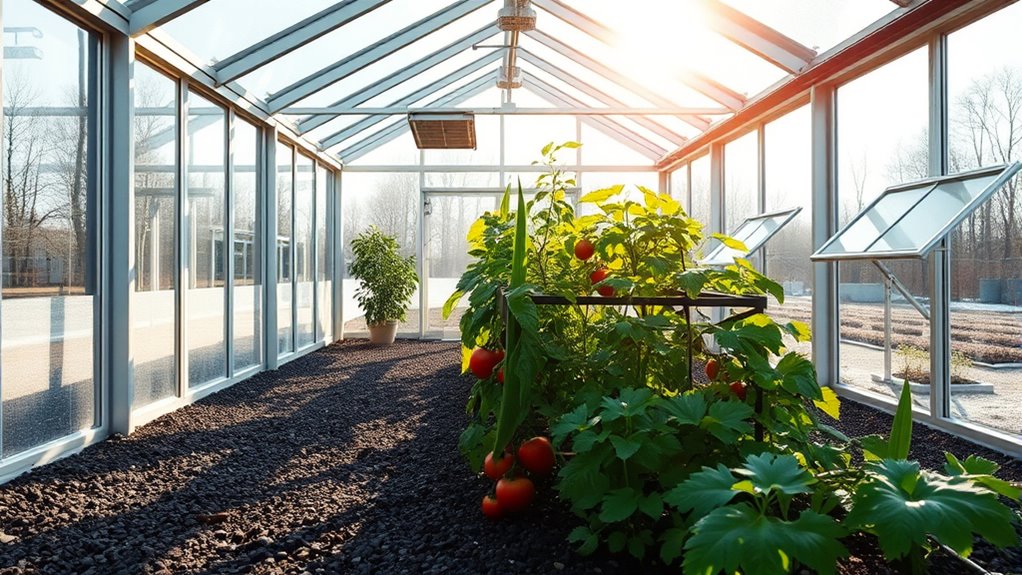
Passive solar greenhouse design harnesses the sun’s energy to naturally heat and light your greenhouse, reducing reliance on external power sources. To make this system effective, you need to understand how to maximize heat retention and distribution. One key element is thermal mass. Thermal mass refers to materials that absorb, store, and release heat slowly, helping to regulate the interior temperature throughout the day and night. When you place materials like concrete, brick, or water containers inside your greenhouse, they absorb warmth during sunny hours and gradually release it when the sun sets. This process stabilizes temperature fluctuations, creating a more consistent environment for your plants. Incorporating passive solar principles can further optimize energy efficiency by designing your greenhouse layout to maximize sun exposure and natural airflow.
Choosing the right glazing options is equally important. Glazing refers to the transparent or translucent materials that cover your greenhouse, allowing sunlight to enter. Different glazing materials—such as glass, polycarbonate, or polyethylene—offer varying levels of insulation, durability, and light transmission. For passive solar design, you want glazing that maximizes sunlight while minimizing heat loss. Double or triple-pane glass, for example, provides superior insulation compared to single-pane options. Polycarbonate panels are lightweight and durable, offering good insulation and UV protection, but they might slightly reduce the amount of sunlight reaching your plants. Your goal is to select glazing that balances high light transmission with good thermal performance, ensuring the greenhouse heats up efficiently without excessive heat loss during colder months.
Integrating thermal mass with your glazing choices can markedly improve your greenhouse’s energy efficiency. If you opt for large, south-facing windows with high-transparency glazing, you allow maximum sunlight to enter and warm up the thermal mass inside. During the day, this heat is stored in the thermal mass and then slowly released, maintaining a stable temperature overnight. Additionally, proper shading or overhangs can help control excessive heat during summer days, preventing overheating while still allowing sunlight in during the winter.
passive solar greenhouse glazing panels
As an affiliate, we earn on qualifying purchases.
As an affiliate, we earn on qualifying purchases.
Frequently Asked Questions
How Much Does a Passive Solar Greenhouse Typically Cost to Build?
A passive solar greenhouse typically costs between $1,000 and $10,000, depending on size, materials, and complexity. To manage costs, use accurate cost estimation and budgeting strategies, focusing on essential features first. You can save money by repurposing materials or building in phases. Keep in mind that investing in quality insulation and glazing can reduce long-term heating costs, making your greenhouse more energy-efficient and cost-effective over time.
What Materials Are Best for Maximizing Thermal Mass?
Did you know that choosing the right thermal mass options can boost your greenhouse’s efficiency by 30%? To maximize thermal mass, opt for materials like concrete, brick, or water, which have high thermal storage capacity. These materials perform well by absorbing heat during the day and releasing it at night. Focus on material performance and placement to create a stable, warm environment that extends your growing season effectively.
How Do I Prevent Overheating in Summer?
To prevent overheating in summer, you should implement effective ventilation strategies like ridge vents, exhaust fans, or side vents to improve airflow. Additionally, use shading techniques such as retractable shades, planting deciduous trees nearby, or applying shading films on windows to block excess sunlight. These measures help regulate temperature, maintain a comfortable environment, and protect your plants from heat stress during hotter months.
Can Passive Solar Design Work in Cold, Cloudy Climates?
You can definitely make passive solar design work in cold, cloudy climates by thinking outside the box. Incorporate solar panel integration to maximize available sunlight and use automated ventilation to regulate temperature fluctuations. While clouds block some sunlight, strategic insulation and thermal mass help retain heat. With careful planning, you turn challenges into opportunities, proving that where there’s a will, there’s a way to create a cozy, energy-efficient greenhouse even in less sunny regions.
What Maintenance Is Required for a Passive Solar Greenhouse?
You’ll need to regularly check your passive solar greenhouse’s ventilation requirements to prevent overheating and humidity issues. Keep vents clean and functional, especially before seasonal changes. Implement pest control strategies like sealing gaps and inspecting plants often to prevent infestations. Additionally, monitor thermal mass and insulation to sustain consistent temperatures, and clear debris to ensure proper airflow. Routine maintenance keeps your greenhouse efficient, healthy, and productive year-round.
Conclusion
Now that you’ve uncovered the basics of passive solar greenhouse design, you’re on the edge of transforming your space. Imagine the possibilities as you harness the sun’s natural power—what unexpected harvests or vibrant blooms could await? The secrets to efficient warmth and sustainability are within your reach. Are you ready to take the next step and open a world of endless gardening potential? The future of your greenhouse adventure starts now—are you prepared to make it happen?
Fall yard work Picks
leaf blowers
As an affiliate, we earn on qualifying purchases.