
To sterilize water in recirculating systems, you can use UV, ozone, or heat, depending on your needs. UV treatment quickly destroys microorganisms without chemicals, but requires proper flow and maintenance. Ozone offers strong oxidation, breaking down contaminants and organic buildup, though it needs careful control. Applying heat can also sterilize water, especially for smaller systems. Understanding these options helps you choose the best method—keep exploring for more tips.
Key Takeaways
- UV sterilization uses UV-C light to inactivate microorganisms quickly without chemical residues.
- Ozone treatment oxidizes pathogens and organics, offering ongoing sterilization and improved water clarity.
- Heat sterilization effectively kills microbes but may be less practical for continuous recirculation systems.
- Combining UV, ozone, and heat can enhance overall water sterilization efficiency.
- Proper system maintenance, flow rate control, and monitoring are essential for optimal sterilization performance.
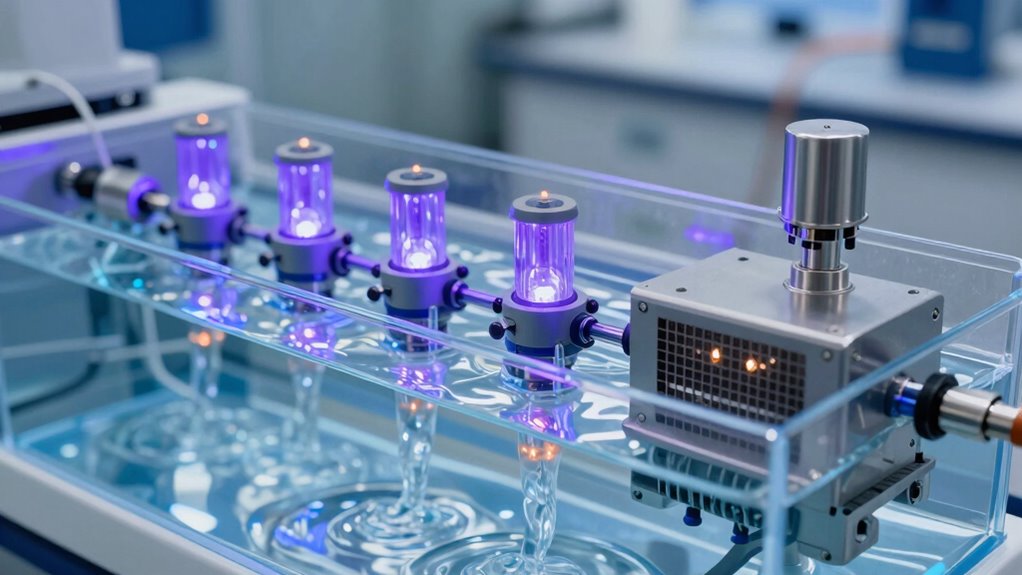
Maintaining clean and safe water in recirculating systems is vital to prevent contamination and guarantee ideal performance. One effective method to achieve this is through water sterilization techniques like UV sterilization and ozone treatment. These approaches are widely used because they eliminate pathogens without introducing harmful chemicals into the system.
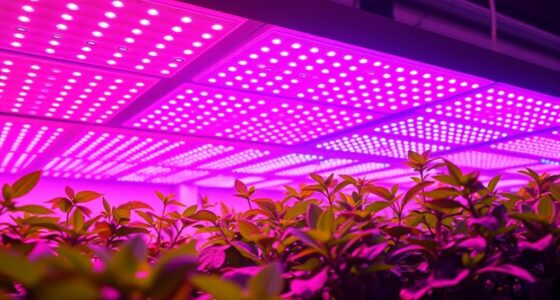
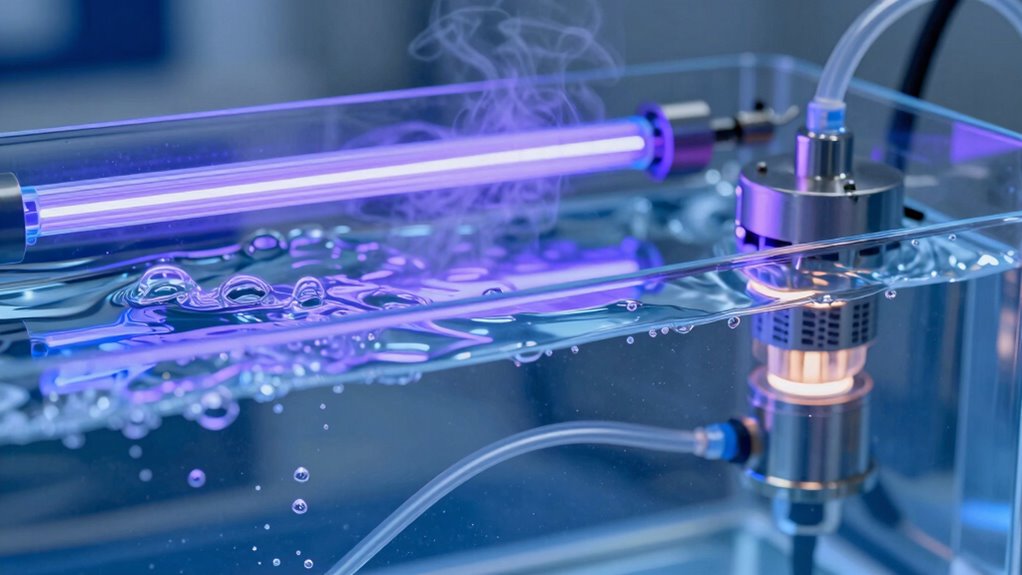
UV sterilization works by exposing water to ultraviolet light, specifically UV-C rays, which damage the DNA of bacteria, viruses, and other microorganisms. When water passes through a UV sterilizer, the microorganisms are rendered inactive, ensuring the water remains free of harmful pathogens. This method is quick, efficient, and leaves no chemical residues, making it ideal for systems that require high purity, such as aquaculture or sensitive industrial processes. To maximize effectiveness, it’s vital to ensure the water flows at the correct rate and that the UV lamps are regularly maintained and replaced. Otherwise, reduced UV exposure can compromise sterilization, allowing microorganisms to survive and proliferate.
UV sterilization uses UV-C light to deactivate microorganisms, ensuring high purity without chemical residues.
Ozone treatment offers another powerful sterilization approach. Ozone, a molecule composed of three oxygen atoms, is a strong oxidizer that destroys bacteria, viruses, and organic contaminants. When ozone is introduced into recirculating water, it reacts rapidly, breaking down cell walls and neutralizing pathogens. Ozone treatment not only disinfects but also oxidizes organic matter, improving water clarity and reducing fouling. It’s especially useful in systems where organic buildup is a concern or where chemical use is restricted. However, ozone must be carefully controlled because excess ozone can be harmful, and residual ozone needs to be properly managed before water re-enters the system. Additionally, understanding the dynamics of ozone dissolution is crucial for effective sterilization.
Both UV sterilization and ozone treatment are effective, but they serve slightly different purposes and can even be used together for comprehensive water purification. UV provides immediate disinfection, while ozone offers ongoing oxidation and sterilization benefits. When selecting a sterilization method, consider factors like system size, water flow rate, and the types of contaminants present. Regular monitoring and maintenance are critical to guarantee these systems operate at peak efficiency.

UV Water Filter Whole House, 55W 120V Water Purifier Filter System for Whole House Water Purification, 12GPM, 3/4" MNPT Inlet/Outlet for Purity, +1 Extra Bulb
Advanced UV Technology: Our whole house water filter system tilizing cutting-edge technology, it effectively minimize contaminants, ensuring water…
As an affiliate, we earn on qualifying purchases.
As an affiliate, we earn on qualifying purchases.
Frequently Asked Questions
What Are the Long-Term Effects of UV, Ozone, and Heat on Water Quality?
You’ll find that long-term use of UV, ozone, and heat can affect water chemistry by altering chemical balances and reducing microbial resistance. UV and ozone effectively control microbes, but over time, they may cause the water to become more susceptible to certain contaminants if not properly managed. Heat can influence mineral solubility, impacting water quality. Regular monitoring helps maintain ideal water quality and prevents degradation from these sterilization methods.
How Do Sterilization Methods Impact Aquatic Organisms in Recirculating Systems?
You should consider that sterilization methods can affect aquatic organisms by reducing microbial resistance, which helps prevent disease outbreaks. UV, ozone, and heat don’t leave harmful chemical residues, making them safer for aquatic life. However, excessive exposure might stress or harm sensitive species. Proper calibration guarantees these methods effectively control pathogens without negatively impacting the health of aquatic organisms in recirculating systems.
Can These Sterilization Techniques Be Combined for Improved Efficiency?
Like a well-oiled machine, combining sterilization methods boosts efficiency through method synergy. You can integrate UV, ozone, and heat to target microbes at different stages, reducing biofouling and pathogen risks. This approach minimizes reliance on any single method, safeguarding aquatic life. Just guarantee proper timing and controls to prevent stress on organisms, making your recirculating system more effective and resilient.
What Maintenance Is Required to Keep Sterilization Systems Effective?
To keep your sterilization systems effective, you need to regularly replace filters and perform system calibration. Check filters frequently and replace them as needed to prevent clogs and maintain flow. Calibrate UV, ozone, and heat systems according to manufacturer instructions to guarantee peak performance. Routine inspections, cleaning, and monitoring system efficacy help prevent failures, ensuring your recirculating water remains sterile and safe.
Are There Environmental Concerns Associated With Ozone or Heat Sterilization?
Yes, ozone and heat sterilization raise environmental concerns. Ozone can contribute to air pollution if not properly managed, and its production consumes energy, impacting sustainability. Heat sterilization uses significant energy, increasing carbon footprint. You should consider these factors when choosing sterilization methods, aiming for options that minimize environmental impact and promote sustainability. Proper maintenance and safety measures can also reduce potential environmental risks associated with these sterilization techniques.

Lamudo Ozone Venturi Injector Kit with SPA-124 Ozone Generator for Cold Plunge, Hot Tubs, Swim Spas, Water Treatment System with Ozonator, Standard 3/4" UPVC Pipe Fitting(DIY Pipeline)
[ Ozone Venturi injector kit ] – Enhanced ozone injection function, ensuring evenly inject ozone into water, and…
As an affiliate, we earn on qualifying purchases.
As an affiliate, we earn on qualifying purchases.
Conclusion
In recirculating systems, sterilization isn’t just about avoiding contamination; it’s about safeguarding your entire operation. UV, ozone, and heat each offer unique strengths—like a triad of protection. While UV disinfects without chemicals, ozone quickly neutralizes pathogens, and heat provides thorough sterilization. Choose wisely, and you’ll create a safer, more efficient system. Because in water management, the real difference isn’t just cleanliness—it’s peace of mind.
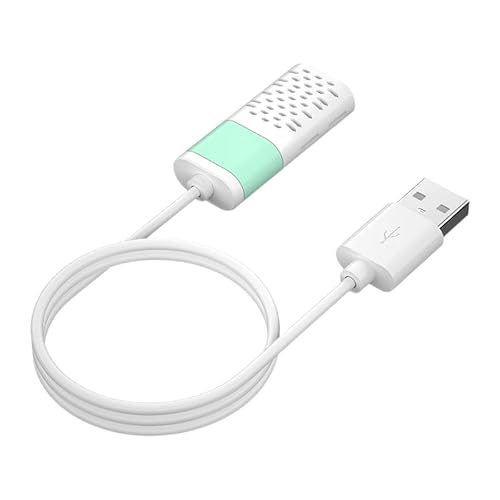
Lagnlnaoy DIY Electric Hypochlorous Acid Water Making Sterilizing Machine Device for Home
PORTABLE DESIGN: Compact USB-powered device for convenient sterilizing solution generation at home or on-the-go
As an affiliate, we earn on qualifying purchases.
As an affiliate, we earn on qualifying purchases.
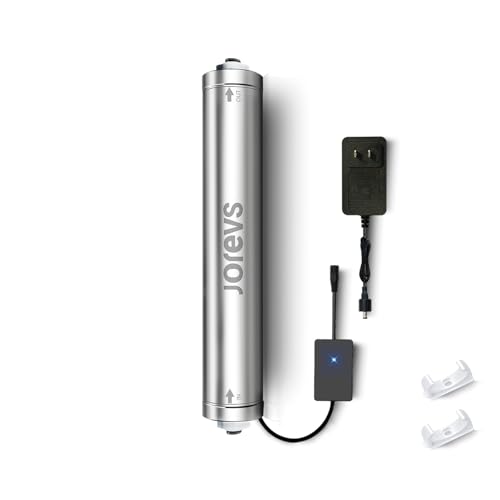
JOREVS UV Water Filter – LED UV Water Purifier for Under Sink, Reduce up to 99.999% Bacteria, Maintenance-Free for Reverse Osmosis System with Instant Flow Sensor, Mercury-Free, 1GPM
【Advanced UVC-LED Technology for Superior Disinfection】: UVC-LED Technology with a wavelength of between 270 nm – 280 nm,…
As an affiliate, we earn on qualifying purchases.
As an affiliate, we earn on qualifying purchases.