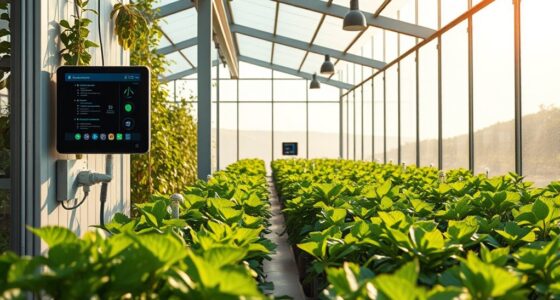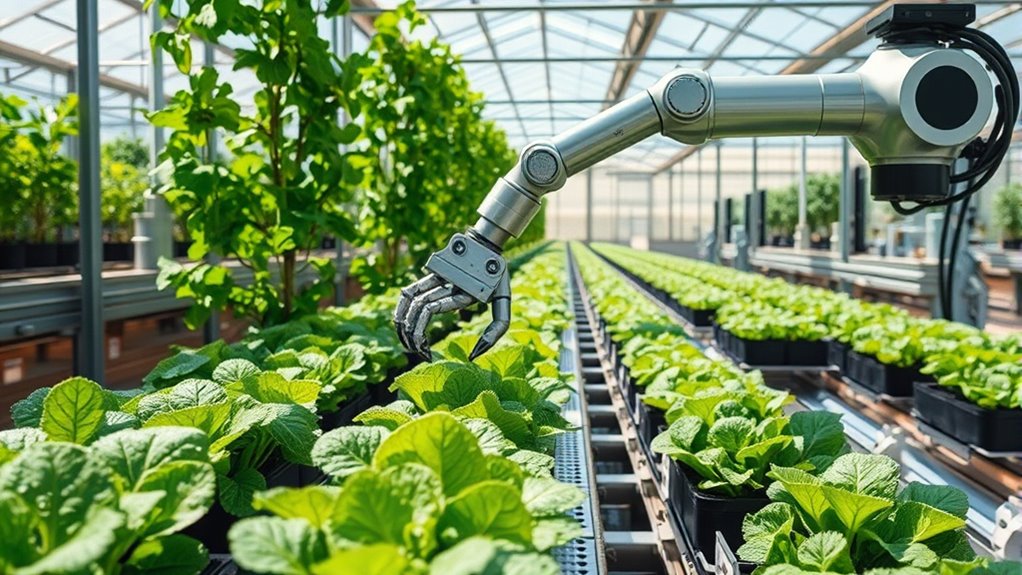

Robotics in protected horticulture transforms your crop management by automating tasks like pruning, soil monitoring, and environmental control. These autonomous systems increase efficiency, reduce labor costs, and help guarantee healthier plants through precise care and early disease detection. With sensor technology advancing, robots now adapt better to various plants and conditions, boosting productivity and sustainability. If you want to discover how these innovations can reshape your operations, there’s plenty more to explore.
Key Takeaways
- Autonomous pruning robots enhance precision and efficiency in plant maintenance within protected environments.
- Soil monitoring robots provide real-time data to optimize irrigation, fertilization, and crop management.
- Robotic systems reduce manual labor and increase operational efficiency for continuous horticultural tasks.
- Advanced sensors improve environmental responsiveness, enabling smarter, adaptive robotic responses.
- Integration of robotics boosts productivity, sustainability, and future readiness in protected horticulture.
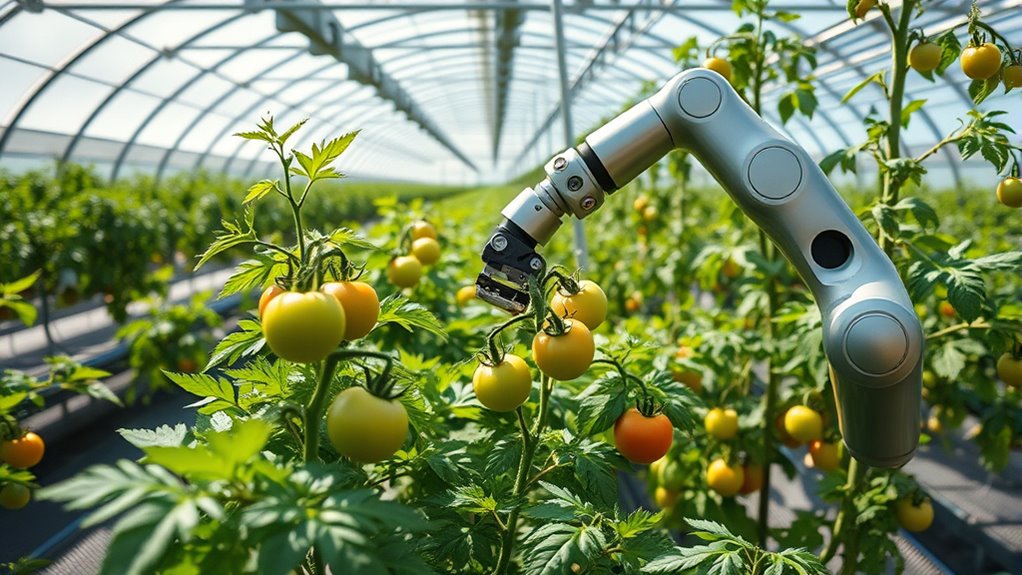
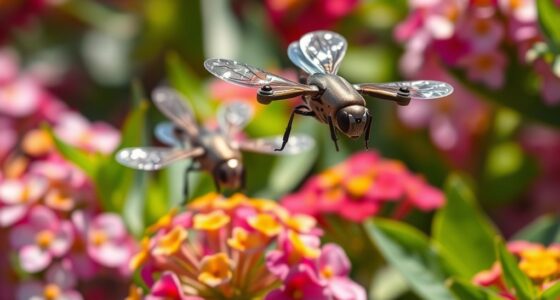
Robotics are increasingly transforming protected horticulture by streamlining tasks and boosting productivity. As you adopt these technologies, you’ll notice how autonomous pruning becomes a game-changer, allowing you to maintain plant health with precision and efficiency. Autonomous pruning robots can navigate through dense foliage, identify which branches need trimming, and perform the task with minimal human intervention. This not only saves you time but also ensures consistent care, promoting healthier growth and higher yields. By integrating sensors and cameras, these robots can detect signs of disease or overgrowth, enabling you to target problem areas before issues escalate. This precision reduces waste and minimizes the need for chemical treatments, aligning with sustainable farming practices.
Autonomous pruning robots enhance plant health with precision, reducing waste and supporting sustainable farming practices.
Alongside pruning, soil monitoring is another critical aspect that robotics can revolutionize. Traditional soil testing can be time-consuming and often provides only a snapshot of current conditions. With robotic soil monitoring systems, you get real-time data on soil moisture, temperature, pH levels, and nutrient content, all without stepping foot in the greenhouse or field. Autonomous vehicles equipped with advanced sensors can traverse your protected environment, collecting detailed soil profiles and transmitting data directly to your management system. This constant stream of information allows you to make informed decisions about irrigation, fertilization, and crop rotation, optimizing resource use and maximizing yields. As a result, you gain better control over your growing environment, reduce waste, and improve crop quality.
Implementing autonomous pruning and soil monitoring technologies also means reducing manual labor, which can be both costly and physically demanding. Robots can work tirelessly around the clock, ensuring that essential tasks are completed promptly and accurately. This not only boosts your operational efficiency but also lets you redirect human effort toward more strategic activities, like planning crop schedules or researching new varieties. Moreover, these systems tend to be highly adaptable; they can be programmed to handle different plant types and growth stages, making them highly versatile tools for protected horticulture.
Additionally, advancements in sensor technology are enhancing the capabilities of these robotic systems, making them smarter and more responsive to environmental changes. In the long run, integrating robotic solutions for autonomous pruning and soil monitoring can markedly enhance your productivity and sustainability. You’ll benefit from healthier plants, optimized resource use, and a more streamlined operation. As technology continues to advance, expect even smarter robots capable of learning and adapting to your specific growing conditions, further simplifying your management tasks. Keeping up with these innovations not only keeps you competitive but also positions your protected horticulture operation at the forefront of sustainable, high-tech farming.
Frequently Asked Questions
What Are the Initial Costs of Implementing Robotics in Protected Horticulture?
You’ll find the initial costs of implementing robotics in protected horticulture vary, typically ranging from $50,000 to $200,000 depending on the technology and scale. Conducting a thorough cost analysis helps you understand potential ROI, while exploring funding options like grants or loans can ease financial burdens. Keep in mind, investing upfront can lead to long-term savings through increased efficiency, reduced labor costs, and improved crop yields.
How Do Robots Handle Delicate Plants Without Causing Damage?
You might be surprised how robots handle delicate plants with gentle handling, thanks to sensitive sensors that detect even the slightest touch. These sensors guide robotic arms to apply just the right amount of force, preventing damage. As a result, your plants stay safe and healthy, while the robots efficiently perform tasks like harvesting or pruning. This precision technology guarantees care and productivity go hand in hand, transforming protected horticulture.
What Maintenance Is Required for Robotics Systems in Horticulture?
You need to regularly perform sensor calibration to guarantee your robotics systems accurately detect plant conditions. Keep software updated to fix bugs, improve performance, and add new features. Check mechanical parts for wear and tear, lubricate moving joints, and replace damaged components promptly. Regularly cleaning sensors and cameras also helps maintain peak function. By staying on top of these maintenance tasks, your robotic systems will operate efficiently, reducing downtime and protecting delicate plants effectively.
Are There Adaptable Robots for Different Crop Types and Growth Stages?
You can indeed find adaptable robots that cater to different crop types and growth stages. These machines are designed with crop-specific automation, allowing them to adjust their functions as plants develop. Think of it as hitting two birds with one stone—saving time and effort while ensuring ideal care. By leveraging growth stage adaptability, you get a versatile tool that helps you manage diverse crops efficiently, making your horticulture tasks smoother.
How Do Robotics Improve Sustainability and Reduce Environmental Impact?
Robotics boost sustainability by enhancing energy efficiency and water conservation. You can rely on automated systems to optimize light, temperature, and irrigation, reducing waste and lowering energy use. Robots precisely deliver water and nutrients, minimizing runoff and conserving resources. This targeted approach not only decreases environmental impact but also improves crop yields, helping you grow more sustainably while protecting natural resources for future generations.
Conclusion
Just as Icarus aimed for the sun, your embrace of robotics in protected horticulture pushes boundaries and reaches new heights. These innovations aren’t just tools—they’re the wings that elevate your growing potential, turning challenges into opportunities. With each robotic advancement, you’re shaping a future where precision and efficiency flourish, much like Da Vinci’s visionary sketches. Embrace this technology, and watch your horticultural dreams soar beyond the horizon.