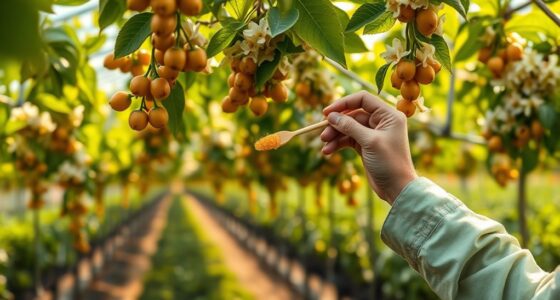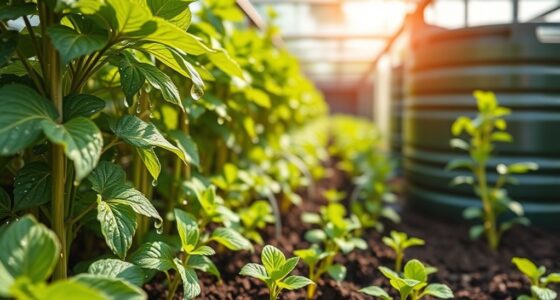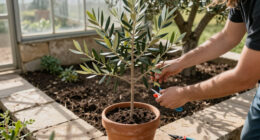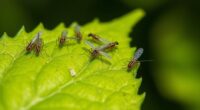
In organic greenhouse farming, you’re allowed to use approved soil amendments like compost, manure, bone meal, and seaweed extracts to enrich your soil naturally. Pest management relies on prevention, biological controls, organic treatments, and physical barriers, avoiding synthetic pesticides. Maintaining soil health and plant vigor helps keep pests at bay. If you want to discover more about sustainable practices and standards, there’s plenty of valuable information to explore.

Get garden gear delivered free with Prime
- Fast, free delivery on millions of items
- Prime Video, Amazon Music and more included
- Member-only deals all year
Key Takeaways
- Organic greenhouse farming permits the use of approved amendments like compost, manure, bone meal, and seaweed extracts to enrich soil.
- Only organic-approved pest control methods, such as neem oil, insecticidal soaps, and biological controls, are allowed.
- Synthetic pesticides are restricted; preventative practices like crop rotation, sanitation, and physical barriers are emphasized.
- Beneficial insects like ladybugs and predatory mites can be introduced for natural pest management.
- Maintaining soil health through organic amendments and ecosystem balance aligns with organic certification standards.

Organic greenhouse farming offers a sustainable way to grow fresh, healthy produce year-round while minimizing environmental impact. When you choose this approach, you’re committing to practices that enhance soil health naturally and reduce reliance on synthetic chemicals. One of the key aspects of organic greenhouse farming is understanding what soil amendments you can use to improve fertility and structure without compromising your organic certification. You’ll want to focus on organic-approved amendments like compost, manure, bone meal, or seaweed extracts. These amendments enrich the soil with essential nutrients and foster a thriving microbial community, which in turn supports healthy plant growth. By regularly adding organic matter, you help maintain a balanced, resilient soil ecosystem that naturally suppresses pests and diseases, reducing your need for intervention.
Pest management in an organic greenhouse requires a strategic, preventative mindset. Instead of resorting to chemical pesticides, you’ll employ integrated pest management (IPM) techniques that focus on prevention, monitoring, and biological controls. Start by selecting pest-resistant varieties and rotating crops to break pest cycles. Maintaining a clean environment is essential; remove plant debris and weeds that can harbor pests. You might introduce beneficial insects like ladybugs or predatory mites, which naturally keep pest populations in check. Using physical barriers such as row covers or sticky traps also helps prevent pests from reaching your plants. When pests do appear, opt for organic-approved treatments like neem oil, insecticidal soaps, or botanical sprays, which target pests without harming beneficial insects or contaminating your produce.
In your organic greenhouse, pest management isn’t just about reacting to infestations—it’s about creating an environment where pests struggle to establish themselves. Healthy soil, rich in organic amendments, supports strong plant immune systems that are better equipped to fend off pests naturally. Regular scouting and monitoring are essential; catch issues early before they become severe. You’ll find that maintaining proper airflow, humidity, and sanitation also plays a critical role in preventing pest outbreaks. Organic certification standards strictly limit the use of synthetic pesticides, so your focus should always be on preventative practices paired with biological controls. Additionally, vertical storage solutions can help keep your workspace organized and reduce clutter that might harbor pests. By combining rich soil amendments with vigilant pest management, you create a balanced ecosystem that promotes healthy, productive plants without compromising your organic integrity. This approach not only guarantees the sustainability of your farm but also delivers cleaner, safer produce to consumers.
organic soil amendments for greenhouse
As an affiliate, we earn on qualifying purchases.
As an affiliate, we earn on qualifying purchases.
Frequently Asked Questions
Are Synthetic Fertilizers Permitted in Organic Greenhouse Farming?
Synthetic fertilizers are not permitted in organic greenhouse farming, as organic standards prioritize natural inputs. You’re not allowed to use synthetic fertilizers or GMO seeds because they conflict with organic principles focused on natural, sustainable practices. Instead, you should rely on compost, organic matter, and natural soil conditioners to nourish your plants. This approach helps maintain soil health, supports biodiversity, and aligns with organic certification requirements.
Can I Use Genetically Modified Seeds in Organic Greenhouses?
You can’t use genetically modified seeds in organic greenhouses because they don’t meet Organic Greenhouse standards. These standards prioritize natural methods and non-GMO seeds to maintain organic integrity. By sticking to non-GMO seeds, you guarantee your greenhouse complies with organic regulations, supports biodiversity, and produces healthier crops. Always check local organic certification rules, but generally, GMO seeds are not permitted in certified organic greenhouse operations.
What Are the Certification Requirements for Organic Greenhouse Produce?
You need to meet organic certification and greenhouse standards to sell your produce as organic. This means using approved methods, avoiding synthetic pesticides and fertilizers, and maintaining detailed records. The certification process involves inspections by authorized agencies, ensuring your greenhouse practices align with organic regulations. By adhering to these requirements, you prove your operation’s compliance, helping you access organic markets and build consumer trust in your greenhouse-grown products.
Is Pest Control Allowed Without Pesticides in Organic Greenhouses?
Did you know that organic greenhouse farmers often achieve pest control success rates of over 80% using natural methods? You can use biological control and natural pest management without relying on synthetic pesticides. These methods include introducing beneficial insects, using organic-approved repellents, and maintaining healthy plant environments. By focusing on natural pest control, you protect your crops’ organic integrity and promote sustainable farming practices.
How Do Organic Standards Vary Between Countries for Greenhouse Farming?
You’ll find that international regulations and certification differences shape organic greenhouse farming standards worldwide. Countries like the US, EU, and Australia each set unique criteria, affecting what practices and inputs are permitted. You need to stay updated on specific standards to guarantee compliance, as some practices accepted in one country may not be in another. Understanding these variations helps you meet certification requirements and maintain organic integrity across borders.
Conclusion
By choosing organic greenhouse farming, you’re embracing sustainable practices that protect the environment and boost crop quality. Did you know that organic farming can reduce water usage by up to 30% compared to conventional methods? This approach not only supports healthier ecosystems but also meets increasing consumer demand for eco-friendly produce. So, as you explore organic options, remember that your choices contribute to a greener, more sustainable future—one greenhouse at a time.
Halloween Picks
halloween
As an affiliate, we earn on qualifying purchases.