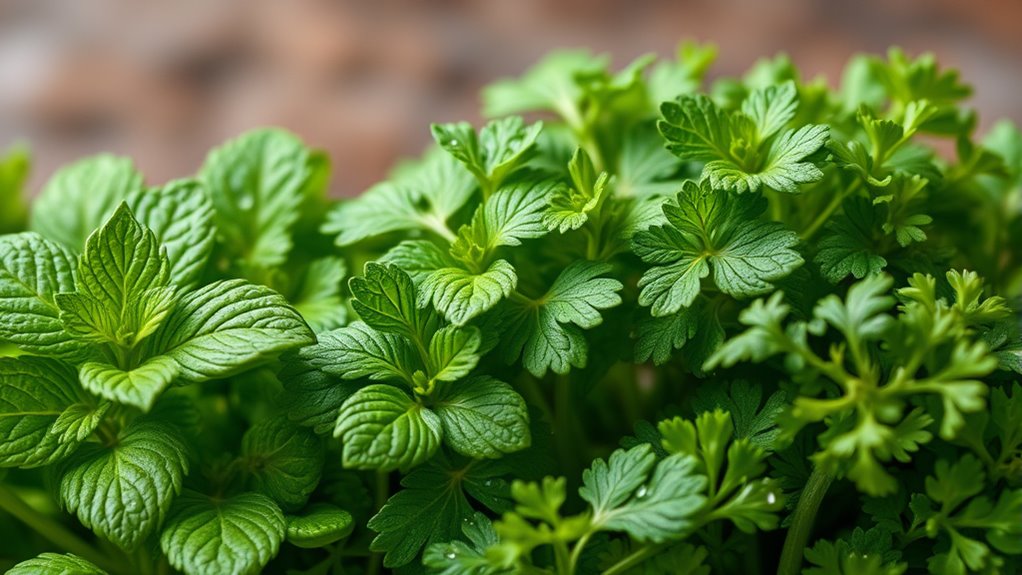

To enhance your dishes with fresh herbal aroma, you should cut mint, cilantro, and parsley just before adding them. Mint gives a cool, invigorating burst, while cilantro adds a bright, citrusy scent. Parsley offers a grassy, subtle pepperiness that completes the flavor. Proper storage can prolong their aroma, but immediate chopping releases their essential oils, delivering maximum flavor. If you keep exploring, you’ll discover tips to maximize their aromatic potential even further.
Key Takeaways
- Cutting mint releases volatile oils, providing a refreshing, cool aroma ideal for garnishing and beverages.
- Cilantro’s essential oils are released upon chopping, offering a bright, citrusy fragrance that enhances Mexican and Asian dishes.
- Parsley’s grassy, slightly peppery aroma is best preserved by chopping just before adding to dishes for a subtle herbal note.
- Proper storage in damp conditions prolongs the aromatic oils of all three herbs, maintaining their flavor intensity.
- Snipping herbs immediately before use maximizes their herbal aroma and flavor, ensuring maximum freshness in dishes.

When it comes to enhancing the flavor of freshly cut herbs, choosing the right variety can make a significant difference. Not all herbs for cut flavor are created equal, and selecting the best options can elevate your dishes with vibrant aroma and taste. If you want herbal aroma enhancement that truly stands out, mint, cilantro, and parsley are top contenders. Each offers unique qualities that can transform simple ingredients into aromatic masterpieces.
Mint is renowned for its refreshing, cool aroma that instantly awakens the senses. When you cut fresh mint, you release volatile oils that intensify its herbal aroma enhancement. This makes it an excellent choice for garnishing salads, beverages, or even savory dishes that benefit from a burst of freshness. The key to maximizing mint’s flavor is to snip the leaves just before use, as the essential oils diminish rapidly once the herb is cut. Properly stored, mint retains its aroma longer, but using it fresh guarantees the most vibrant flavor. Its crisp, invigorating scent can cut through rich or heavy dishes, balancing flavors and adding a bright herbal note.
Mint’s crisp, invigorating scent boosts dishes with fresh, vibrant herbal aroma.
Cilantro offers a distinctive, citrusy aroma that can brighten up any plate. When you choose herbs for cut flavor like cilantro, you’ll notice an immediate herbal aroma enhancement that elevates your culinary creations. Cilantro’s leaves contain essential oils that are released upon cutting, providing a fresh, slightly spicy fragrance that complements a wide range of cuisines, from Mexican to Asian dishes. To preserve its herbal aroma enhancement, chop cilantro just before serving. The aroma is delicate, so exposing it to air for too long causes it to fade. When used fresh, cilantro can add a lively, herbal kick to salsas, salads, and garnishes. Its aromatic oils are most potent during the first few minutes after cutting, so timing matters.
Parsley is a versatile herb that offers a grassy, slightly peppery aroma that enhances the flavor profile of many dishes. When you cut parsley, you access a fresh, clean scent that can serve as a subtle herbal aroma enhancement. Parsley’s bright flavor works well in everything from dressings to soups to meat dishes. To get the most out of parsley’s flavor, chop it just before adding to your dish. Its aroma is gentle but persistent, making it a reliable choice for adding a fresh herbal note without overpowering other flavors. Proper storage in a damp paper towel and sealed container helps keep its aroma intact longer, ensuring that each time you add it, you’re delivering that vibrant herbal burst.
Frequently Asked Questions
How Long Do Fresh Herbs Typically Stay Fresh After Cutting?
Fresh herbs typically stay fresh for about 1 to 2 weeks after cutting if you practice proper herb preservation and fresh herb storage. To extend their shelf life, you should store them in a glass of water, cover loosely with a plastic bag, and keep them refrigerated. Proper storage helps maintain their flavor and freshness longer, ensuring you get the most out of your herbs for recipes and garnishes.
Can Herbs Be Frozen Without Losing Flavor?
Herbs can be frozen without losing flavor if you follow proper herb preservation and freezing techniques. To keep taste intact, chop the herbs, then pack them tightly into ice cube trays with a little water or oil. Once frozen, transfer the cubes to airtight containers. This method locks in freshness, ensuring your mint, cilantro, and parsley remain flavorful for future use. Proper freezing techniques preserve herbs’ vibrant taste and aroma.
Are There Any Health Risks Associated With Consuming Large Amounts of Herbs?
Consuming large amounts of herbs can pose health risks due to herb toxicity, especially if you have existing health conditions or are pregnant. Excessive herb consumption might lead to adverse effects like allergic reactions or interactions with medications. It’s best to enjoy herbs like mint, cilantro, and parsley in moderation and consult a healthcare professional if you’re unsure about safe quantities, to avoid potential herb toxicity.
What Are Some Creative Ways to Incorporate Herbs Into Everyday Dishes?
Herbs are like nature’s flavor bombs, ready to elevate your dishes. You can infuse oils with mint, cilantro, or parsley for a fresh twist, or create herb-based dressings that brighten salads and grilled veggies. Toss chopped herbs into soups, sprinkle them over roasted meats, or blend them into smoothies for vibrant flavor. Get creative by adding herbs to dips, marinades, or even baked goods to keep your meals exciting.
How Do I Prevent Herbs From Wilting Quickly After Harvesting?
To prevent herbs from wilting quickly, you should use proper herb storage techniques like trimming stems and placing them upright in a glass of water, covering loosely with a plastic bag. Make sure you’re practicing ideal watering methods by keeping the soil moist but not soaked. Store herbs in the refrigerator’s crisper drawer for extra freshness, and use them soon after harvesting to enjoy their vibrant flavor.
Conclusion
Now that you know how mint, cilantro, and parsley can elevate your cut flavors, don’t forget to experiment and trust your palate. These herbs add freshness and complexity, turning any dish into a masterpiece. Remember, even in a world of modern kitchens, a touch of nature’s ancient herbs can make all the difference. Like the wise alchemist from old tales, embrace these timeless ingredients and reveal the true magic of your culinary creations.