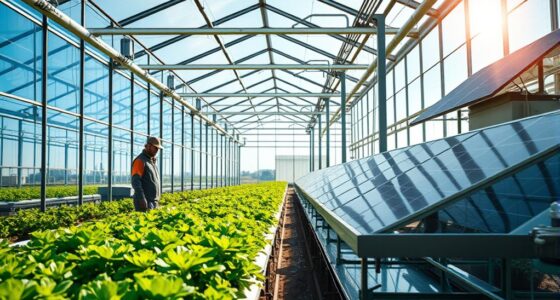
When planning your aquaponic crops, choose plants that match your system’s nutrient levels and growth rates, like leafy greens for quick harvests or fruiting plants for longer cycles. Coordinate planting schedules to ensure continuous harvests and prevent nutrient imbalances. Monitor water chemistry regularly, adjust fish feeding accordingly, and diversify crops to optimize nutrient use. With careful crop selection and timing, you’ll create a balanced, productive system that supports both fish and plants—discover how to fine-tune your setup as you go.

Get garden gear delivered free — and shop member deals
- Fast, free delivery on millions of items
- Access to Prime Big Deal Days deals on October 6–7
- Prime Video, Amazon Music and more included
Key Takeaways
- Select crops based on their nutrient needs and growth cycles to optimize system balance.
- Plan crop variety and staggering schedules for continuous harvest and efficient nutrient use.
- Match crop demands with fish biomass and feeding routines to prevent nutrient imbalances.
- Choose fast-growing leafy greens for quick yields and fruiting plants for longer-term productivity.
- Adjust crop selection and timing to maintain system stability and promote healthy aquatic life.

Aquaponic crop planning is vital for creating a balanced and productive system. When you’re designing your aquaponics setup, you need to think carefully about how your fish tank maintenance impacts the overall health of your system. Regularly checking and maintaining your fish tank guarantees a stable environment for your aquatic life, which is the foundation for healthy plant growth. If you neglect fish tank maintenance, you risk fluctuations in water quality, which can lead to stress for your fish and, consequently, affect the nutrient supply to your plants. Keeping the tank clean and well-maintained helps prevent disease, reduces harmful waste buildup, and keeps the system running smoothly. By establishing a routine, you’ll ensure your fish are healthy, and your plants receive consistent nutrients. Proper system management is essential for long-term success in aquaponics.
Nutrient balancing is a critical component of aquaponic crop planning because plants rely on a steady supply of nutrients derived from fish waste. As your fish produce waste, bacteria convert it into forms that plants can absorb, like nitrates. However, if you don’t manage nutrient levels properly, your plants can suffer from deficiencies or excesses. Too few nutrients, and your plants will struggle to grow, showing signs of yellowing or stunted development. Too many nutrients, and you risk creating an imbalanced system that could lead to algae blooms or toxicity for your fish. To keep nutrient levels in check, you need to monitor water chemistry regularly, test for nitrates, phosphates, and pH, and adjust your feeding or plant density accordingly. Overfeeding your fish can overwhelm the system with nutrients, so it’s better to feed smaller amounts more frequently while observing your plants’ response.
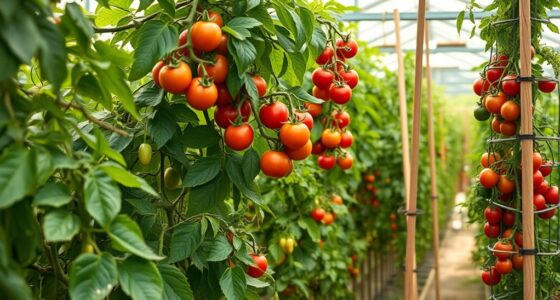
When planning your crops, consider the specific needs of each plant type regarding nutrient requirements and growth cycles. Leafy greens like lettuce and spinach typically require fewer nutrients and grow quickly, making them excellent choices for beginners. Fruiting plants like tomatoes or peppers demand more nutrients and longer growth periods, so you’ll need to plan for higher fish biomass and possibly supplemental feeding to meet their needs. You should also stagger your planting schedule to ensure a continuous harvest, which helps maintain nutrient consumption rates and prevents nutrient buildup. Additionally, diversifying your crops can improve nutrient utilization and reduce the risk of crop failure. By carefully selecting and timing your crops, you create a balanced ecosystem where fish health, nutrient levels, and plant growth all support each other harmoniously. This thoughtful planning will lead to a more sustainable and productive aquaponics system.
As an affiliate, we earn on qualifying purchases.
Frequently Asked Questions
How Do Seasonal Changes Affect Aquaponic Crop Selection?
Seasonal changes markedly influence your aquaponic crop selection by requiring climate adaptation. During colder months, you might choose crops that thrive in lower temperatures or implement insulation. In warmer seasons, you can rotate crops to optimize growth and prevent pests, practicing crop rotation. By adjusting your crop choices seasonally, you guarantee a steady harvest year-round, maintaining system health and productivity despite environmental fluctuations.
What Are the Best Companion Plants for Aquaponic Systems?
Imagine your aquaponic system as a harmonious dance floor, where each plant plays a role. You’ll want to choose companion plants that embrace plant compatibility, like basil with tomatoes or marigolds with leafy greens. These companion plants promote healthy growth, repel pests, and enhance flavor. By practicing companion planting, you create a thriving ecosystem that benefits your main crops and maintains balance within your system.
How to Manage Pests in Aquaponic Crop Planning?
To manage pests in your aquaponic system, you should implement integrated pest management by regularly inspecting your plants and removing pests manually. Encourage beneficial insects like ladybugs and predatory beetles, which naturally control pests without chemicals. Keep your system healthy with proper nutrient balance and avoid overfeeding, which can attract pests. These steps help maintain a balanced ecosystem, reducing pest problems and promoting healthy crop growth.
Can Aquaponics Support Rare or Exotic Crops?
Yes, aquaponics can support rare or exotic crops if you understand their specific needs. You’ll need to assess rare crop viability and guarantee your system’s water quality, temperature, and nutrients match the exotic plant’s adaptation requirements. By carefully adjusting these parameters, you give your rare or exotic plants a healthy environment to thrive, making aquaponics a versatile method for cultivating unique crops beyond traditional options.
What Are Cost-Effective Methods for Scaling Aquaponic Systems?
You can boost economic feasibility by starting small and reinvesting gains, turning initial efforts into steady growth. Emphasize resource optimization by choosing scalable, modular systems that require minimal upfront investment. Use readily available materials, like repurposed tanks or containers, and automate where possible to cut labor costs. Partner with local suppliers or communities to share resources, making expansion more manageable and cost-effective, ultimately turning your aquaponic venture into a sustainable, thriving enterprise.
Conclusion
By now, you see how aquaponic crop planning combines modern innovation with old-school wisdom, much like a medieval alchemist turning water into gold. You can craft a balanced system that maximizes yields while conserving resources. Remember, careful planning keeps everything running smoothly, just like a well-oiled 18th-century clock. With this approach, you’ll be well on your way to sustainable, productive aquaponic farming—no need for a magic wand, just smart planning and dedication.
Fall Picks
fall essentials
As an affiliate, we earn on qualifying purchases.