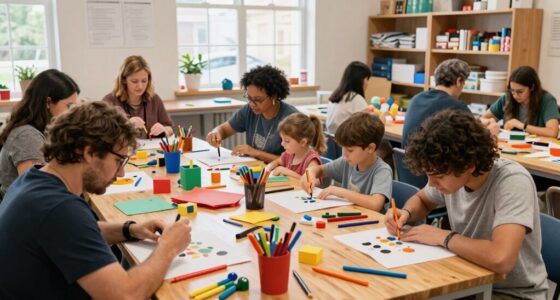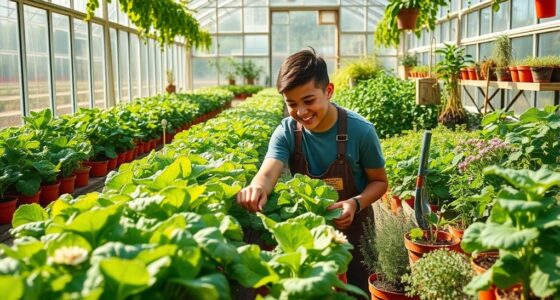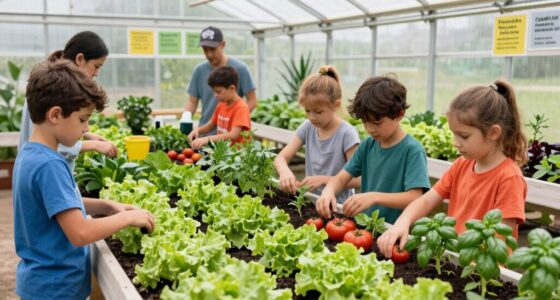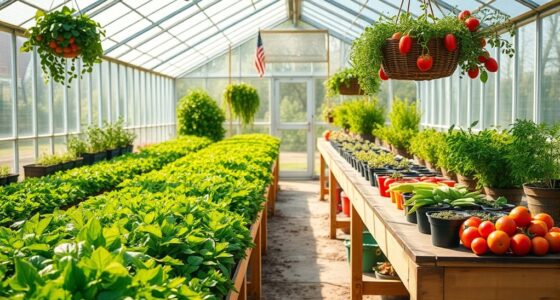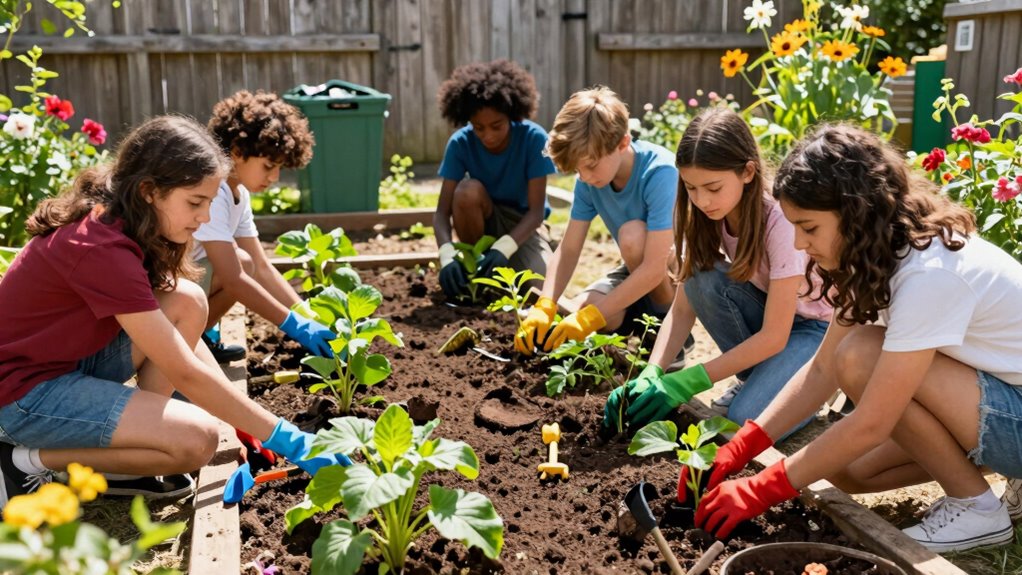

To make youth gardening programs last, involve kids in hands-on planting and care, which boosts their sense of ownership and connection to nature. Incorporate community activities that foster teamwork and pride, creating a sense of belonging. Focus on developing skills like responsibility and patience, while emphasizing sustainability. When children see how their efforts make a difference, they become motivated to stay involved. Keep exploring to discover how these strategies can grow lasting impact in your community.

Get garden gear delivered free with Prime
- Fast, free delivery on millions of items
- Prime Video, Amazon Music and more included
- Member-only deals all year
Key Takeaways
- Hands-on planting fosters ownership, immediate gratification, and lifelong curiosity about nature.
- Developing core skills like responsibility and patience encourages ongoing engagement.
- Community involvement builds pride, teamwork, and a sense of collective achievement.
- Integrating local stakeholders ensures program sustainability and strengthens community identity.
- Combining active participation with meaningful impact motivates continued involvement and environmental stewardship.
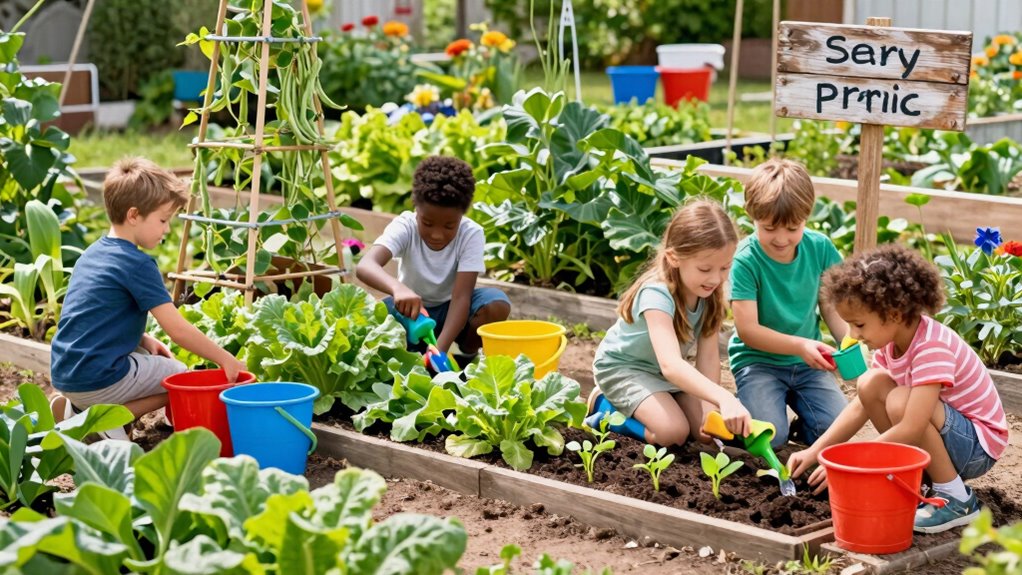
Youth gardening programs are gaining popularity as a powerful way to teach young people about nature, responsibility, and healthy living. When you get involved in these programs, you’re not just planting seeds—you’re planting the foundation for lifelong skills. One of the key elements that makes these programs stick is the hands-on experience of seed planting. You see, when children actively participate in planting seeds, they develop a sense of ownership and connection to their environment. Watching a tiny seed grow into a vibrant plant provides immediate gratification and reinforces the idea that effort and patience lead to results. This tangible progress keeps kids engaged and enthusiastic to learn more about gardening, nature, and sustainability. Engaging children in biodiversity activities through gardening can further deepen their understanding of ecosystems and the importance of preserving diverse species.
Hands-on seed planting fosters ownership, patience, and lifelong curiosity about nature and sustainability.
Community engagement plays an essential role in making youth gardening programs successful and enduring. When young people see their efforts making a difference in their community—whether by beautifying a local park, creating a shared garden space, or contributing to a school project—they feel a sense of pride and belonging. These programs often foster teamwork, teaching kids how to collaborate, share responsibilities, and celebrate collective achievements. As community members come together to support the garden, the program becomes more than just about individual growth; it becomes a shared mission that strengthens bonds and promotes social responsibility. This collective effort creates a sense of purpose that motivates youth to stay committed over time.
Furthermore, youth gardening programs that incorporate community engagement tend to be more sustainable because they involve local stakeholders, from parents and teachers to neighborhood leaders. When everyone invests in the success of the garden, the program gains resilience and longevity. Kids learn not only about planting and growing but also about the importance of contributing to something larger than themselves. This sense of contributing to a community’s well-being helps solidify their interest and commitment, making the program more than just a temporary activity. It becomes a meaningful part of their identity and their community fabric.
In the end, what makes youth gardening programs stick is the combination of active participation in seed planting and the feeling of making a real difference through community engagement. These elements turn gardening from a simple activity into a powerful educational tool that fosters responsibility, environmental stewardship, and a sense of belonging. When kids can see the impact of their work and understand that they are part of a bigger picture, they’re more likely to stay involved and carry these lessons into their future.
As an affiliate, we earn on qualifying purchases.
Frequently Asked Questions
How Do Programs Engage Reluctant or Uninterested Youth?
You engage reluctant youth by offering interactive activities that make gardening fun and hands-on. Incorporate peer mentorship so they see peers enjoying and learning, which boosts their interest. You can also let them choose what plants to grow or design their own garden spaces, giving them a sense of ownership. This approach helps break down barriers and builds confidence, making them more likely to stay involved and develop a lasting connection to gardening.
What Are the Best Ways to Measure Program Success?
Think of measuring program success like tending a garden—you need clear gardening metrics and success indicators. You should track tangible outcomes like increased plant knowledge, participation rates, and skill development, along with softer measures like boosted confidence or enthusiasm. Regular surveys, progress journals, and project evaluations help you see growth over time. By analyzing these indicators, you guarantee your youth gardening program blossoms into a lasting, impactful experience.
How Can Programs Ensure Inclusivity for Diverse Youth?
You can guarantee inclusivity by prioritizing cultural sensitivity and making accessibility improvements. Recognize and respect diverse backgrounds, adapting activities to reflect different cultures and experiences. Use accessible facilities and materials to accommodate youths with varying needs. Engage community members in planning, listen to their feedback, and create an environment where all feel welcome and valued. This approach fosters a more inclusive, enriching gardening experience for every young participant.
What Funding Sources Support Youth Gardening Initiatives?
You can tap into various funding sources to support your youth gardening initiatives, such as applying for local government grants focused on environmental education. For example, a community program secured funding diversity through a federal grant opportunity aimed at youth empowerment. These grants help sustain programs, expand reach, and promote inclusivity. By actively seeking diverse funding opportunities, you guarantee your project remains financially stable and accessible to all youth.
How Do Programs Adapt to Different Community Environments?
You adapt youth gardening programs by building strong community partnerships that reflect the local culture and needs. Engage community members to guarantee activities are culturally relevant, making the program more meaningful. You also tailor gardening topics and practices to suit local climate and traditions. This approach fosters ownership and participation, helping the program resonate deeply with the community and ensuring its long-term success.
Conclusion
So, next time you’re surprised that kids actually stick with gardening, remember it’s not just about planting seeds. It’s about giving them a reason to dig deep—literally and figuratively. Ironically, the secret to youth gardening programs thriving isn’t complicated; it’s just nurturing curiosity and patience. Who knew that a little dirt and a lot of care could grow more than just plants? Turns out, the real magic is in watching young minds blossom.
Halloween Picks
halloween
As an affiliate, we earn on qualifying purchases.