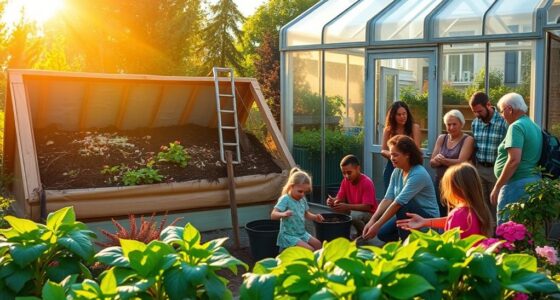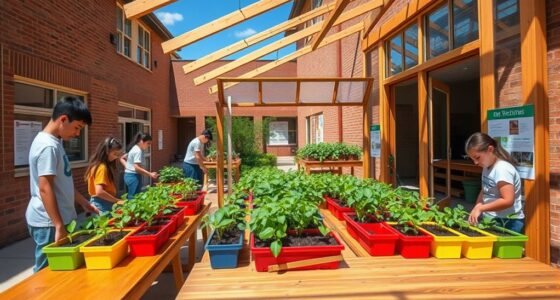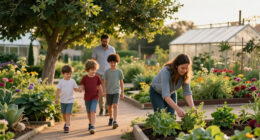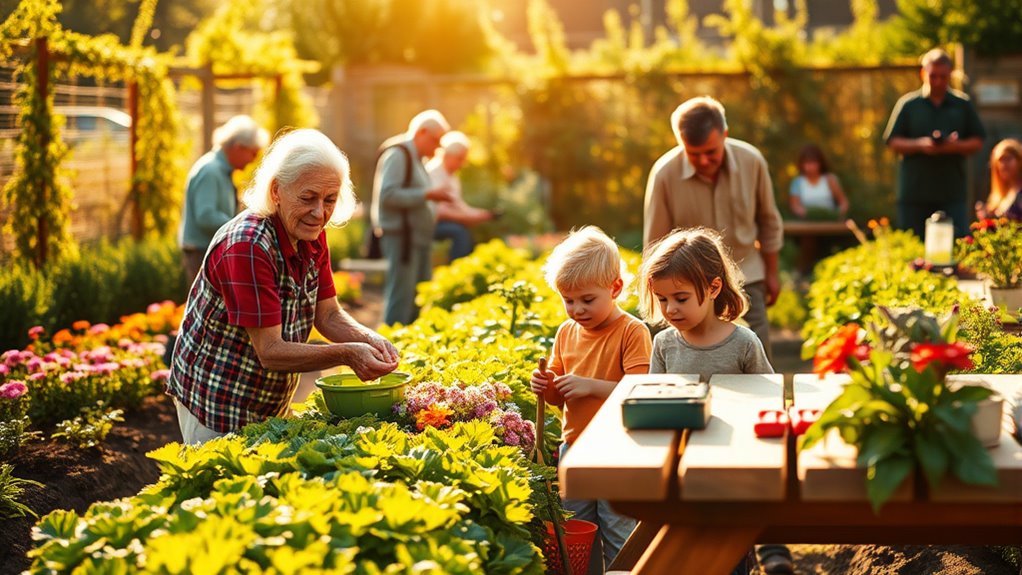
Intergenerational learning in community gardens is a valuable way to connect people of all ages through gardening activities. You can witness elders sharing traditional techniques, cultural stories, and herbal remedies, while younger participants bring fresh ideas and digital skills. This exchange fosters mutual respect, strengthens community bonds, and helps preserve cultural knowledge. As you explore these gardens, you’ll see how they become vibrant spaces of continuous learning and shared growth that enrich everyone involved.

Get garden gear delivered free — and shop member deals
- Fast, free delivery on millions of items
- Access to Prime Big Deal Days deals on October 6–7
- Prime Video, Amazon Music and more included
Key Takeaways
- Community gardens facilitate intergenerational exchange of traditional knowledge, skills, and cultural stories.
- Older generations teach practical gardening techniques, passing down cultural practices and herbal remedies.
- Intergenerational learning fosters mutual respect, breaking down age and cultural barriers within the community.
- Sharing skills like seed saving, composting, and digital research promotes sustainable practices and innovation.
- Gardens become hubs for dialogue, strengthening community bonds and preserving cultural heritage through ongoing learning.

Community gardens are vibrant spaces where generations come together to share knowledge, skills, and stories. As you step into these gardens, you’re immediately immersed in an environment teeming with diversity and tradition. These spaces serve as living classrooms, where older generations pass down time-honored techniques, and younger ones bring fresh ideas and perspectives. This exchange isn’t just about planting seeds; it’s about cultivating cultural understanding and strengthening community bonds through skill sharing and dialogue.
When you participate in a community garden, you actively engage in cultural exchange. You might learn about different planting methods, culinary traditions, or medicinal uses of herbs that originate from various parts of the world. For example, an elder might teach you how to grow and prepare a traditional herbal remedy, sharing stories about its significance within their culture. In return, you could introduce them to modern composting techniques or new vegetable varieties you’ve researched. This mutual sharing enriches everyone involved, fostering respect and appreciation for cultural differences. It’s a powerful reminder that gardening isn’t just about growing food—it’s about growing understanding and connection.
Participating in community gardens fosters cultural exchange, shared knowledge, and mutual respect across generations.
Skill sharing in community gardens is one of the most rewarding aspects of intergenerational learning. You can find yourself learning everything from basic planting skills to advanced pruning techniques. Older gardeners often have decades of experience, and by observing or asking questions, you gain practical knowledge that textbooks can’t provide. They might teach you how to save seeds, build compost bins, or recognize plant diseases. In turn, you might share digital skills, like how to research sustainable gardening practices online or use social media to promote community events. This exchange ensures that valuable skills aren’t lost over generations and that everyone’s knowledge is respected and valued.
Being part of a community garden means you’re actively contributing to a legacy of shared learning. You’re not just growing plants—you’re nurturing relationships and fostering a sense of belonging. As you swap stories and techniques, barriers of age and background dissolve, creating a space where everyone’s voice matters. The garden becomes a hub of cultural exchange and skill sharing that benefits all involved, enriching your understanding of different traditions while enhancing your gardening abilities. This intergenerational dynamic transforms a simple patch of earth into a vibrant community where learning is ongoing, meaningful, and rooted in shared experience.
As an affiliate, we earn on qualifying purchases.
Frequently Asked Questions
How Do Community Gardens Facilitate Intergenerational Communication?
You can see community gardens facilitate intergenerational communication through cultural exchange and skill sharing. As different generations work together, they share traditions, stories, and gardening techniques, fostering understanding and respect. This collaboration encourages conversations, builds relationships, and creates a sense of community. By actively participating, you help bridge gaps between ages, making the garden a vibrant space for learning, connection, and mutual appreciation across generations.
What Challenges Exist in Implementing Intergenerational Programs?
Like the Odyssey’s journey, implementing intergenerational programs faces hurdles. Funding barriers often limit resources, making it hard to sustain activities. Cultural differences can create misunderstandings or discomfort, hindering connection. You might struggle with aligning diverse traditions or expectations. To overcome these challenges, you need patience and adaptability, fostering open dialogue and seeking inclusive support. Recognizing these obstacles helps you build stronger, more resilient intergenerational bonds in your community garden.
How Can Technology Enhance Intergenerational Learning in Gardens?
You can enhance intergenerational learning in gardens by leveraging technology like virtual collaboration tools, which allow different age groups to share ideas and experiences easily. Digital storytelling also plays a key role, enabling participants to create and share their gardening journeys, fostering understanding and connection. These technologies bridge generational gaps, making learning more engaging and accessible, and encouraging ongoing participation in community garden projects.
What Role Do Local Schools Play in Community Garden Initiatives?
Your local schools are the heartbeat of community garden initiatives, acting as catalysts for change. By forming strong school partnerships, you can seamlessly integrate garden activities into the curriculum, making learning vibrant and hands-on. These collaborations inspire students to connect with nature, foster community spirit, and develop essential skills. Together, you create a thriving environment where education and sustainability bloom side by side, transforming neighborhoods into lush, learning-filled landscapes.
How Is Success Measured in Intergenerational Learning Programs?
You measure success in intergenerational learning programs by evaluating outcomes like improved communication, shared knowledge, and stronger community bonds. Participant satisfaction is key, so you gather feedback through surveys and conversations to understand their experiences. Observing how participants engage with each other and noting any positive changes in attitudes or skills also helps you gauge the program’s effectiveness. Ultimately, success reflects meaningful connections and lasting learning.
Conclusion
You might be surprised to learn that over 70% of community garden participants report stronger bonds across generations. By engaging in shared gardening activities, you not only grow plants but also foster understanding and respect between ages. Intergenerational learning creates a vibrant, supportive community where everyone benefits. So, next time you tend to your garden, remember—you’re cultivating more than vegetables—you’re nurturing connections that last a lifetime.
Fall yard work Picks
leaf blowers
As an affiliate, we earn on qualifying purchases.