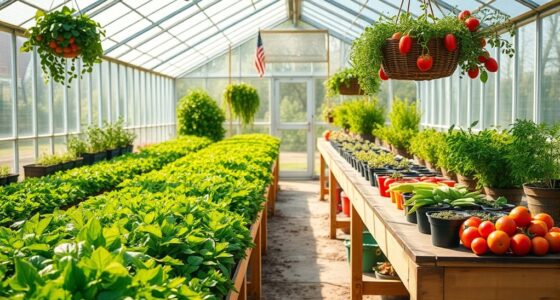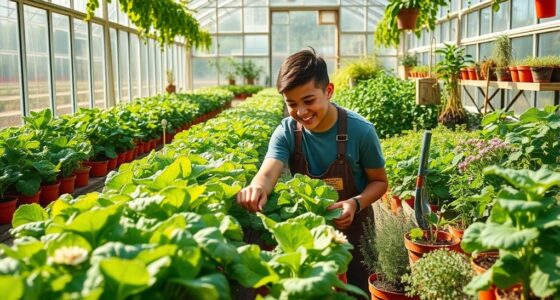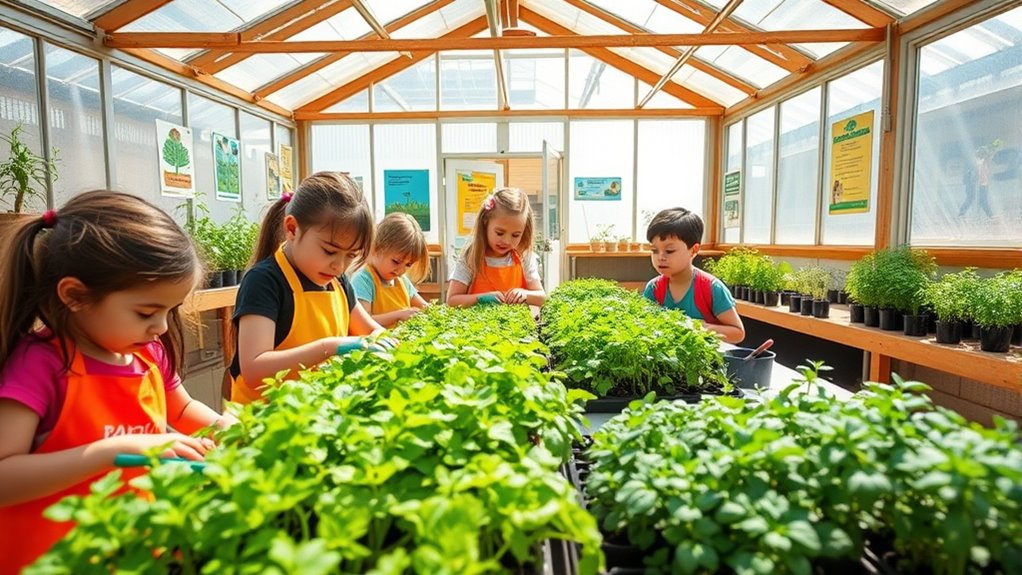

Discover engaging curriculum ideas for K-12 greenhouse learning by incorporating hands-on plant propagation, such as seed planting and cuttings, to illustrate plant reproduction. Use the greenhouse as an interactive classroom to teach climate adaptation, resilience, and sustainability, encouraging students to explore real-world environmental challenges. Enhance lessons with multimedia tools like projectors to visualize complex processes and foster scientific inquiry. Keep exploring to uncover even more ways to make your greenhouse lessons impactful and inspiring.
Get ready for Prime Big Deal Days — try Prime free
Exclusive member deals on October 6–7, plus fast free delivery. Cancel anytime.
As an affiliate, we earn on qualifying purchases.
Key Takeaways
- Incorporate plant propagation activities like seed starting, cuttings, and layering to teach growth cycles and reproductive methods.
- Use the greenhouse to explore climate adaptation by growing drought-tolerant or native plant species.
- Design experiments on environmental factors affecting plant growth, such as light, temperature, and moisture levels.
- Integrate multimedia tools like projectors for visualizing plant development and biological processes.
- Promote sustainability and ecological awareness through hands-on projects on biodiversity and climate resilience.

Have you ever wondered how a greenhouse can become a dynamic classroom for students of all ages? It’s more than just a space for growing plants; it’s an interactive environment where students can explore crucial scientific concepts firsthand. One engaging way to do this is through plant propagation, which offers students a tangible understanding of how plants reproduce and spread. By guiding students in propagation techniques like cuttings, layering, or seed planting, you help them grasp the fundamentals of plant biology and the importance of patience and precision. As they witness roots develop from cuttings or seeds sprout into seedlings, they see the direct link between their actions and plant growth. This process also provides a platform to discuss climate adaptation—how plants adjust to changing environmental conditions. You can introduce students to concepts like selecting hardy varieties or understanding how different plants thrive in specific climates. This encourages critical thinking about sustainability and resilience, especially in the face of climate change. Students learn that plant propagation isn’t just about multiplying plants; it’s about understanding how plants can be adapted to survive and flourish under various environmental stresses.
Additionally, incorporating information about high-quality projectors can enhance visual learning in greenhouse classrooms, making complex biological processes easier to understand through multimedia presentations.
Involving students in these activities makes abstract ideas about climate adaptation concrete. For example, they might experiment with propagating plants that are drought-tolerant or resistant to pests, fostering an understanding of how plants can be selected or bred for specific climate conditions. This hands-on experience prompts discussions about real-world challenges, such as how farmers and gardeners respond to climate fluctuations by choosing appropriate plant varieties. It also encourages eco-conscious thinking, emphasizing the importance of sustainable gardening practices and the role of biodiversity in climate resilience. As students observe the effects of different conditions on their propagated plants, they develop a deeper appreciation for how climate influences plant growth and survival. They learn that adaptation isn’t just an abstract concept but a practical reality that can be explored through science and experimentation.
greenhouse plant propagation kit
As an affiliate, we earn on qualifying purchases.
As an affiliate, we earn on qualifying purchases.
Frequently Asked Questions
How Can I Assess Student Progress in Greenhouse Projects?
You can assess student progress in greenhouse projects by reviewing their student portfolios, which showcase their growth, observations, and reflections over time. Incorporate peer assessments to encourage collaboration and critical thinking, allowing students to evaluate each other’s work. These methods provide an exhaustive view of their understanding and skills, helping you identify areas for improvement and celebrate successes. Combining portfolios and peer feedback creates a dynamic, meaningful assessment process.
What Safety Precautions Are Necessary for K–12 Greenhouse Activities?
Imagine stepping into a lush greenhouse, but safety always comes first. You need to identify hazards like sharp tools, hot surfaces, and chemical use. Make certain students know emergency procedures, such as how to respond to cuts or chemical spills. Equip the space with first aid kits, fire extinguishers, and clear exits. Consistently supervise activities, enforce safety rules, and guarantee everyone understands how to stay safe during greenhouse activities.
How Do I Integrate Greenhouse Learning With Other Subjects?
You integrate greenhouse learning with other subjects by designing cross-curricular activities and interdisciplinary lessons that connect plant biology, ecology, and sustainability with subjects like math, art, and language arts. You can have students measure plant growth, create botanical illustrations, or write stories inspired by their greenhouse experiences. This approach makes learning engaging and helps students see real-world applications, fostering a deeper understanding across multiple disciplines.
What Budget-Friendly Greenhouse Setups Are Suitable for Schools?
Imagine turning your classroom into a lush jungle without breaking the bank. You can do this with cost-effective solutions like repurposed plastic bottles, old windows, or DIY mini-greenhouses made from inexpensive materials. These DIY greenhouse options are perfect for schools on a tight budget, offering a hands-on learning experience. With a little creativity, you’ll cultivate green thumbs without draining your school’s funds, proving that sustainable education is accessible for all.
How Can I Involve Parents and the Community in Greenhouse Programs?
You can involve parents and the community by organizing community workshops where they can learn about greenhouse gardening and sustainability. Encourage parent volunteer programs, inviting parents to help with planting, maintenance, and educational activities. Share progress and success stories through newsletters or social media to foster ongoing engagement. These efforts create a sense of ownership and excitement, making the greenhouse a collaborative space that benefits students, families, and the wider community.
Conclusion
As you nurture young minds in the greenhouse, you plant seeds of curiosity that bloom into lifelong learning. Think of the classroom as a vibrant garden, where each lesson is a ray of sunlight and every experiment a invigorating rain. With your guidance, students will grow into curious explorers, their knowledge blossoming like colorful flowers. Keep tending this educational garden, and watch how their love for learning flourishes into a beautiful, everlasting harvest.
Flea & tick season Picks
flea and tick prevention
As an affiliate, we earn on qualifying purchases.