To save seeds effectively, pick the best time to harvest when seeds are fully mature and dry, usually indicated by color changes or dryness. Select healthy, disease-free plants and handle seeds gently after collecting and drying them thoroughly. Use proper storage in cool, dark, airtight containers to maintain viability. Label everything clearly for easy organization. If you continue exploring, you’ll discover detailed tips on timing, drying, and caring for seeds to ensure successful future planting.
Key Takeaways
- Harvest seeds at full maturity, indicated by dryness, color change, and firmness, to ensure viability.
- Select healthy, disease-free plants with vigorous growth for better seed quality.
- Properly dry, clean, and label seeds before storing in airtight containers in a cool, dark environment.
- Maintain optimal temperature (32°F–41°F) and low humidity using desiccants and stable storage conditions.
- Organize seeds by type, label accurately, and test germination for successful growing out in the next season.

DELLA 20K BTU ODU 2 Dual Zone 9000 12000 BTU Mini Split AC Work with Alexa, Energy Efficient, 20 SEER2 208-230V Cools Up to 950 Sq.Ft Wifi Multi Zone Pre-Charged Heat Pump with 16ft Installation Kits
[ENERGY EFFICIENT COOLING] Della 2 Zone 20000 BTU/h, 20 SEER2, 208-230V, ETL Listed, AHRI Certified pre-charged air conditioner...
As an affiliate, we earn on qualifying purchases.
Understanding the Best Times to Harvest Seeds

Knowing the right time to harvest seeds is essential for ensuring their viability and future growth. You should aim for seed maturity, which occurs when seeds reach their full development and are ready for collection. Watch for signs like dry, firm seed pods or hulls and color changes indicating ripeness. For fruits and vegetables, seeds are best harvested once they’ve fully mature on the plant and have dried naturally. Timing is vital—harvesting too early can mean underdeveloped seeds that won’t germinate, while waiting too long can cause seeds to disperse or become damaged. The goal is to find the most suitable harvesting window when seeds are at peak maturity, ensuring they are viable and ready for storage or planting. Additionally, understanding zoning laws can help you select appropriate locations for seed saving or starting new plants.
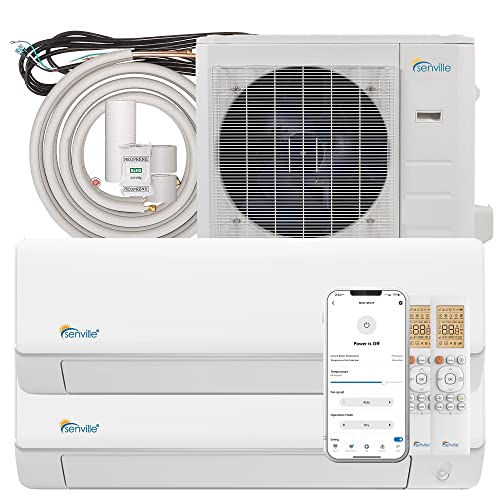
Senville 28000 BTU Dual Zone Mini Split Air Conditioner Heat Pump, 2 Ton, Works with Alexa, White
PERFECT FOR MULTIPLE ROOMS: Comes with multiple indoor air handlers for individual rooms and a single outdoor unit....
As an affiliate, we earn on qualifying purchases.
Selecting Healthy Plants for Seed Saving

When selecting plants for seed saving, pick the healthiest and most vigorous specimens. Guard against plants showing signs of disease or weakness, as these traits can pass to your seeds. Choosing strong, disease-free plants helps ensure your future crops stay resilient. Remember, fatherly guidance and careful selection play a key role in successful gardening practices.
Choosing Robust Specimens
Choosing healthy, vigorous plants is essential for successful seed saving because these specimens are more likely to produce strong, resilient offspring. Look for plants with robust growth, healthy leaves, and a good height. High plant vigor indicates strong genetics, which directly influences seed quality. Selecting specimens that have thrived in your environment ensures adaptability and better seed performance. Use this quick reference:
| Plant Trait | Indicators | Benefits |
|---|---|---|
| Strong stems | No wilting or drooping | Resilient seedlings |
| Healthy leaves | Vibrant color, no spots | Disease resistance |
| Vigorous growth | Rapid, consistent development | High seed production |
| Uniform size | Consistent maturity | Reliable germination |
| Adaptability | Thrives in your climate | Better seed resilience |
Additionally, observing plant resilience in various conditions can help identify the best candidates for seed collection.
Avoiding Disease-Prone Plants
To guarantee high-quality seeds, you need to avoid plants that show signs of disease or weakness. Select disease-resistant varieties whenever possible, as they are less prone to infections and will produce healthier seeds. Inspect plants carefully for spots, discoloration, or wilting, and discard any that display these symptoms. Incorporate crop rotation strategies to reduce the buildup of pathogens in your soil, which helps prevent disease spread. Growing different plant families each season minimizes the risk of disease-prone plants contaminating your seed stock. Healthy, vigorous plants are more likely to produce strong seeds with good germination rates. Proper plant selection and practicing crop rotation are essential for maintaining resilient seed stocks. By choosing resistant varieties and practicing crop rotation, you ensure your seed saving efforts yield resilient plants for future seasons.
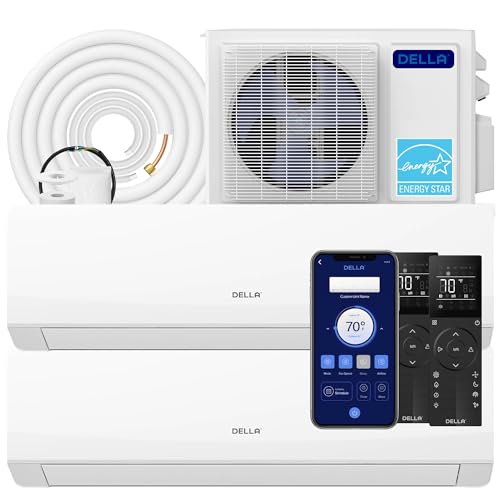
DELLA 18K BTU 2 Zone 9000 9000 BTU Mini Split AC & Heat Pump, Energy Star 22 SEER2 Inverter 230V Ductless AC System for Rooms up to 800 Sq.Ft, WiFi & Voice Control, Pre-Charged, 16.4ft Install Kit
Energy Efficient Cooling & Heating: DELLA 18000 BTU/h, higher 22 SEER2 rating, 230V, UL/ETL Listed, AHRI Certified 1.5...
As an affiliate, we earn on qualifying purchases.
Harvesting Seeds at the Right Maturity
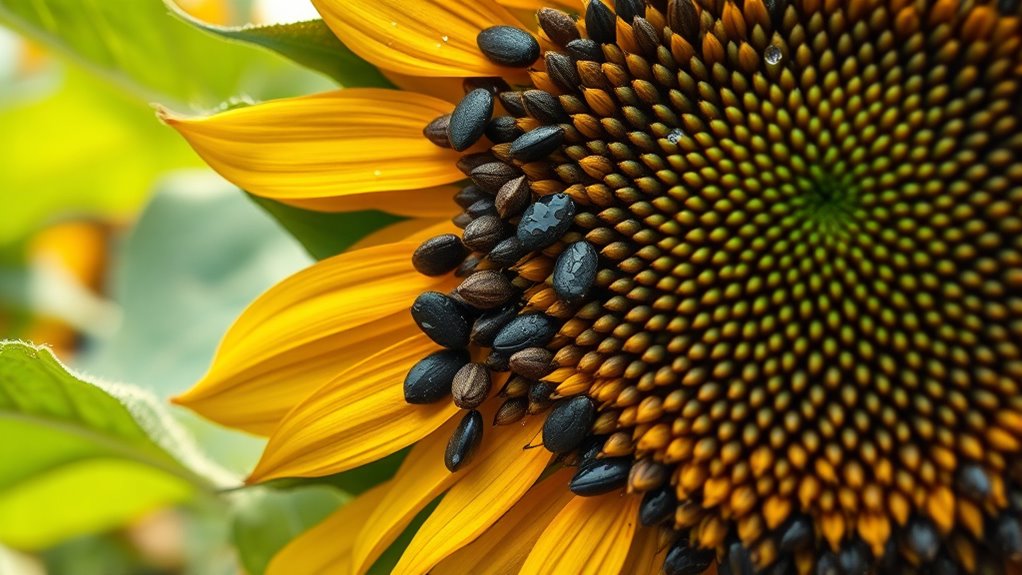
Have you ever harvested seeds too early or too late, only to find they don’t store well or sprout poorly? Knowing the right seed maturity is essential for successful seed saving. When seeds reach full maturity, they develop the right size, color, and texture, signaling they’re ready for harvest. If you wait too long, seeds may drop naturally or become overripe, reducing viability. Conversely, harvesting too early means seeds aren’t fully developed, leading to poor germination. To determine the correct harvest timing, observe seed pods or fruits closely. Look for signs like drying, browning, or hardness. Timing your harvest precisely ensures your saved seeds have the best chance for healthy, vigorous growth next season. Proper seed maturity is key to successful seed saving. Additionally, understanding the shelf life of seeds can help you store them appropriately for future planting success.

ROVSUN 20000 BTU Dual Zone WIFI Mini Split AC/Heating System, 23 SEER2 2 Zone 9000 + 9000 BTU Ductless Split Air Conditioner with Pre-Charged Condenser, Heat Pump & 25Ft Copper Line Set, 208-230V
All-in-one for Multiple Rooms: Equipped with 1 outdoor 20,000BTU condenser and 2 indoor (9,000BTU + 9,000BTU) air handlers...
As an affiliate, we earn on qualifying purchases.
Cleaning and Preparing Seeds for Storage
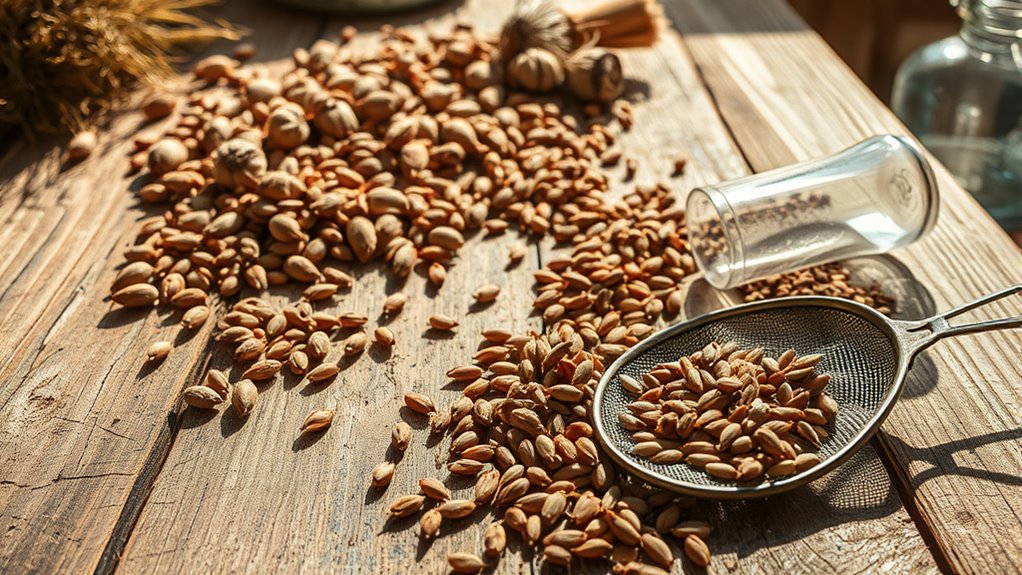
Once you’ve harvested your seeds, it’s important to clean off any debris and chaff to prevent mold and pests. Make sure the seeds have reached full maturity, so they store well and remain viable. Finally, dry your seeds thoroughly using proper techniques to avoid spoilage during storage. Using deep cleaners can ensure your seeds are free from residual dirt and contaminants before storing.
Removing Debris and Chaff
Before storing your seeds, it’s essential to remove any remaining debris and chaff that might be clinging to them. This process involves careful weed removal and debris clearing to guarantee your seeds stay fresh and viable. Use your hands or a gentle brush to dislodge loose plant material, stems, and chaff. Avoid rushing, as leftover debris can promote mold or attract pests during storage. Focus on separating clean seeds from any unwanted material, making sure no debris remains. Proper debris clearing helps prevent contamination and preserves seed quality. Once you’ve removed all debris and chaff, your seeds will be ready for the next step in storage. Keeping your seeds clean and debris-free ensures they stay healthy and ready for planting in the future.
Ensuring Complete Maturity
Ensuring your seeds are fully mature is a crucial step before storage, as immature seeds won’t store well or germinate reliably. Proper seed maturity depends on correct harvest timing, which varies by plant type. To confirm seed maturity, look for signs like color change, hardness, and the seed’s ability to rattle inside the pod. Harvest too early, and the seeds may be underdeveloped; wait too long, and they might disperse or deteriorate. Carefully clean off debris and chaff to prevent mold or pests. Handling seeds at full maturity ensures better viability and longevity. Remember, patience during this stage pays off with healthier, more successful seeds for next season. Additionally, understanding the seed drying process can help maintain seed quality during storage.
Proper Drying Techniques
Proper drying techniques are essential to prepare your seeds for long-term storage and guarantee they stay viable. First, ensure the seed moisture content is low enough to prevent mold or rot; seeds should feel dry to the touch but not brittle. Spread the seeds in a single layer on a screen or paper to promote even airflow circulation. Keep them in a warm, dry, well-ventilated area away from direct sunlight. Regularly stir or turn the seeds to facilitate uniform drying. Avoid rushing the process with heat or artificial fans, as rapid drying can damage seed quality. Proper airflow circulation removes excess moisture and helps maintain seed integrity. Once thoroughly dried, store the seeds in airtight containers in a cool, dark place for optimal longevity. Using vetted drying techniques ensures your seeds’ viability and longevity.
Proper Drying Techniques for Different Seed Types
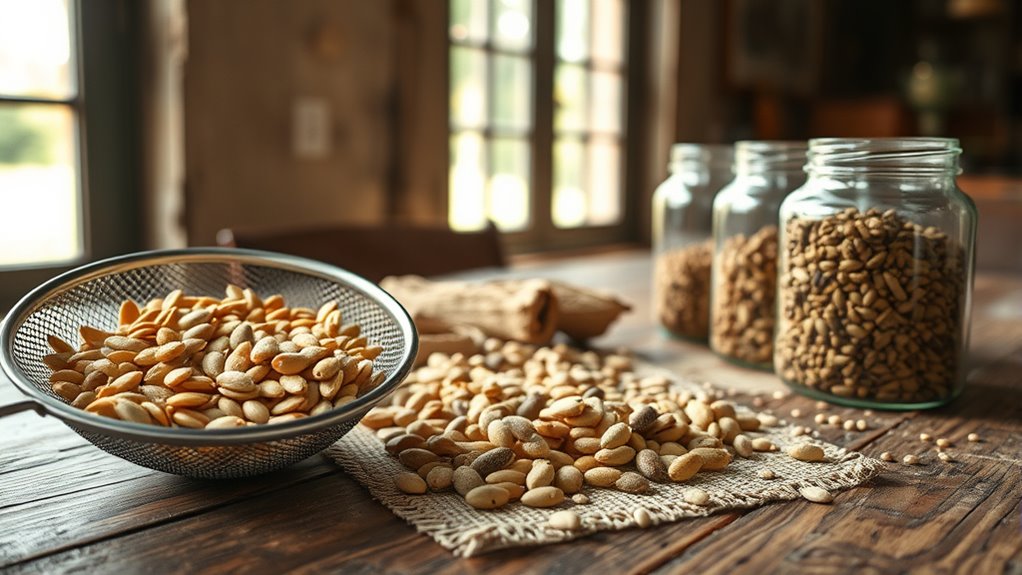
Different seed types require specific drying methods to guarantee viability and longevity. Understanding seed coat textures helps determine the best approach—smooth coats dry quickly, while hairy or textured coats may need gentle handling. Proper moisture content management is essential; too much moisture causes mold, while too little reduces germination. To dry seeds effectively:
Proper seed drying depends on coat texture and moisture control for optimal viability.
- Use a well-ventilated, shaded area to prevent direct sunlight damage
- Spread seeds evenly on a screen or paper for uniform drying
- Monitor moisture levels regularly with a hygrometer
- Handle seeds gently to avoid damaging delicate seed coats
Additionally, being aware of the impact of technology on artistic expression can inspire more mindful and creative seed-saving practices.
Storage Solutions to Maintain Seed Viability
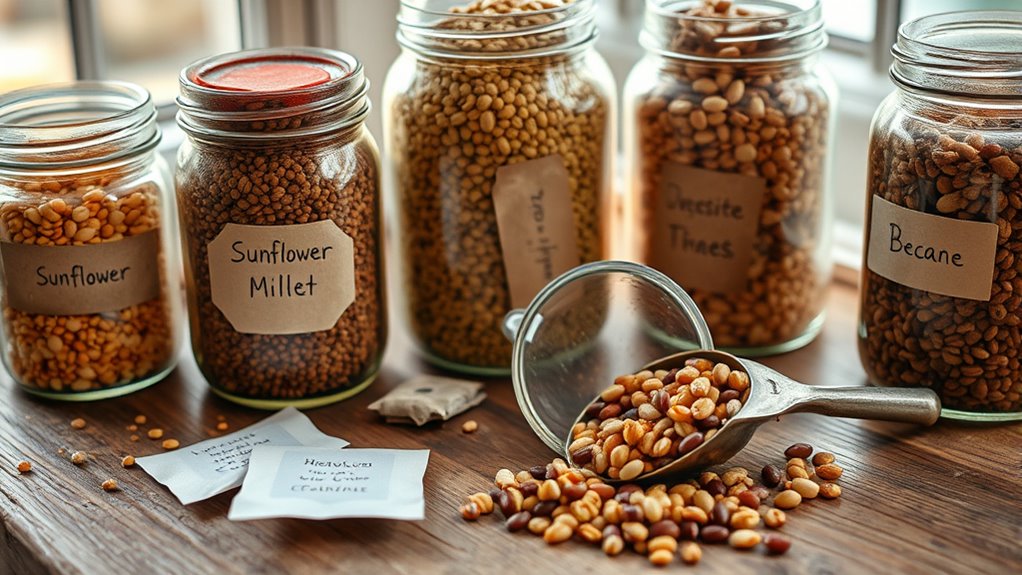
Choosing the right containers helps safeguard your seeds from pests and moisture. Keeping storage areas cool and stable in temperature prevents premature sprouting or spoilage. Managing humidity levels ensures your seeds stay viable for future planting; a little effort here makes a big difference. Incorporate proper storage solutions like airtight containers and moisture absorbers to further enhance seed preservation.
Proper Container Selection
Selecting the right container is essential to keeping your seeds viable over time. You want containers that protect seeds from moisture, pests, and light, which can degrade their quality. Choose container materials like glass or plastic with airtight seals to prevent air and humidity from damaging the seeds. The size of your seed container also matters; smaller containers reduce exposure and make it easier to organize different seed types. Ensure the containers are clean and dry before use to avoid mold or contamination. Proper labeling is key for easy identification later. Using the right seed container sizes helps maintain seed freshness and longevity, ensuring your seeds stay viable until planting time. Additionally, selecting containers made from airtight materials can significantly extend seed viability by preventing moisture ingress. With careful selection, you’ll maximize seed preservation and gardening success.
Temperature Control Tips
To keep your seeds viable over time, maintaining the right storage temperature is essential. Proper temperature regulation helps prevent seed dormancy from breaking prematurely and ensures seeds remain healthy for planting later. Keep seeds in a cool, consistent environment, ideally between 32°F and 41°F (0°C to 5°C), such as a refrigerator or a cool basement. Fluctuations in temperature can trigger seed dormancy loss or reduce viability. Avoid storing seeds near heat sources, sunlight, or in places with high humidity. Consistent temperatures slow down metabolic processes, preserving seed quality and longevity. Additionally, using vetted storage containers designed for seed preservation can further enhance viability. By controlling storage temperatures carefully, you give your seeds the best chance to stay dormant until you’re ready to plant them, ensuring successful germination when the time comes.
Humidity Management Practices
Controlling humidity levels is vital for keeping seeds viable during storage. Proper humidity regulation prevents mold, rot, and loss of germination potential. To achieve effective moisture regulation, consider using airtight containers with desiccants like silica gel or activated charcoal. Keep your storage area cool and dry, avoiding fluctuations in humidity. Regularly monitor humidity levels with a hygrometer to guarantee ideal conditions. Additionally, store seeds away from direct sunlight and sources of moisture that could compromise moisture regulation. Maintaining consistent humidity helps preserve seed viability over time. Advances in machine learning algorithms are also being utilized to develop smarter storage monitoring systems that can predict and adjust humidity levels automatically. By paying close attention to humidity management practices, you’ll extend seed longevity and guarantee healthy germination when planting season arrives. Proper humidity control is a simple yet vital step in successful seed saving.
Labeling and Organizing Your Seed Collection
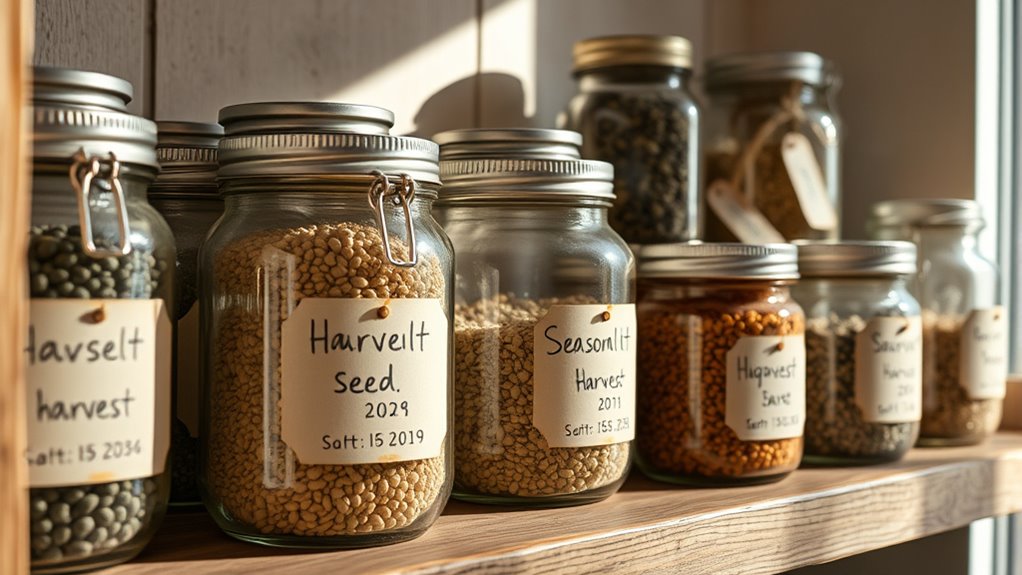
Organizing your seed collection begins with clear labeling, which helps you easily identify and access your seeds when needed. Proper seed labeling ensures you know the plant variety, harvest date, and year, preventing confusion later on. Use waterproof markers or labels that won’t smudge or fade over time. When it comes to seed organization, categorize your seeds by plant type, planting season, or growth cycle to streamline your gardening process. Store similar seeds together in labeled containers or envelopes and keep a master list of your collection for quick reference. This systematic approach saves time and reduces the risk of planting the wrong seeds. Well-labeled and organized seeds make your gardening efforts more efficient and enjoyable, helping you maximize your harvest. Additionally, understanding potential pitfalls in adopting new payment technologies can help you avoid disruptions if you decide to incorporate digital tools into your seed management system.
Saving Seeds From Vegetables and Herbs
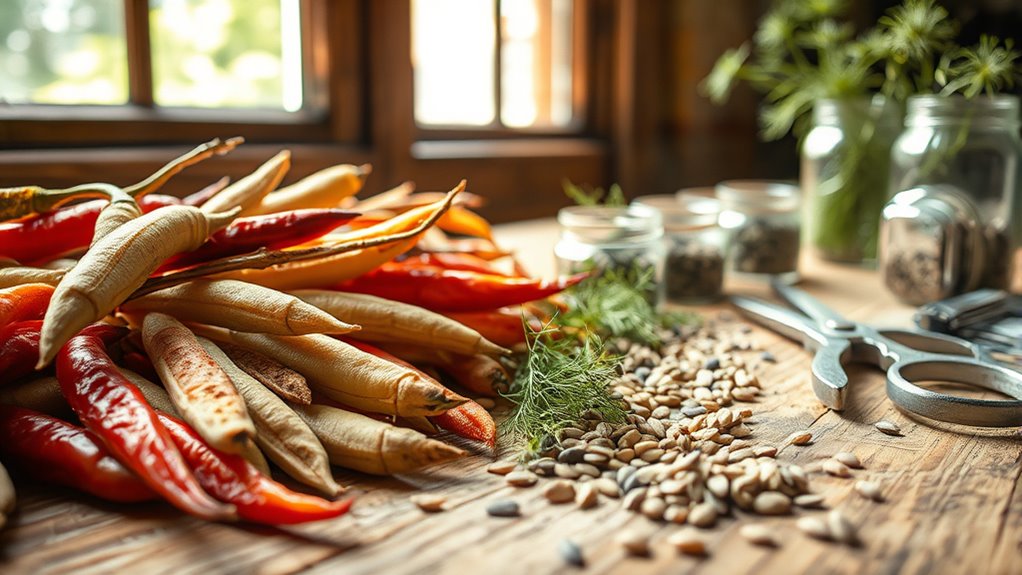
Saving seeds from vegetables and herbs is a rewarding way to preserve your favorite varieties and reduce gardening costs. It helps maintain seed genetic diversity and ensures you have resilient plants for future seasons. To successfully save seeds, let vegetables like tomatoes, peppers, and herbs such as basil mature fully before harvesting. Keep seeds dry and clean to prevent mold and disease. Sharing seeds through seed exchange programs promotes genetic diversity and strengthens local gardening communities. Consider labeling your saved seeds with variety and harvest date for easy identification. Store seeds in a cool, dark place to maximize viability. Engaging in seed exchange programs can introduce new genetic traits and expand your seed collection, making your garden more adaptable and vibrant. Additionally, seed exchange programs remain popular among gardening enthusiasts and help sustain diverse plant populations for generations to come.
Preserving Seeds From Fruits and Flowers

After harvesting seeds from vegetables and herbs, you can expand your seed collection by saving seeds from fruits and flowers. This process preserves seed genetics and maintains seed viability for future planting. Choose mature, healthy fruits and flowers, and carefully extract the seeds. Clean and dry them thoroughly to prevent mold and deterioration. Proper storage is essential; keep seeds in labeled, airtight containers in a cool, dark place. This helps retain their vitality and ensures successful germination later. Use the table below to differentiate between fruit and flower seed saving:
| Fruits | Flowers |
|---|---|
| Select fully ripened fruit | Harvest at peak bloom |
| Extract seeds carefully | Remove seeds from seed heads |
| Dry thoroughly | Store in paper envelopes |
| Store in cool, dark place | Maintain seed viability |
| Label with date and source | Keep dry and labeled |
This method ensures your seeds remain viable, preserving their genetic traits for seasons to come. Additionally, understanding the cost factors of seed saving tools can help optimize your efforts.
Tips for Growing Out Saved Seeds in the Next Season
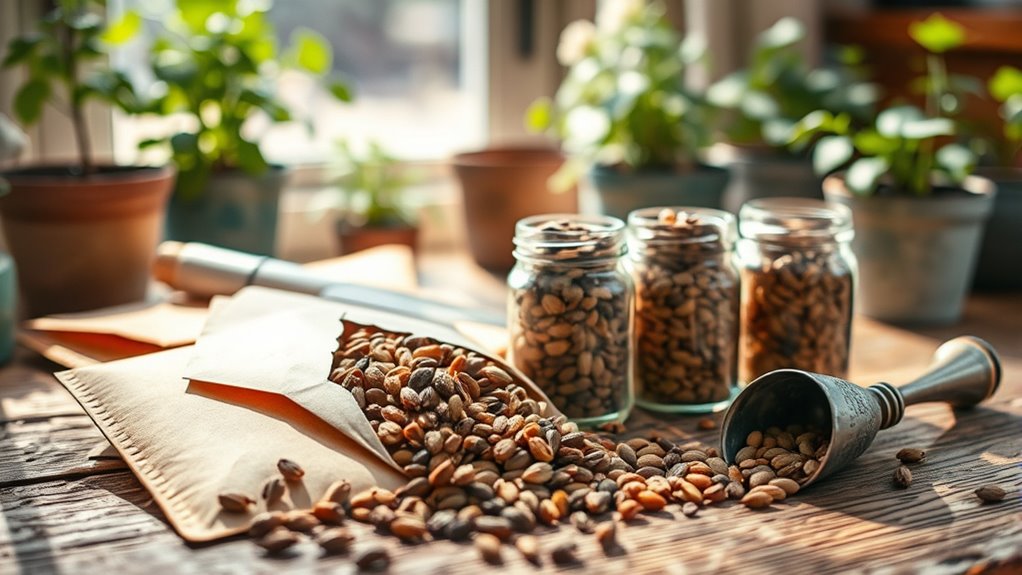
To successfully grow out your saved seeds next season, start by selecting the healthiest and most viable seeds from your collection. Conduct germination testing by placing a few seeds between moist paper towels to check seed viability. This helps you identify which seeds are likely to sprout and ensures a successful start. Keep in mind that older seeds may have lower viability, so testing is especially important for seeds stored over winter. Store your seeds in a cool, dry place to maintain their quality until planting. When you’re ready, plant the seeds at the appropriate depth and spacing for each type. Proper handling and testing increase your chances of a bountiful harvest. Using high-quality oils during seed processing or storage can help preserve seed health and vigor. Monitoring your seedlings for healthy growth is essential for a successful season.
Frequently Asked Questions
How Long Can I Store Seeds Before They Lose Viability?
You can usually store seeds for 1 to 5 years before their seed viability declines considerably. Proper storage duration depends on the seed type; some, like beans and corn, last shorter, while others, like onions and herbs, stay viable longer. Keep seeds in a cool, dry, airtight container to maximize storage duration. Regularly check for signs of mold or moisture to ensure your seeds remain viable for planting future seasons.
Are There Specific Containers Best for Seed Storage?
You should choose containers that protect your seeds from moisture, light, and temperature fluctuations. Opt for airtight, opaque containers like glass jars with tight-fitting lids or plastic seed storage boxes. These help with seed packet organization and prevent deterioration. Avoid clear plastics or flimsy materials that let light in or allow moisture to seep in. Proper container material selection guarantees your seeds stay viable longer, making your garden more successful.
Can I Save Seeds From Hybrid Plants for Next Season?
Sure, you can save seeds from hybrid plants, but beware — seed hybrid compatibility varies, and you might not get the same plant next season. Hybrid seeds often produce unpredictable results, so check seed saving legality before harvesting. If you’re aiming for consistency, consider saving seeds only from open-pollinated varieties. Keep in mind, saving hybrid seeds can lead to surprises, so plan accordingly to preserve your planting plans!
How Do Climate Conditions Affect Seed Preservation?
Climate variability directly impacts seed preservation by influencing seed longevity and viability. Warmer, humid conditions can cause seeds to deteriorate faster, reducing their ability to germinate later. Conversely, stable, cool, and dry environments extend seed longevity. You should store seeds in airtight containers in a controlled environment to protect them from unpredictable climate changes, ensuring they stay viable longer for planting season after season.
What Are Common Mistakes to Avoid When Saving Seeds?
You absolutely must avoid seed contamination and improper drying when saving seeds. These mistakes can ruin your entire harvest faster than you can blink! Always keep seeds clean and free from dirt or mold, and guarantee they dry thoroughly before storage. Neglecting these steps may lead to poor germination or mold growth, wasting your effort and seeds. Stay vigilant, follow proper drying techniques, and keep your seeds pristine for future planting success!
Conclusion
By saving seeds, you can grow your garden sustainably and cut costs. Did you know that seed saving dates back over 12,000 years? With proper timing and techniques, you’ll guarantee healthy, productive plants each season. Keep practicing your seed-saving skills, and you’ll enjoy a vibrant, thriving garden year after year. Plus, you’ll be part of a centuries-old tradition that connects you to nature’s cycles—making your gardening journey even more rewarding.