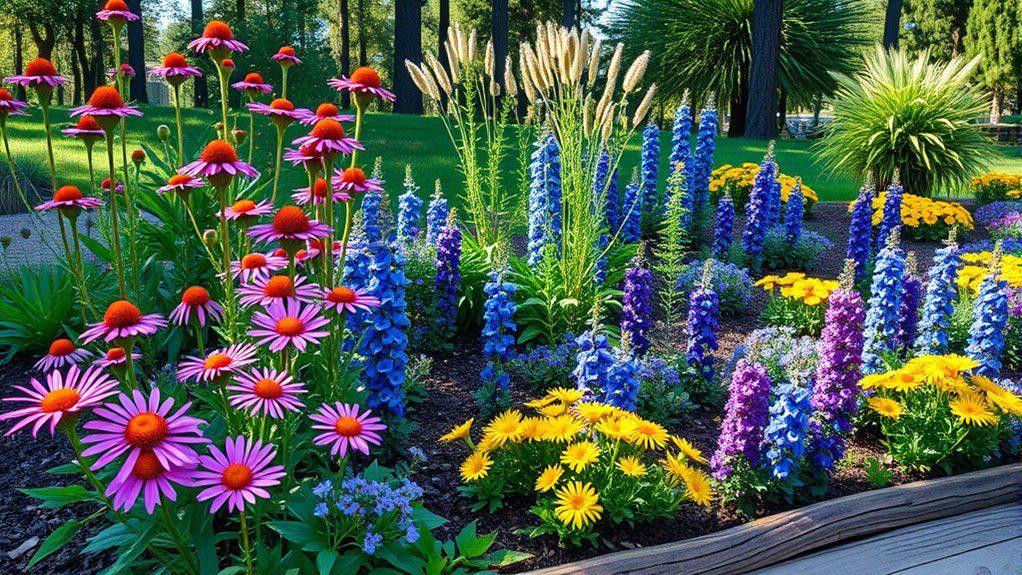
Using native plants in your garden creates a healthier, more sustainable space that benefits pollinators, conserves resources, and boosts biodiversity. These plants are adapted to local conditions, needing less water and fertilizers, while providing habitat for bees, butterflies, and birds. They help prevent soil erosion and support eco-friendly gardening practices. By choosing native plants, you foster resilience and harmony in your yard—discover more ways to make your garden eco-friendly as you continue exploring.
Key Takeaways
- Native plants support local pollinators, ensuring healthy ecosystems and improved crop and wild plant productivity.
- They have deep roots that stabilize soil, prevent erosion, and reduce runoff, promoting soil health.
- Once established, native plants require minimal watering, fertilizers, and pest control, making gardens low-maintenance.
- They create habitats for wildlife, enhancing biodiversity and making gardens more resilient to pests and diseases.
- Native plants conserve resources by requiring less water and chemicals, fostering sustainable and environmentally friendly gardening.

Gardening with native plants is one of the simplest ways to create a healthier, more sustainable landscape. When you choose native species, you’re supporting local pollinators like bees, butterflies, and hummingbirds that rely on these plants for food and habitat. These pollinators are essential for maintaining healthy ecosystems and ensuring the productivity of many crops and wild plants. By planting species that native pollinators recognize and depend on, you make a direct contribution to their survival, which in turn benefits your entire garden and surrounding environment.
Native plants also play a vital role in soil conservation. Unlike many non-native species that may require frequent watering or chemical inputs, natives are adapted to your local climate and soil conditions. This adaptation means they generally have deeper root systems that stabilize the soil, preventing erosion and reducing runoff. When you incorporate native plants into your landscape, you help maintain soil integrity, which in turn keeps nutrients in place and supports healthy plant growth. This natural soil conservation reduces the need for artificial soil amendments, fertilizers, and extensive watering, making your garden more sustainable and less demanding on resources.
Starting with native plants simplifies your gardening routine because they typically require less maintenance once established. You won’t need to invest as much time or money in pest control or fertilizers, since these plants are well-suited to thrive under natural conditions. This resilience not only saves you effort but also lessens your environmental impact by reducing chemical usage. Additionally, native plants often attract beneficial insects that prey on pests, creating a balanced and healthy garden ecosystem that naturally suppresses pest populations.
Moreover, supporting native plants helps preserve local biodiversity. When you plant species native to your region, you create a habitat that sustains a wide variety of insects, birds, and other wildlife. This diversity strengthens the ecological web within your yard, making it more resilient against pests and diseases. It also offers you a more authentic garden experience, with seasonal blooms and wildlife interactions that are true to your local landscape.
In addition, native plants tend to require fewer resources like water and fertilizers, which further enhances the sustainability of your garden. Incorporating native plants into your gardening habits is a practical step toward environmental stewardship. It’s about working with nature rather than against it, reducing your garden’s ecological footprint, and fostering a thriving, sustainable landscape. By prioritizing native species, you not only support pollinator populations and conserve soil but also enjoy a more vibrant, low-maintenance garden that benefits everyone—plants, animals, and you.
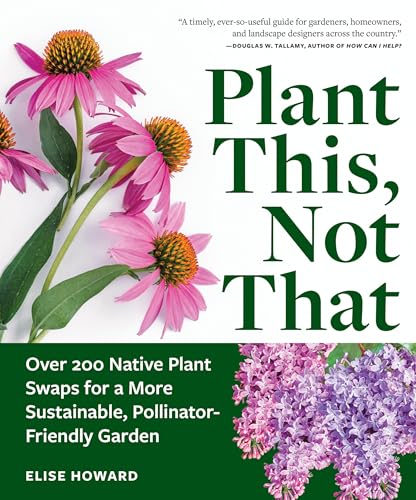
Plant This, Not That: Over 200 Native Plant Swaps for a More Sustainable, Pollinator-Friendly Garden
As an affiliate, we earn on qualifying purchases.
As an affiliate, we earn on qualifying purchases.
Frequently Asked Questions
How Do I Choose Native Plants Suitable for My Specific Climate?
To choose native plants suited for your climate, start by identifying your climate zone using local resources or USDA plant hardiness zone maps. Then, consult plant selection guides specific to your area, which highlight plants thriving in your conditions. Consider soil type, sun exposure, and moisture levels. This approach guarantees you select native plants that will flourish, supporting a healthier, more sustainable garden tailored to your environment.
What Are Common Mistakes to Avoid When Planting Native Species?
When planting native species, avoid common mistakes like ignoring your garden design and rushing plant selection. You might choose plants that don’t suit your soil or sunlight conditions, which can lead to poor growth. Also, skipping proper spacing or overwatering can harm your native plants. Always research each plant’s needs and incorporate them thoughtfully into your garden design to make certain of healthy, sustainable growth and a thriving native landscape.
How Can I Ensure Native Plants Thrive in Urban Environments?
Did you know urban native plants often struggle due to improper watering and soil? To guarantee they thrive, monitor their watering requirements closely, adjusting based on weather and season. Start with thorough soil preparation, enriching it if needed, to improve drainage and nutrients. Proper watering and soil prep create a strong foundation, helping your native plants adapt to urban conditions and flourish amidst city landscapes.
Are Native Plants Resistant to Local Pests and Diseases?
Native plants generally have strong resilience to local pests and diseases, making them a smart choice for your garden. Their pest resistance strategies include natural defenses honed over time, which can reduce the need for chemical treatments. To boost native plant resilience, you should maintain healthy soil, proper watering, and encourage beneficial insects. This approach helps your native plants thrive and stay resistant to common pests and diseases.
What Maintenance Is Required for Native Plant Gardens?
Think of your native plant garden as a lively community. You’ll need to water native plants during dry spells and perform native plant pruning to keep them healthy and thriving. Usually, minimal maintenance is required—just remove dead or damaged stems and occasionally mulch. For example, I once pruned my wildflowers in early spring, which encouraged vibrant blooms. With regular care, your native garden will flourish with less effort over time.
Conclusion
By choosing native plants, you’re planting the seeds for a healthier, more vibrant garden that thrives with less effort. Think of your garden as a symphony, where native plants are the harmonious notes that create balance and beauty naturally. Every plant you add helps protect local ecosystems and reduces your environmental footprint. So, embrace native plants and watch your garden flourish like a well-tuned orchestra—beautiful, sustainable, and full of life.