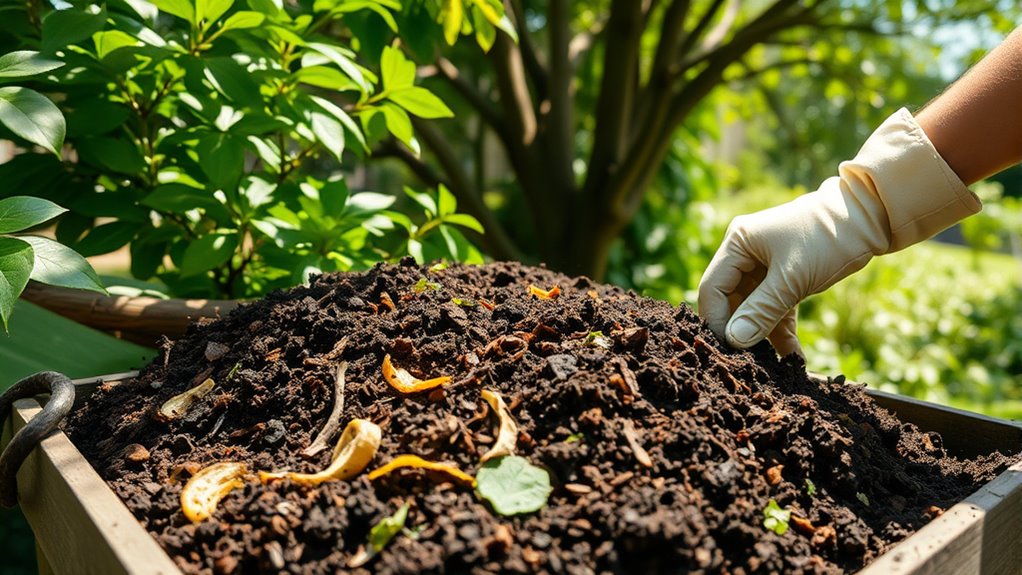

Getting started with composting is simple and eco-friendly. You’ll want to balance green materials like food scraps with brown materials such as dry leaves or paper to promote efficient decomposition. Keep your compost moist, turn it regularly for aeration, and avoid adding meat or dairy to prevent pests and odors. Maintaining these basics ensures healthy compost that enriches your soil. Keep exploring further, and you’ll gain all the tips needed for successful composting and sustainable waste management.

Get garden gear delivered free with Prime
- Fast, free delivery on millions of items
- Prime Video, Amazon Music and more included
- Member-only deals all year
Key Takeaways
- Understand the importance of balancing green (nitrogen) and brown (carbon) materials for effective composting.
- Keep the compost moist, aerated, and regularly turned to promote healthy decomposition.
- Avoid adding meats, dairy, or oily foods to prevent pests and odors.
- Monitor compost for signs of problems like foul smell or pests, and adjust layers accordingly.
- Use compost to enrich soil, supporting sustainable gardening and environmental health.
As an affiliate, we earn on qualifying purchases.
Getting Started With Composting Basics
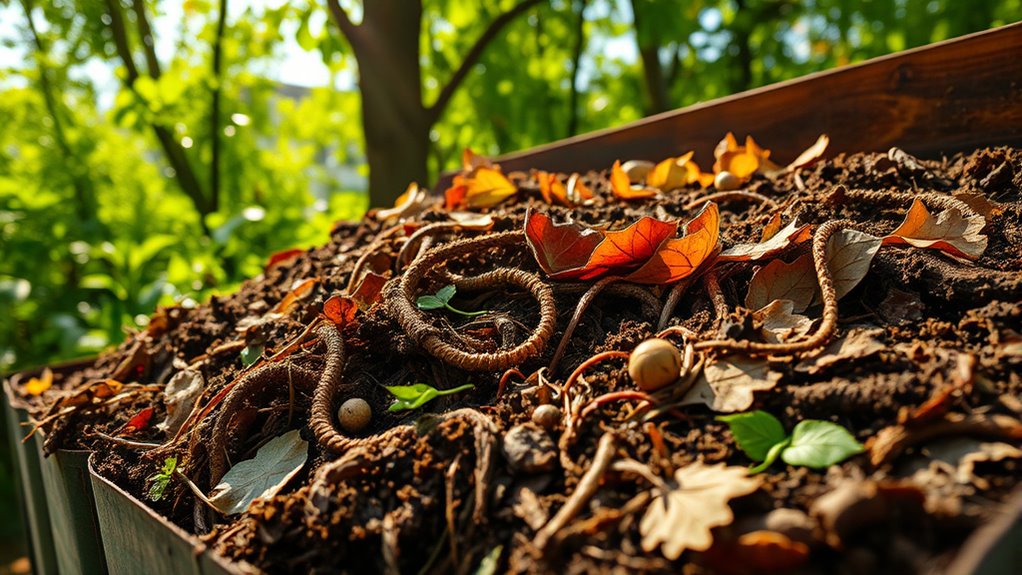
Composting is an eco-friendly way to recycle organic waste and enrich your soil, making it a valuable practice for gardeners and environmentally conscious individuals. Understanding the basics of composting, including proper materials and maintenance, can help ensure successful compost creation. It’s important to balance green and brown materials, maintain adequate moisture, and turn the pile regularly to promote decomposition. Additionally, being aware of common issues like pests or odors can help you troubleshoot and keep your compost healthy. Incorporating knowledge about soil health and sustainable practices can enhance your composting success and benefit the environment.
Frequently Asked Questions
How Long Does It Take for Compost to Be Ready?
It typically takes about 3 to 6 months for compost to be ready, depending on your composting timeline and conditions. You’ll know it’s ready when it has a dark, crumbly texture and earthy smell. Turn your pile regularly to speed up the process, and look for readiness indicators like a uniform color and temperature drop. Patience is key—your compost will be perfect for gardening once these signs appear.
Can I Compost in a Small Apartment?
Yes, you can compost in a small apartment using indoor composting methods. You should get an apartment compost bin, which is designed for limited space and contains odors effectively. Place it in your kitchen or a suitable indoor spot. Add kitchen scraps like vegetable peels and coffee grounds, and turn or aerate regularly. This way, you can compost efficiently without needing a backyard or outdoor space.
What Should I Do if My Compost Smells Bad?
If your compost smells bad, you need to troubleshoot it quickly. First, check for excess moisture or too many nitrogen-rich materials, which can cause compost odor. Turn the compost to aerate it, helping to reduce smell. Add dry, carbon-rich materials like leaves or paper to balance moisture and nutrients. Proper troubleshooting compost guarantees your compost stays fresh and odor-free, making your composting experience more enjoyable and effective.
Are There Any Items I Should Never Compost?
Think of your compost as a treasure chest—you wouldn’t want to toss in just anything! Never compost non-compostables like plastic, metal, or glass, which can harm your pile and environment. Also, avoid green waste such as meat, dairy, oily foods, or diseased plants. These can cause odors and attract pests. Stick to proper organic waste, and your compost will turn into rich soil without a hitch!
How Often Should I Turn or Aerate the Compost?
You should turn or aerate your compost every 3 to 7 days to promote proper aeration and decomposition. This process, called compost turning, helps introduce oxygen, preventing odors and speeding up composting. Adjust the aeration frequency based on temperature and moisture levels; if it’s hot and dry, turn more often. Regular compost turning keeps the pile well-oxygenated, ensuring healthy microbial activity and faster, efficient composting.
Conclusion
Now that you know the basics, composting is easier than you think. Did you know that composting can divert up to 30% of household waste from landfills? By starting today, you not only reduce waste but also create nutrient-rich soil for your garden. Every small effort counts—so grab your compost bin and get started. Before long, you’ll enjoy healthier plants and a greener planet. Happy composting!
Halloween Picks
halloween
As an affiliate, we earn on qualifying purchases.