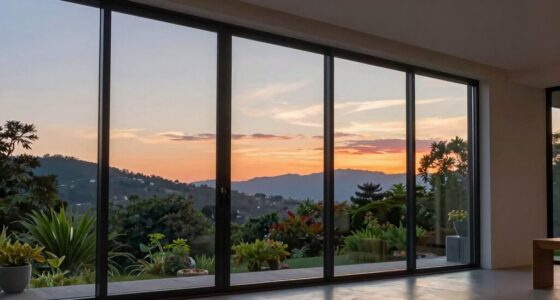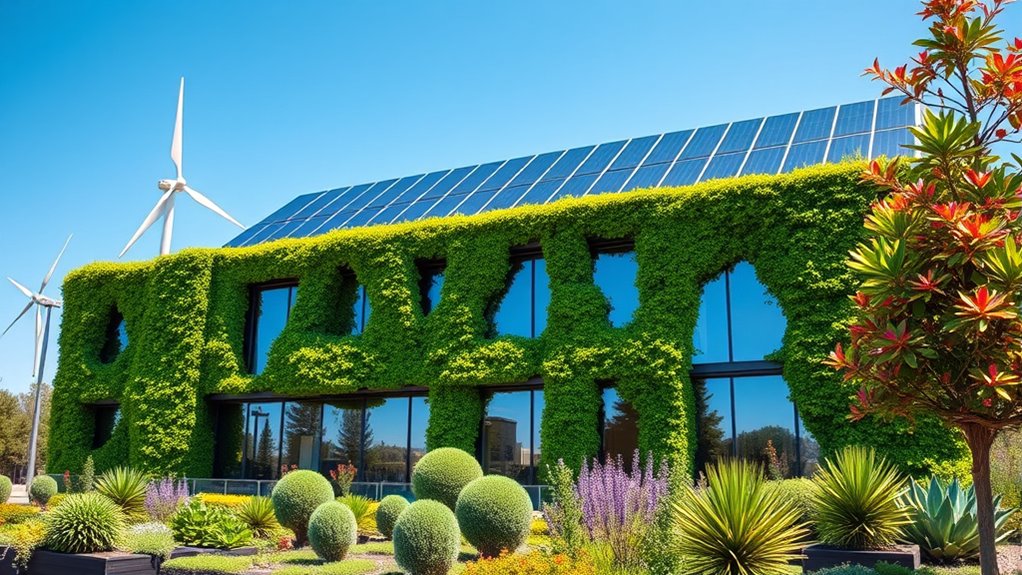
Innovative green architecture combines eco-friendly materials, energy-efficient designs, and sustainable planning to reduce environmental impact. You’ll see projects that prioritize renewable resources like bamboo, reclaimed wood, and recycled steel, along with techniques such as modular construction and passive energy strategies. These case studies show buildings that incorporate green spaces, solar panels, and natural ventilation for healthier, more efficient spaces. Keep exploring to uncover inspiring examples of how sustainability is shaping future-proof structures.

Get garden gear delivered free with Prime
- Fast, free delivery on millions of items
- Prime Video, Amazon Music and more included
- Member-only deals all year
Key Takeaways
- Case studies highlight the integration of green corridors and natural landscapes for eco-conscious urban development.
- They showcase the use of renewable materials like bamboo, reclaimed wood, and recycled steel to enhance sustainability.
- Innovative designs incorporate modular construction and natural insulation techniques to reduce waste and improve energy efficiency.
- Examples emphasize passive strategies such as building orientation and natural ventilation to minimize reliance on artificial systems.
- Successful projects demonstrate holistic approaches combining renewable energy, green spaces, and eco-friendly systems for sustainable living.
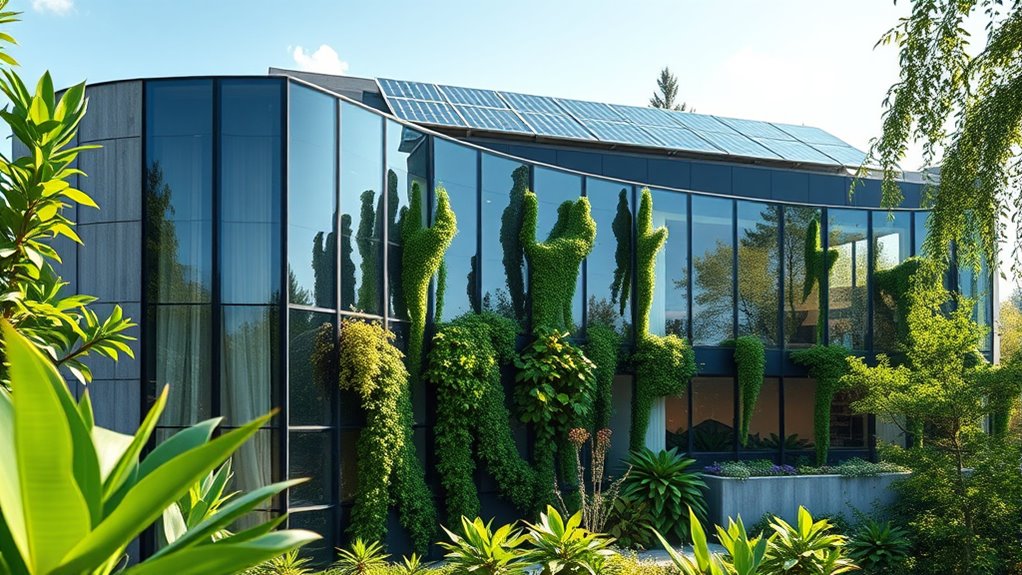
Have you ever wondered how sustainable design transforms buildings into environmentally friendly spaces? It all begins with innovative approaches to urban planning that prioritize eco-conscious development. When architects and city planners work together, they create layouts that reduce travel distances, promote green corridors, and incorporate natural landscapes into cityscapes. This thoughtful planning ensures that buildings are not just isolated structures but integral parts of a larger, sustainable ecosystem. By integrating green spaces, bike paths, and public transit options, urban planning minimizes pollution and carbon footprints, making cities healthier and more livable.
One of the most compelling aspects of green architecture is the use of renewable materials. Instead of relying on traditional, resource-intensive construction supplies, these buildings utilize sustainable resources like bamboo, reclaimed wood, recycled steel, and other eco-friendly materials. These choices considerably cut down on environmental impact by reducing energy consumption during manufacturing and construction. For example, bamboo grows rapidly and absorbs more carbon dioxide than many trees, making it a highly renewable resource. Reclaimed wood not only gives new life to old materials but also reduces deforestation. Using recycled steel helps lower energy use in production, further decreasing the building’s overall carbon footprint. The integration of renewable materials in construction showcases a commitment to sustainability from the ground up, emphasizing durability while reducing ecological harm. Additionally, incorporating green wall systems can improve insulation and air quality within buildings, further supporting eco-friendly design principles.
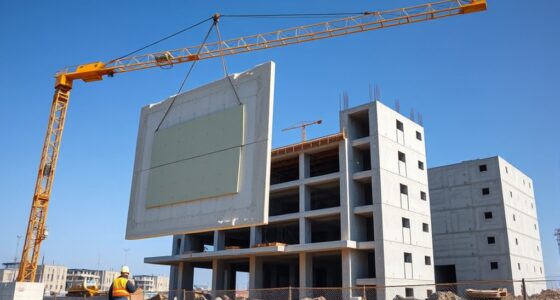
You’ll notice that these principles are often combined with innovative building techniques. For instance, some structures employ modular designs that allow for easier assembly and disassembly, promoting reuse and reducing waste. Others incorporate natural insulation materials like sheep’s wool or cellulose, which improve energy efficiency without relying on synthetic options. These choices reflect a dedication to reducing energy demand, lowering greenhouse gas emissions, and creating healthier indoor environments. Moreover, integrating energy-efficient technologies such as solar panels and rainwater harvesting systems further enhances the sustainability of green architecture. Incorporating renewable energy sources can significantly decrease the dependence on fossil fuels, leading to greener building operations and lower carbon emissions. Furthermore, employing passive design strategies, such as optimizing building orientation and natural ventilation, can greatly boost energy savings and indoor comfort. Emphasizing environmentally friendly construction methods helps ensure that sustainability remains a central focus throughout the building lifecycle.
bamboo sustainable building materials
As an affiliate, we earn on qualifying purchases.
As an affiliate, we earn on qualifying purchases.
Frequently Asked Questions
What Are the Initial Costs of Green Architecture Projects?
You might wonder about the initial costs of green architecture projects. Typically, installing features like a green roof or integrating solar panels requires higher upfront investments compared to traditional buildings. These costs cover specialized materials, installation, and planning. However, you could save money in the long run through reduced energy bills and maintenance. While initial expenses are higher, the environmental benefits and energy efficiency make green architecture a smart investment.
How Do Green Buildings Impact Local Ecosystems?
Imagine green buildings as nurturing trees that invite urban flora and boost biodiversity enhancement. When you choose eco-friendly designs, you support local ecosystems by providing habitats and reducing pollution. These structures act like living lungs, improving air quality and fostering wildlife. Your efforts encourage a thriving environment where urban flora flourishes, and biodiversity expands, creating a harmonious balance between architecture and nature that benefits everyone in the community.
What Certifications Validate Sustainable Building Practices?
You want to know what certifications validate sustainable building practices. LEED certification is a popular choice, recognizing buildings that meet high environmental standards. BREEAM standards also assess sustainability, focusing on energy efficiency and resource management. These certifications guarantee your project adheres to rigorous eco-friendly criteria, boosting credibility and market value. By pursuing LEED or BREEAM, you demonstrate your commitment to sustainable construction and environmental responsibility.
How Do Green Designs Adapt to Climate Change?
Imagine you’re living in a future where buildings hold secrets like the Ark of the Covenant. Green designs adapt to climate change by enhancing climate resilience through innovative adaptive design. You can incorporate features like green roofs, rainwater harvesting, and natural ventilation, which respond to shifting weather patterns. This approach helps your structure withstand extreme conditions, ensuring sustainability while keeping the environment and your comfort protected against the unpredictable impacts of climate change.
What Are the Long-Term Economic Benefits of Green Architecture?
You’ll find that green architecture offers long-term economic benefits through significant energy savings, lowering your utility costs over time. These sustainable designs often lead to higher investment returns by increasing property value and attracting eco-conscious tenants. Additionally, you can benefit from incentives like tax credits and rebates, which further improve your financial outlook. Embracing green building practices helps you achieve cost efficiency now and secures economic stability in the future.
Conclusion
As you reflect on these inspiring examples, it becomes clear that embracing green architecture gently guides us toward a more harmonious future. While challenges remain, the promising innovations showcased suggest a subtle shift in our approach to building design—one that delicately balances progress with nature’s delicate balance. Through thoughtful adaptation and continued ingenuity, you can be part of a movement that silently transforms our environments into sustainable, nurturing spaces for generations to come.
Fall Picks
fall essentials
As an affiliate, we earn on qualifying purchases.