
TL;DR
The final lawn mow should be guided by local temperatures and grass growth, not a fixed calendar date. Experts cited by Homes and Gardens recommend mowing before the first hard frost, leaving most lawns about 2.5 to 3 inches tall, and clearing leaves and debris.
Homes and Gardens has published guidance on when to make a lawn’s final cut before winter, advising homeowners to watch for slowing grass growth and the forecast of a first hard frost rather than rely on a fixed date. The advice matters because mowing too late or cutting grass too short can leave a lawn less prepared for winter and spring growth.

Get garden gear delivered free with Prime
- Fast, free delivery on millions of items
- Prime Video, Amazon Music and more included
- Member-only deals all year
The timing depends on local temperatures, grass type and weather patterns. The Homes and Gardens report says most grass species enter dormancy when temperatures consistently fall below about 50°F. Warm-season grasses may slow earlier, as temperatures reach the 60s, while cool-season grasses typically begin slowing in the 50s. These are general indicators, not a universal schedule: local conditions can change from year to year.
Jeremy Yamaguchi, identified in the report as the former CEO of Lawn Love, recommends following local forecasts as temperatures approach 50°F. Sarah Jameson, founder and owner of Lawn Chick, says slower growth is a sign that grass is preparing for dormancy. She also points to the first hard frost as a seasonal marker, while distinguishing it from the lighter frost that can occur on chilly mornings. The report recommends completing the final mow just before that hard frost.
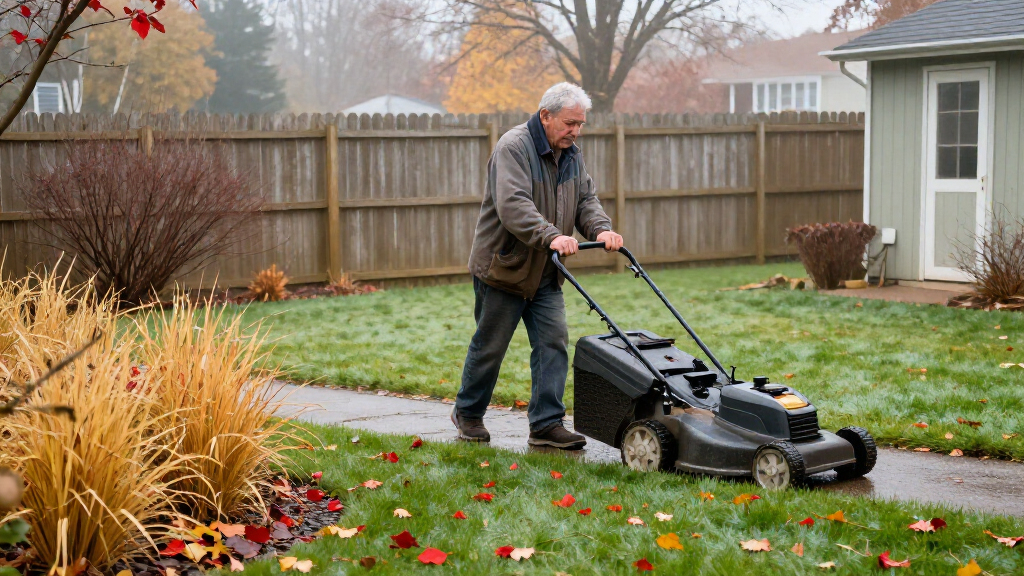
For the last cut, Jameson recommends keeping most lawns around 2.5 to 3 inches tall, rather than cutting them very short. The report also advises mowing only when grass is dry, and removing twigs, rocks, pine cones and other debris first. A mulching mower can chop clippings and leaves into smaller pieces, but a thick layer of whole leaves should be cleared because it can block light and smother grass.
How the Final Cut Affects Spring Grass
The final mow is one part of fall lawn care, but its timing and method can affect the condition in which grass enters winter. Leaving grass at a moderate height provides cover through colder weather, while cutting it very short can leave it more exposed. Clearing debris helps prevent damage to the lawn and mower, and removing heavy leaf cover reduces the risk of grass being smothered underneath it.
The advice is useful because lawn growth does not stop everywhere at the same time. Regional weather and grass type vary, so homeowners who use a calendar date alone may mow too early or miss the local window. Forecasts and the lawn’s own growth provide more relevant signals, though neither gives an exact date that applies to every yard.
Popular right now

Ninja Creami Scoop & Swirl Ice Cream Maker – Bone & Champagne (Amazon Exclusive)

Roborock Qrevo S Pro Robot Vacuum and Mop with 18,500 Pa Suction

Ninja Luxe Café Mini Plus Espresso and Drip Coffee Machine with AutoFroth, Stainless Steel, ES351
As an affiliate, we earn on qualifying purchases.
Temperature, Frost and Regional Timing
The Homes and Gardens report says the timing can differ substantially across the United States. Yamaguchi gives the Midwest as an example, where the final mow may be due around early to mid-October, while in parts of the Southwest it may be as late as late November or early December. These are examples from the report, not fixed dates for every location in those regions.
The distinction between grass types also matters. The report describes warm-season grasses slowing in the 60s and cool-season grasses slowing in the 50s, with dormancy generally associated with sustained temperatures below about 50°F. Because weather varies year to year, the report emphasizes observing growth and checking local forecasts rather than treating those temperature ranges as precise cutoffs.
“Once temperatures are below this mark, most species of grass naturally go dormant and thus no longer need to be mowed.”
— Jeremy Yamaguchi, former CEO of Lawn Love, as quoted by Homes and Gardens
Why There Is No Fixed Last-Mow Date
No single date applies to all lawns, and the source report does not establish a precise temperature threshold for every grass variety or local climate. The 50°F figure and the temperature ranges for warm- and cool-season grasses are broad guidance; local weather, lawn growth and species can affect timing.
The report also does not give a forecast for any particular location or confirm when the first hard frost will occur in a given year. Homeowners will need to check their own local forecasts and observe whether their grass is still growing. The source describes lawn-care recommendations, not a guarantee that a particular mowing height or schedule will produce a specific spring result.
Watch Local Growth and Frost Forecasts
Homeowners can monitor local temperatures and the forecast for the first hard frost, then make the final cut while the grass is still dry and before that frost arrives. Before mowing, clear the lawn of twigs, stones, pine cones and other debris; set the mower to leave most grass around 2.5 to 3 inches tall, following any lawn-specific needs.
After the cut, keep fallen leaves from forming a thick layer on the lawn. The immediate next step is not a shared calendar deadline but continued attention to local weather and whether grass is still growing. The report does not provide a date for when lawns will resume growth; that will depend on conditions in each area next spring.
Key Questions
When should I make the last mow of the year?
Use slowing grass growth and local frost forecasts as cues. The Homes and Gardens report recommends completing the final mow just before the first hard frost, but the timing varies by region, grass type and year.
Should I cut my lawn very short before winter?
No. The report says Sarah Jameson recommends leaving most lawns around 2.5 to 3 inches tall rather than cutting them very short. Lawn needs can vary, so treat that as general guidance.
Can I mow when the grass is wet?
The report advises mowing only when grass is dry. Wet grass can produce an uneven cut, clog the mower and leave clumps on the lawn.
Do I need to remove leaves before winter?
Remove thick layers of whole leaves so they do not smother the grass. The report says a mulching mower can chop leaves into smaller pieces, but it advises against leaving a heavy mat on the lawn.
Does the 50°F guideline apply everywhere?
No. The report presents about 50°F as a general indicator of dormancy for many grass species, not a universal cutoff. Warm-season and cool-season grasses slow at different temperatures, and local conditions matter.
Source: homesandgardens.com