
TL;DR

Get garden gear delivered free with Prime
- Fast, free delivery on millions of items
- Prime Video, Amazon Music and more included
- Member-only deals all year
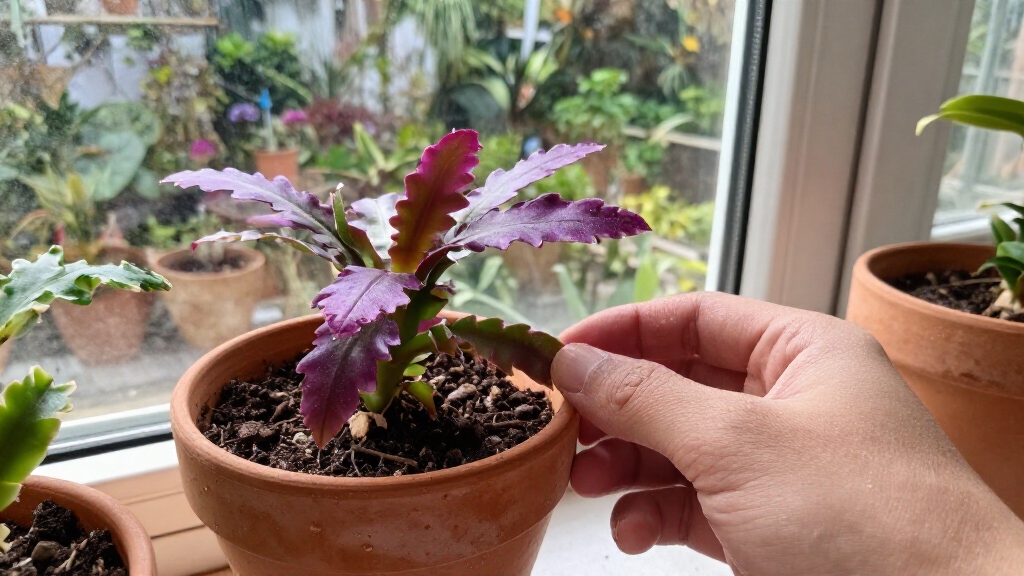
A Christmas cactus’s green stems may turn purple when the plant is stressed by direct sunlight, too much or too little water, nutrient shortages or temperature extremes. The color alone does not identify the cause, so check light, soil moisture, roots and recent temperature conditions before changing care.
Purple or reddish stem segments on a Christmas cactus can be a sign of stress, with bright direct light, improper watering, nutrient deficiency and temperature swings among the likely causes, according to a Gardener’s Path report. The color change does not, by itself, establish which condition is affecting a plant, so growers need to check its environment and growing medium before deciding how to respond.
Christmas cactus, a group of plants in the genus Schlumbergera, is a rainforest epiphyte, not a desert cactus. In its natural setting, it grows on trees and rocks rather than in exposed desert conditions. The report says purple pigments can become more prominent when the plant is under environmental stress.
Excessive direct sunlight is one possible trigger. The report explains that purple anthocyanin pigments may serve as a protective response to ultraviolet exposure, while prolonged harsh light can scorch stems and damage tissue. It recommends filtered or indirect light, such as a suitable north- or west-facing location.
Watering problems can produce similar symptoms. Underwatering can leave the plant stressed and dehydrated; overwatering can deprive roots of air and, in severe cases, leave stems yellow, purple or brown before they become mushy. The report advises using a well-draining pot and medium, and watering when the top one to two inches of potting mix feel dry. It also lists nutrient shortages and unusually hot or cold conditions as possible causes.
Check Care Before Changing It
Recognizing purple stems as a possible stress signal can prompt a timely check of conditions that affect plant health. Strong direct sun may damage stem tissue, while waterlogged roots can lose access to the air they need. Those problems call for different responses, making it risky to assume that discoloration has one universal fix.
The practical takeaway is to look for other signs alongside the color: dry or brittle stems may point toward insufficient moisture, while mushy tissue or persistently wet soil can indicate excess water or root damage. A plant’s recent exposure to direct sun, temperature changes and the condition of its potting medium can also help narrow down the cause. These are clues, not a diagnosis.
Popular right now

Dyson Omni-Glide Cordless Stick Vacuum, Gold/Iron

Dyson PencilVac Fluffycones Cordless Hard Floor Vacuum

Ninja Luxe Café Mini Espresso and Drip Coffee Machine, ES301
As an affiliate, we earn on qualifying purchases.
A Rainforest Cactus Indoors
Though commonly called a cactus, Schlumbergera is adapted to a shaded, humid rainforest environment, where it grows attached to other surfaces. The report notes that its segmented green stems may respond to stressful conditions by taking on purple, red or pink hues. That background helps explain why desert-cactus assumptions—such as placing it in strong direct sun—may not suit this houseplant.
The report describes four broad categories rather than a single confirmed cause: light, moisture, nutrition and temperature. It also points to aerial roots between stem segments as another possible sign of stress, but the available material does not establish that aerial roots and purple coloring always share the same cause.
Color Alone Cannot Diagnose
The source material does not provide a way to identify the precise cause from purple coloring alone, nor does it say how quickly a plant should recover after care changes. Several stressors can produce discoloration, and more than one condition may be present. It is also unclear from the report whether a particular plant’s color change reflects temporary pigment production, lasting tissue injury or another problem.
Before adding fertilizer or changing watering, growers should inspect the soil moisture, drainage, roots and light exposure. The report discusses magnesium, nitrogen and phosphorus shortages but does not establish that a purple plant necessarily lacks any one of those nutrients. Its suggested Epsom-salt treatment applies only if magnesium is the issue, which the color alone cannot confirm.
Review Conditions and Monitor
The next step is to review the plant’s recent conditions: whether it receives direct sun, how often the potting mix dries, whether water drains freely, and whether temperatures have shifted sharply. Make changes that match the evidence—for example, move the plant to filtered light or correct persistently wet soil rather than making several unrelated changes at once.
If overwatering appears likely, the report says a grower may inspect the roots, remove rotten sections and repot in lightly moistened, well-draining medium. Nutrient treatment should follow a reasonable assessment of the growing medium and plant condition. Monitor new growth and stem texture after adjustments; the source does not give a recovery timetable or guarantee that damaged tissue will turn green again.
Key Questions
Does a purple Christmas cactus always need fertilizer?
No. Purple stems have several possible causes, including light exposure, watering stress and temperature changes. The report lists nutrient deficiency as one possibility but does not treat color alone as proof of a shortage.
Can direct sunlight turn Christmas cactus stems purple?
Yes. The report identifies bright, direct sunlight as a likely stressor and says prolonged exposure can scorch stems. It recommends indirect or filtered light.
How dry should the potting mix be before watering?
The report advises watering when the top one to two inches of potting medium feel dry. The pot should also have drainage, and the medium should drain well.
Could overwatering cause purple or brown stems?
It could. According to the report, severe overwatering may lead to purple-to-brown discoloration, with stems becoming mushy in extreme cases. Wet soil and root condition can help assess whether excess water is involved.
What temperature should a Christmas cactus be kept at?
The report recommends a room temperature of about 70 to 80°F to avoid temperature-related discoloration. It also says a short-term temperature change is used during dormancy to prepare the plant to bloom.
Source: gardenerspath.com