
TL;DR

Get garden gear delivered free with Prime
- Fast, free delivery on millions of items
- Prime Video, Amazon Music and more included
- Member-only deals all year
A Grow Organic guide says successful lupine seed-starting depends on matching preparation and planting to the species and seed packet. Scarification, soaking and cold stratification are not required for every lupine, and the guide gives no single treatment that applies to all varieties.
Grow Organic’s lupine seed-starting guide advises gardeners to identify their variety before scarifying, soaking or chilling seeds, because treatments differ among species. The guidance matters to growers planning spring or fall sowing: using every treatment on every seed packet is not a reliable universal method, and the source says to follow the packet and local growing guidance.
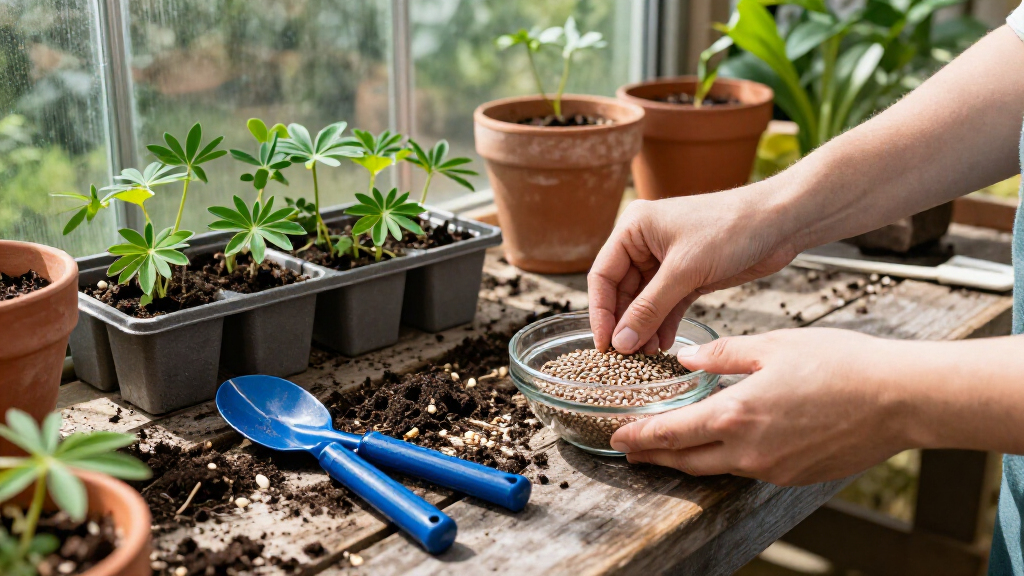
The guide describes scarification as making a small opening in a hard seed coat so water can reach the seed. If the packet recommends it and the supplier has not already treated the seeds, the guide says gardeners can gently rub one spot with sandpaper or carefully nick the coat. It warns against cutting into the seed itself and against repeating treatment on pretreated seed.
An overnight soak may help some garden varieties absorb water, but the guide says to follow packet instructions and sow soon afterward. It cautions that leaving seeds underwater too long can damage them. Cold stratification—keeping seed moist and chilled for a specified period—is a separate treatment; the source says not all lupines need it or need both treatments.
For many garden types, the guide recommends sowing about one-quarter inch deep, while deferring to packet directions where they differ. Seeds need contact with prepared soil, and indoor starts should go into deep cells with seed-starting mix kept moist rather than saturated. The source gives 14–21 days as a common germination range when conditions are right, not a guarantee for every variety.
Seed Treatment Depends on Variety
The practical consequence is that lupine is not one uniform seed-starting project. The source distinguishes annual Texas bluebonnet, Lupinus texensis, from perennial Russell hybrids, and notes that lupines come from different habitats. A treatment or planting schedule suitable for one type may not suit another.
Matching the seed to the garden can also affect whether seedlings persist. The guide says many lupines need well-drained soil, while light shade may help in hotter summer regions. It advises gardeners to check mature plant width: although 6–12 inches is typical spacing for many seed-grown garden types, larger varieties may need 18–24 inches or more. These are general ranges, not a substitute for variety-specific directions.
Careful handling matters after germination, too. Lupines develop roots that can be disturbed during transplanting, so the guide recommends moving indoor-grown seedlings while young and keeping the root ball intact. Gradual adjustment to outdoor light and wind can reduce the shock of moving them outside.
lupine seeds for pollinator garden
As an affiliate, we earn on qualifying purchases.
As an affiliate, we earn on qualifying purchases.
Annuals, Perennials and Local Conditions
The source places seed treatment within a broader choice of species and sowing time. Early spring works for many garden types, while fall sowing may suit species that grow through mild winters or benefit from winter chilling. The guide warns that a warm spell can prompt seeds to sprout before hard freezes, so fall planting does not automatically replace a required treatment or fit every region.
It points readers to outside references for specific plants and methods, including the U.S. Forest Service’s review of sundial lupine, Lupinus perennis, and North Carolina State University’s profile of spreading lupine. It also references a University of Washington propagation guide for scarification and the USDA Woody Plant Seed Manual for broader seed-treatment background. Those references cover particular species or general methods, not a single recipe for all lupines.
For garden care, the guide says soil should drain well and that nutrient needs vary: some native types grow in poor soil, while garden hybrids may need steadier moisture. It notes that lupines can fix nitrogen with suitable bacteria on their roots, but says this does not immediately increase soil nitrogen for nearby plants.
““Check the packet first, then adapt these steps to your climate.””
— Grow Organic guide
No Single Germination Recipe
The supplied guide does not identify a treatment schedule for every lupine species or give a universal duration for cold stratification. It also does not provide a single sowing date suitable for all climates. Packet directions and regional advice remain necessary, particularly for fall sowing, when a warm period could trigger growth before hard freezes.
The 14–21-day germination range is presented as typical when conditions are right, but the source does not specify a temperature range or promise that all seeds will sprout within that window. It lists several possible reasons for poor germination without naming one as the most common. The source also does not establish that lupines described as deer-resistant will avoid browsing; it says deer may still eat them.
Check the Packet Before Sowing
Gardeners preparing to sow should first confirm the botanical name and treatment instructions on the packet, then check whether seed has already been treated and whether chilling is recommended. They can select a spring or fall window suited to the species and local weather, prepare well-drained ground, and use the packet’s specified depth and spacing.
For indoor starts, the source recommends deep cells, bright light after shoots appear and careful transplanting while seedlings are young. The supplied material does not announce a follow-up study or other scheduled development; the practical next step is applying variety-specific directions and monitoring germination and seedling growth.
Key Questions
Do lupine seeds always need scarification or soaking?
No. Requirements vary by species and seed lot. Check the packet, and do not scarify seeds the supplier has already treated. An overnight soak may help some types, but the guide cautions against leaving seeds underwater too long.
How deep should lupine seeds be planted?
The guide gives about one-quarter inch as a depth for many garden types. Use the packet’s directions if they specify a different depth.
How long do lupine seeds take to germinate?
The source gives 14–21 days as a common range when conditions are right. It is not a guarantee; seed quality, temperature, moisture and planting depth can affect germination.
Can lupine seeds be sown in fall?
Fall sowing can suit some species, including types that benefit from winter chilling, but it is not right for every region or variety. A warm spell can cause seeds to sprout before hard freezes, so check local guidance and the packet.
How should indoor-grown lupine seedlings be transplanted?
Move seedlings outdoors while young, keep the root ball intact and let plants adjust gradually to outdoor light and wind, according to the guide.
Source: rss
Halloween Picks
halloween
As an affiliate, we earn on qualifying purchases.