
TL;DR

Get garden gear delivered free with Prime
- Fast, free delivery on millions of items
- Prime Video, Amazon Music and more included
- Member-only deals all year
A Grow Organic report says centipedes, millipedes, pill bugs and sowbugs are mostly beneficial garden residents, but they play different roles. Centipedes prey on small arthropods; the others mainly feed on decaying material and can sometimes damage vulnerable seedlings or soft fruit. The report advises identifying the animal and checking for actual damage before taking action.
Centipedes, millipedes, pill bugs and sowbugs are usually helpful garden residents, according to a Grow Organic report, but some can occasionally harm tender seedlings or soft fruit. The report distinguishes centipedes, which hunt small arthropods, from the other three groups, which mainly break down decaying plant material, and recommends checking for damage before attempting control.
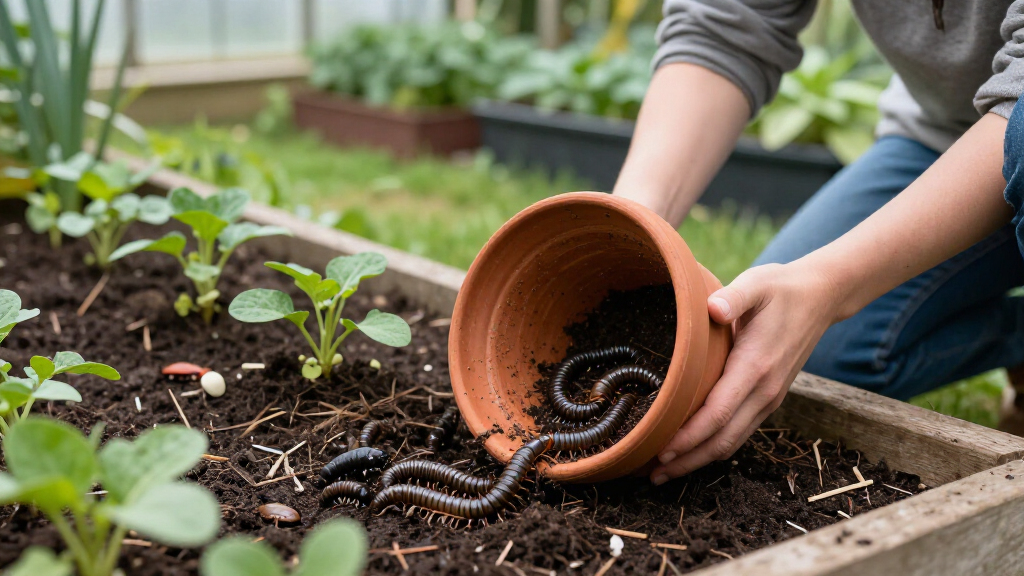
The animals may turn up beneath flowerpots, damp mulch, leaf litter or compost, where they find shelter and food. Despite being commonly called bugs, none of the four groups discussed is an insect: centipedes and millipedes are myriapods, while pill bugs and sowbugs are land-dwelling crustaceans. Their presence alone is not evidence that plants are being harmed.
Centipedes are predators with flat bodies, one pair of legs on each leg-bearing segment and a relatively quick gait. They eat insects, spiders and other small animals, rather than living plants, so the report describes garden centipedes as generally beneficial. Millipedes move more slowly and typically have rounded bodies with two pairs of legs on most middle segments. They mainly eat dead leaves, rotting wood and other organic matter, though they may feed on tender seedlings in damp conditions.
Pill bugs and sowbugs also feed chiefly on decaying material. Pill bugs, commonly called roly-polys, can curl into a ball when disturbed. Sowbugs generally cannot and have two visible tail-like projections. Both may occasionally damage seedlings or soft fruit that is in contact with damp soil, according to the report.
When Garden Arthropods Cause Damage
Knowing which animal is present can help gardeners avoid treating creatures that are not damaging plants. Centipedes prey on other arthropods, while millipedes, pill bugs and sowbugs help break down organic matter. That makes their usual presence different from a confirmed plant-pest problem.
The report also identifies circumstances where monitoring may be warranted: tender seedlings, damp conditions and soft fruit touching wet soil. Its guidance is to look for actual injury rather than infer a problem from finding an arthropod. Where damage is occurring, reducing excess moisture and unnecessary hiding places may help, while vulnerable seedlings can be protected.
This distinction matters for decisions about pest control. Treating without identification can target beneficial garden residents unnecessarily. The report recommends an integrated pest management approach: identify the animal, assess damage and consider changes to conditions before seeking a control product.
As an affiliate, we earn on qualifying purchases.
Identifying the Four Garden Groups
These animals often shelter in similar places, so appearance and movement can help distinguish them. A fast, flat-bodied animal with one leg pair per segment is characteristic of a centipede. A slow-moving, rounded animal with many short legs may be a millipede; if it curls into a coil, that can be another clue. Color alone is not enough to identify a species, the report says.
A pill bug has seven pairs of legs and can roll into a ball. A sowbug also has seven pairs of legs but does not roll up tightly and has tail-like projections. These are crustaceans adapted to life on land, not centipedes. The familiar word “roly-poly” refers to a pill bug, not a millipede or a centipede.
The report also addresses centipedes found indoors. House centipedes prefer damp areas, including bathrooms, basements and crawl spaces, and hunt other arthropods. It says adults usually have 15 pairs of legs. Most centipedes avoid people, but some species can bite if handled or threatened, so unfamiliar centipedes should not be picked up.
What Gardeners Should Check
The report does not identify a particular outbreak, garden, location or species-specific problem. It provides general guidance, and the exact species cannot be established from color or a brief description alone. Whether any animal is causing damage depends on what is present and what is happening to the plants.
It is also not clear from the source how common the occasional damage described is, or how much damage a particular population may cause. Gardeners should look for visible injury to seedlings or fruit and confirm the animal’s identity before deciding that control is needed. The report does not provide a universal treatment threshold.
Control products are not presented as a default response. The report advises consulting product guidance only if control is needed; any pesticide or herbicide must be used only as its label permits, with required protective equipment. Its reference to diatomaceous earth likewise says to use it only where the label allows the intended use.
Identify Before Taking Action
The report’s recommended next step is to identify the animal and inspect plants for actual damage. If seedlings are affected, gardeners can reduce excess moisture, remove unnecessary debris that offers shelter and protect vulnerable plants. For animals entering buildings, it advises sealing openings around the structure.
If the problem persists, the report points readers toward pest-control guidance and product information rather than recommending a single treatment for all four groups. Any control decision should follow identification and an assessment of damage, with products used according to their labels. The source does not announce a follow-up study, a local pest alert or a new control measure.
Key Questions
Are centipedes good for gardens?
Usually, yes. The report says garden centipedes hunt insects, spiders and other small arthropods, and do not normally eat living plants.
Do millipedes eat plants?
Mostly, millipedes eat decaying plant material, such as dead leaves and rotting wood. They may sometimes damage tender seedlings, especially in damp conditions.
How is a roly-poly different from a sowbug?
A pill bug, or roly-poly, can roll into a ball. A sowbug generally cannot and has two tail-like projections. Both are land-dwelling crustaceans.
Should I treat my garden if I find these animals?
Not just because they are present. The report recommends identifying the animal and checking for plant damage first. If control is needed, follow the applicable product label and use required protective equipment.
Can centipedes bite people?
The report says some centipede species can bite when handled or threatened. Avoid handling unfamiliar centipedes; it does not give a species-specific risk assessment.
Source: rss
Halloween Picks
halloween
As an affiliate, we earn on qualifying purchases.