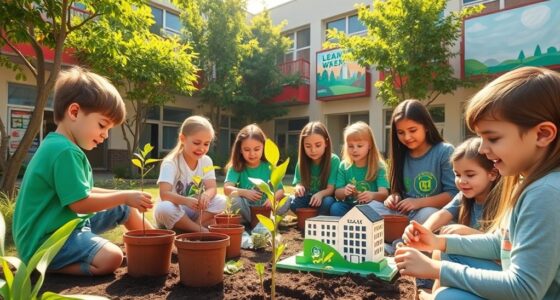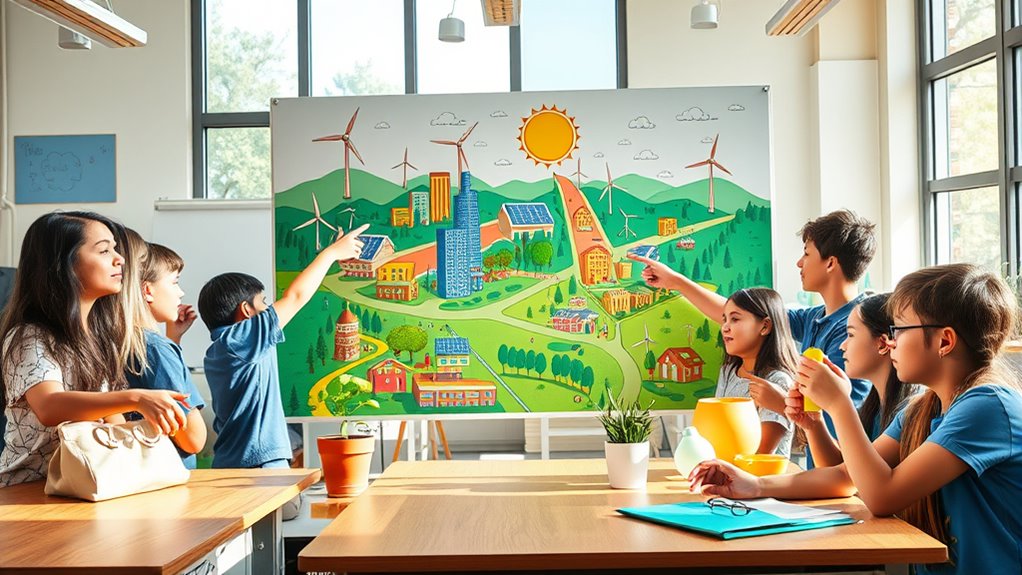

To integrate sustainability into your curriculum, focus on hands-on projects like building models of renewable energy systems or exploring local energy initiatives. Incorporate eco-friendly practices through activities such as waste reduction and water conservation. Organize field trips to renewable energy facilities and invite experts for real-world insights. Use interdisciplinary projects combining science, social studies, and economics to promote critical thinking. Keep exploring these ideas to discover more inspiring ways to make sustainability a core part of your teaching.
Key Takeaways
- Incorporate renewable energy sources like solar and wind into lessons with hands-on models and local project research.
- Design classroom activities focused on waste reduction, recycling, and water conservation to promote eco-friendly habits.
- Organize field trips to renewable energy facilities and invite experts to provide real-world insights.
- Develop interdisciplinary projects combining science, social studies, and economics to explore sustainability challenges.
- Include DIY renewable energy projects and mindfulness practices to engage students practically and support emotional resilience.
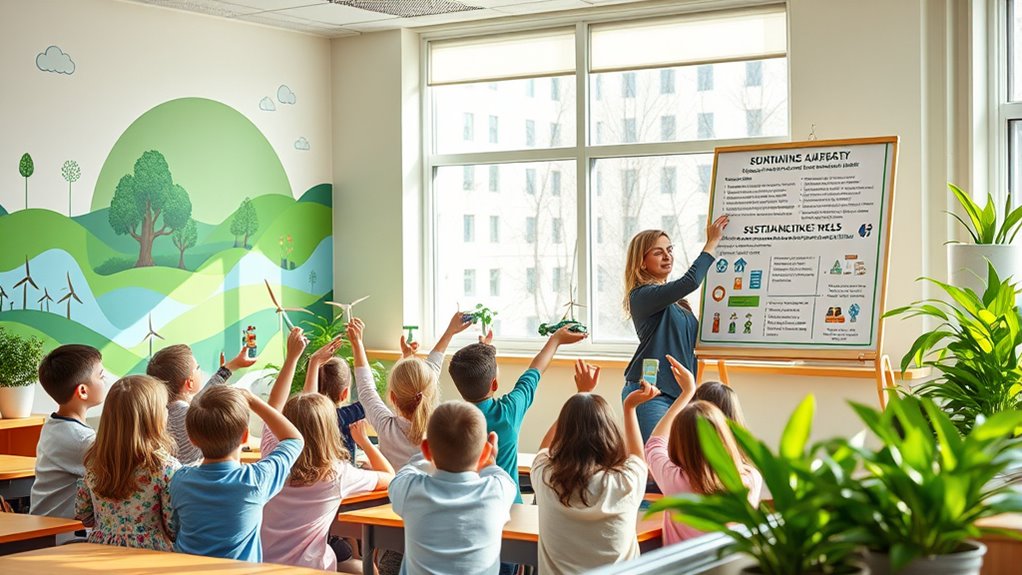
Have you ever wondered how education can shape a more sustainable future? By integrating sustainability into the curriculum, you can inspire students to become environmentally conscious and responsible citizens. One effective way is through projects and lesson ideas that focus on renewable energy and eco-friendly practices. These initiatives not only teach students about essential environmental issues but also empower them to take actionable steps toward change. When you design lessons around renewable energy, you’re helping students understand how sources like solar, wind, and hydro power can reduce reliance on fossil fuels, lower carbon emissions, and support a healthier planet. You might, for example, encourage students to research local renewable energy projects or create models of sustainable energy systems, making the subject tangible and relevant. Incorporating eco-friendly practices into classroom activities is equally impactful. Simple actions like reducing waste, recycling, and conserving water can be turned into engaging projects that highlight their importance. You could challenge students to audit their school’s energy use or develop plans to improve waste management, demonstrating how small changes add up to significant environmental benefits. These activities help students see the direct connection between their behaviors and environmental health. To deepen understanding, you can organize field trips to renewable energy facilities or invite experts to discuss eco-friendly innovations. Such experiences make abstract concepts concrete and inspire students to see themselves as part of the solution. When you weave these ideas into lessons, you’re fostering critical thinking about sustainability and encouraging students to develop eco-friendly habits that extend beyond the classroom. You can also incorporate interdisciplinary projects that combine science, social studies, and even economics, giving students a thorough view of sustainability challenges and solutions. For example, students might analyze the economic benefits of investing in renewable energy or explore the social implications of sustainable practices in different communities. By doing so, you’re helping them grasp how sustainability intersects with various aspects of life and society. Additionally, understanding mindfulness techniques can support students’ emotional well-being and resilience as they engage with environmental issues, fostering a more balanced approach to activism and learning. Incorporating hands-on renewable energy projects, such as building small solar-powered devices, can also enhance experiential learning and inspire innovation. Moreover, introducing electricity production from bike generators can inspire students to explore sustainable energy options on a smaller scale and understand their potential impact. Recognizing how energy efficiency plays a crucial role in reducing environmental footprints can further motivate students to adopt sustainable habits. Connecting sustainable energy solutions to real-world applications helps students see the tangible benefits of eco-friendly practices. Ultimately, integrating these topics promotes a mindset of responsibility and innovation. It’s about giving students the tools and knowledge to make informed decisions and take meaningful action. When you focus on real-world applications, you’re preparing them to address future environmental challenges with confidence. Your role is pivotal in shaping a generation that values and actively participates in building a sustainable world—one where renewable energy and eco-friendly practices are the norm, not the exception. Through thoughtful projects and lessons, you can ignite a passion for sustainability that lasts a lifetime.
Top picks for "integrat sustainability curriculum"
Open Amazon search results for this keyword.
As an affiliate, we earn on qualifying purchases.
Frequently Asked Questions
How Can Teachers Assess Student Understanding of Sustainability Concepts?
To evaluate student understanding of sustainability concepts, you should use a mix of methods. Encourage student reflection, where students articulate their learning and ideas. Use clear project rubrics to assess their work against specific sustainability criteria. These tools help you gauge comprehension and critical thinking. Combining reflection with rubric-based assessments ensures you get a well-rounded view of how well students grasp sustainability principles and their ability to apply them.
What Resources Are Best for Teaching Sustainability Across Different Grade Levels?
You might think finding resources for teaching sustainability across grades is tough, but engaging interactive activities and community partnerships make it easier. For younger students, use simple experiments or games that demonstrate environmental impact. Older students benefit from projects involving local organizations or eco-initiatives. Online platforms, educational videos, and textbooks tailored for different levels are also invaluable. These tools help you adapt lessons, making sustainability relatable and inspiring for every age group.
How Can Schools Measure the Impact of Sustainability Projects?
To gauge the impact of sustainability projects, you should focus on effective impact measurement and data collection. You can track progress through student surveys, participation rates, and environmental data like waste reduction or energy savings. Regularly collecting and analyzing this data helps you understand what’s working and where improvements are needed. This approach guarantees your sustainability initiatives are meaningful and aligned with your educational goals.
What Challenges Might Educators Face When Integrating Sustainability Into Existing Curricula?
When you try to integrate sustainability into existing curricula, you might face challenges like resistance to change and limited resources. Engaging stakeholders such as teachers, students, and community members is vital but can be difficult. Balancing curriculum requirements while fostering meaningful sustainability education requires careful planning. You’ll need to navigate potential conflicts and guarantee stakeholder engagement remains strong to successfully embed sustainability concepts into your lessons.
How Can Sustainability Education Be Adapted for Diverse Learning Styles?
Think of sustainability education as a colorful tapestry—you need varied threads to make it vibrant. You can adapt lessons through differentiated instruction and inclusive strategies, ensuring every student’s learning style is embraced. Use hands-on activities, visual aids, or discussions to reach auditory, visual, and kinesthetic learners alike. By tailoring your approach, you make sustainability concepts accessible and engaging, turning complex ideas into an inspiring experience for all students.
Conclusion
By integrating sustainability into your curriculum, you’re empowering students to make eco-conscious choices and shape a greener future. Did you know that 87% of Gen Z students want their education to focus more on environmental issues? Incorporating projects and lessons on sustainability not only engages students but also prepares them for the challenges ahead. So, take action today—your efforts can inspire the next generation of eco-leaders and drive meaningful change.