Renovation dust contains tiny particles that settle into every surface and linger for months, posing health risks. Most cleanup plans only remove visible dust, leaving microscopic particles behind that can become airborne again. To protect yourself, you need better methods like air filtration systems and thorough cleaning techniques. Wearing protective gear also reduces exposure. If you want to guarantee your home is truly safe and dust-free, there’s more to think about.
Key Takeaways
- Microscopic dust particles settle deep into surfaces, requiring advanced cleaning methods beyond basic sweeping and vacuuming.
- Standard plans often neglect ongoing airborne dust, which can remain suspended and pose health risks.
- Effective cleanup involves high-quality air filtration and protective gear, which many plans fail to incorporate fully.
- Inadequate cleaning allows residual dust to re-contaminate cleaned surfaces, prolonging indoor air quality issues.
- Long-term health safety depends on comprehensive dust removal, surpassing the scope of most basic or partial cleanup plans.
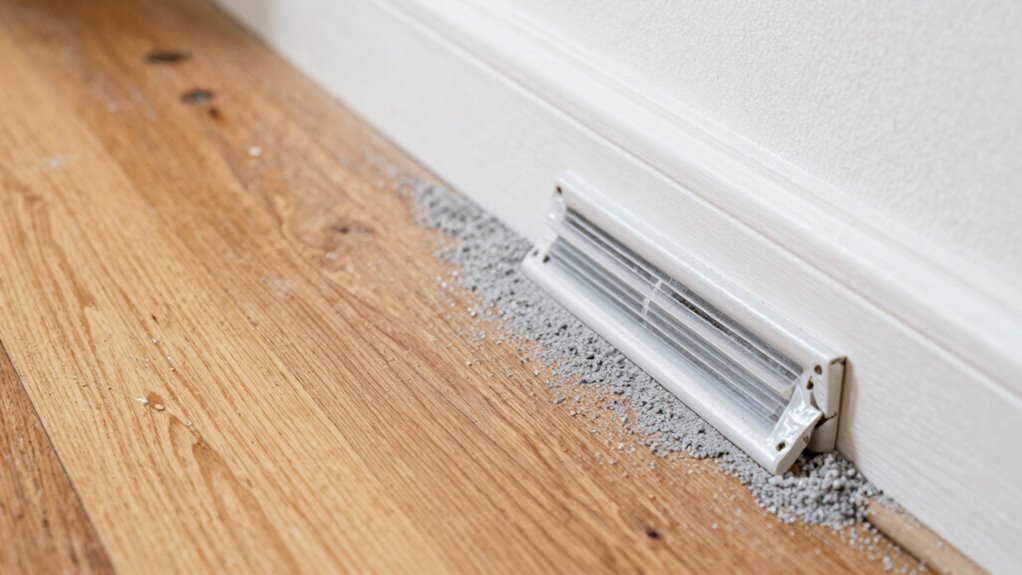
After a renovation, dust can quickly become a persistent problem that affects your home’s air quality and cleanliness. It’s not just about cleaning visible debris; tiny particles settle into every nook and cranny, lingering long after the work is done. Many people underestimate how deeply renovation dust can infiltrate your living space, making standard cleanup plans insufficient. To truly protect your environment, you need a dedicated approach that prioritizes effective air filtration and the use of protective gear. Regular sweeping and vacuuming alone won’t cut it because they only remove surface dust, leaving the microscopic particles airborne or embedded in your furniture and flooring.
Air filtration plays an essential role here. High-quality air purifiers with HEPA filters are indispensable in capturing the smallest dust particles that traditional filters can’t trap. These devices work continuously to scrub the air, reducing dust levels and preventing them from recirculating throughout your home. Using air filtration systems during and after renovation minimizes dust exposure, safeguarding your respiratory health and improving indoor air quality. It’s not enough to rely on basic filters or open windows; investing in proper air filtration ensures that airborne particles are actively removed, not just dispersed. Additionally, understanding the importance of proper cleanup techniques can significantly improve your results and reduce health risks. Incorporating advanced cleaning methods can further ensure that microscopic dust is thoroughly removed from all surfaces.
High-quality HEPA air purifiers actively remove microscopic dust particles, ensuring cleaner, healthier indoor air during and after renovations.
Protective gear is equally important, especially when cleaning or handling renovation debris. Wearing a good-quality dust mask or respirator prevents you from inhaling harmful particles that can cause irritation or longer-term health issues. Gloves and goggles further shield your skin and eyes from dust contact, which can be irritating or damaging. You should also consider wearing disposable coveralls to prevent dust from settling on your clothes, reducing the risk of spreading contamination outside the work area. These precautions aren’t just about comfort—they’re indispensable steps in protecting your health during cleanup. Additionally, proper disposal of dust and debris helps prevent recontamination or spread of dust to other areas of your home. Moreover, implementing a comprehensive cleaning routine ensures that all contaminated surfaces are thoroughly addressed, further minimizing residual dust. Recognizing the long-term health implications of dust exposure emphasizes why a thorough cleanup is so critical.
HEPA air purifier for dust removal
As an affiliate, we earn on qualifying purchases.
As an affiliate, we earn on qualifying purchases.
Frequently Asked Questions
How Long Does Renovation Dust Typically Stay Airborne?
Renovation dust can stay airborne for several hours or even days, depending on factors like airflow and particle size. Airborne particles from dust often linger before settling, which makes cleanup essential. To reduce dust staying in the air, you should increase ventilation and use air purifiers. Proper cleanup helps dust settle faster and prevents it from spreading, protecting your indoor environment from ongoing airborne particles.
Are Standard Vacuum Cleaners Effective for Dust Removal?
Like trying to tame a whirlwind, standard vacuum cleaners fall short in DIY cleaning renovation dust. They lack the HEPA filters and powerful suction needed to trap tiny particles, making them limited for dust removal. You might think they’re enough, but renovation dust lingers in the air and on surfaces. To truly clean up, you need specialized equipment that captures every speck, preventing dust from settling back into your space.
What Health Risks Are Associated With Renovation Dust Exposure?
Exposure to renovation dust can pose serious health risks because airborne particles can be inhaled, leading to respiratory issues. You might experience coughing, wheezing, or shortness of breath, especially if you have existing conditions like asthma. Long-term exposure could cause lung damage or other health problems. To protect yourself, make certain of thorough cleanup with proper ventilation and specialized filters, rather than relying on standard vacuum cleaners alone, which may not capture all airborne particles.
Can Renovation Dust Damage Electronic Equipment?
Yes, renovation dust can damage electronic equipment. Dust infiltration into your electronics can cause overheating, short circuits, or malfunctions, risking your device’s safety and longevity. To protect your electronics, you should keep them covered or unplugged during renovation, and guarantee proper cleanup. Regularly cleaning dust from surfaces helps maintain electronics safety. Ignoring dust buildup may lead to costly repairs or replacements, so prioritize thorough cleanup after renovation projects.
What Are Cost-Effective Methods for Deep Cleaning After Renovation?
You can use eco-friendly cleaning products and DIY removal techniques for cost-effective deep cleaning after renovation. Start by vacuuming with a HEPA filter vacuum to trap fine dust, then wipe surfaces with a damp microfiber cloth. Use natural solutions like vinegar and baking soda for stubborn spots. Regularly cleaning with eco-friendly methods not only saves money but also minimizes chemical exposure, ensuring your space is safe and thoroughly refreshed after renovation.
Conclusion
You might not realize it, but renovation dust can linger in your home for weeks, affecting your health and comfort. In fact, studies show that indoor dust can contain over 100 different chemicals, many of which are harmful. That’s why proper cleanup isn’t just a chore—it’s essential for your well-being. Don’t settle for quick fixes; take the time to clean thoroughly. Your lungs and your home will thank you for it.