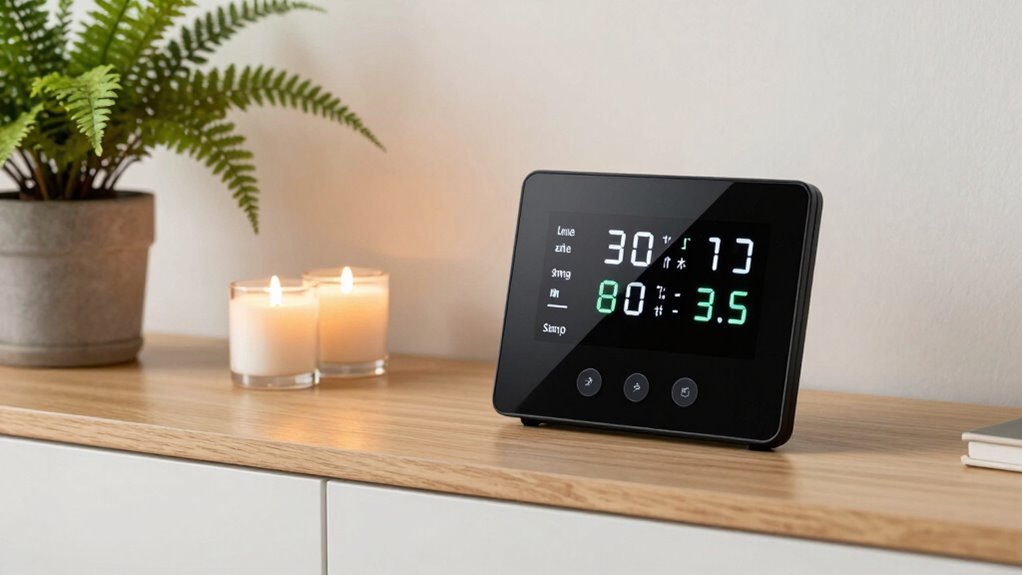

Indoor air monitors give you objective, real-time data on pollutants like particulate matter, VOCs, and CO₂ that smells can’t detect or identify accurately. While odors can be misleading or fade quickly, these devices consistently measure invisible and odorless chemicals that pose health risks. They also help you recognize sudden changes in air quality, allowing timely actions. Keep exploring to discover how these monitors can truly safeguard your indoor environment.

Get garden gear delivered free with Prime
- Fast, free delivery on millions of items
- Prime Video, Amazon Music and more included
- Member-only deals all year
Key Takeaways
- Indoor air monitors detect invisible pollutants like VOCs and particulate matter that odors cannot reveal.
- They provide real-time, objective data rather than relying on subjective smell perception.
- Monitors identify sudden spikes in air pollutants, enabling proactive health measures.
- They maintain accuracy through calibration, ensuring reliable long-term air quality assessments.
- Monitors help evaluate compliance with indoor air quality standards beyond what smells can indicate.
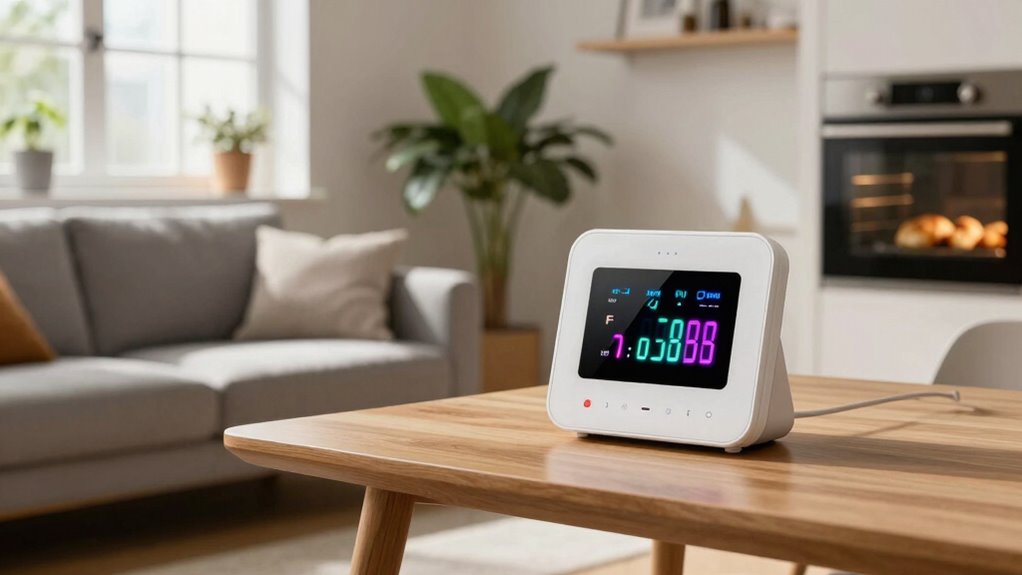
Are you aware of the air quality inside your home? Chances are, you’ve relied on your nose to tell you if something’s off, but odors can be deceiving. Smells only reveal a fraction of what’s lurking in the air, often masking more harmful pollutants that can affect your health over time. That’s where indoor air monitors come in, offering insights that smell alone simply can’t provide. These devices use advanced technology, such as air quality sensors and VOC detection, to measure the presence of airborne substances invisible to the naked eye or nose.
Air quality sensors are the backbone of these monitors. They continuously analyze the air, detecting pollutants like particulate matter, carbon dioxide, and volatile organic compounds (VOCs). VOC detection is especially important because many common household items—cleaners, paints, furniture, and even your personal care products—release these chemicals into the air. While VOCs might not produce an immediate smell or visible odor, they can cause headaches, dizziness, or long-term health issues with prolonged exposure. An air quality monitor can alert you to these unseen dangers, giving you the chance to ventilate or remove the source before symptoms develop.
Air quality sensors detect pollutants like VOCs, helping you identify hidden dangers before symptoms appear.
Unlike a smell, which can be subjective and fade quickly, air quality sensors provide objective, real-time data about your environment. This data helps you understand what’s truly happening in your home, whether it’s a spike in humidity, a surge in VOCs, or a buildup of particulate matter from cooking or outdoor pollution. The information empowers you to take specific actions—like increasing ventilation, using air purifiers, or replacing products that emit harmful chemicals—rather than guessing based on how your space smells. The accuracy of these sensors is crucial for making informed decisions about your indoor environment. Regular maintenance and calibration of these devices further enhance their reliability and sensor precision.
What’s more, these monitors often come with user-friendly displays or smartphone alerts that make it easy to stay informed. You don’t need to be an expert to interpret the data; the devices do that for you, highlighting when air quality drops below safe levels. This proactive approach can prevent health issues before they start, especially for people with allergies, asthma, or sensitivities. Understanding indoor air quality and its measurement is essential for maintaining a healthy home environment. Additionally, sensor calibration ensures the data remains accurate over time, providing you with trustworthy information.
In addition, some monitors include air quality standards and recommendations based on the data, helping you make better decisions to improve your living space.
indoor air quality monitor with VOC detection
As an affiliate, we earn on qualifying purchases.
As an affiliate, we earn on qualifying purchases.
Frequently Asked Questions
Can Air Monitors Detect Specific Airborne Viruses or Bacteria?
Indoor air monitors can detect specific airborne viruses and bacteria through advanced viral detection and bacterial identification technologies. These devices analyze air samples to identify harmful pathogens, providing real-time alerts and detailed data. Unlike smell, which can’t pinpoint health threats, air monitors offer precise insights into airborne contaminants. This helps you take prompt action, improve indoor air quality, and reduce health risks associated with viral and bacterial exposure.
How Often Should Indoor Air Monitors Be Calibrated?
You should calibrate your indoor air monitor regularly to guarantee sensor accuracy. Typically, calibration frequency depends on the device, but a good rule of thumb is every three to six months. Regular calibration maintains sensor accuracy, helping your monitor provide reliable readings. If you notice inconsistent data or if the monitor is exposed to harsh conditions, consider calibrating more often to keep your indoor air quality measurements precise and trustworthy.
Do Air Monitors Detect Mold Spores Effectively?
Sure, your air monitor can tell you if the air’s a little funky, but don’t bet on it catching every mold spore flying around. Mold detection isn’t its strong suit, especially for airborne spores hiding behind walls or in hidden corners. While it might give you a general air quality idea, for true mold detection, you’ll need specialized testing. So, don’t rely solely on your monitor—get a professional inspection.
Are Indoor Air Quality Monitors Suitable for All Types of Homes?
Indoor air quality monitors are suitable for most homes, helping you identify pollutants and improve your home maintenance. They work well with air purifier integration, ensuring cleaner, healthier air. However, some monitors may not detect every pollutant in unique environments or larger spaces. You should consider your home’s size and specific needs before choosing a monitor, making sure it provides accurate readings for best air quality management.
Can Air Monitors Predict Future Air Quality Issues?
Yes, indoor air monitors can predict future air quality issues, but only if you trust their sensor accuracy and understand data interpretation. Ironically, these tiny gadgets often seem to know more than your nose, giving you a heads-up before problems become obvious. While they won’t guarantee perfect foresight, they empower you to act early—making your home healthier before issues even surface.
Conclusion
Indoor air monitors are your secret weapon against invisible dangers lurking in your home. Unlike smell, which can deceive you, these devices reveal the truth about pollutants, allergens, and toxins that could be making you sick without you even realizing it. Think of them as your personal air detectives—fighting off unseen threats with the precision of a superhero. Don’t settle for just smelling fresh; let these monitors guarantee your air is truly clean and safe every day.
Columbus Day / Indigenous Peoples' Day Picks
long weekend sales
As an affiliate, we earn on qualifying purchases.