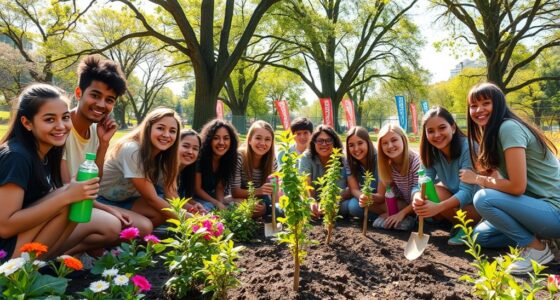
Explore museum and outdoor field trip guides that focus on eco topics for an engaging learning experience. These resources highlight hands-on activities, interactive exhibits, and real-world conservation efforts to deepen understanding of sustainability and wildlife protection. You’ll find practical tips for visiting parks, reserves, and eco-museums, along with inspiring success stories. Keep exploring to discover how these experiences can connect theory with action and empower learners to make a difference.
Key Takeaways
- Include interactive exhibits and multimedia that explain sustainable practices and eco-friendly habits.
- Highlight local parks, reserves, and conservation areas for outdoor experiential learning.
- Incorporate guided activities like native species planting and invasive species removal projects.
- Showcase community-based conservation success stories and ongoing environmental initiatives.
- Provide practical tips and resources for students to implement sustainability actions in daily life.

Exploring eco topics through museum visits and field trips offers a hands-on way to understand the environment and our impact on it. When you engage directly with exhibits or outdoor experiences, you’re more likely to grasp complex issues like sustainable practices and wildlife conservation. Museums dedicated to ecology or environmental science often feature interactive displays, models, and multimedia presentations that explain how sustainable practices can reduce our carbon footprint and preserve natural resources. These exhibits show you practical ways to incorporate eco-friendly habits into daily life, such as reducing waste, conserving water, and choosing renewable energy sources. Visiting these museums gives you a clearer picture of the importance of sustainability and how individual actions collectively make a difference.
Hands-on museum and outdoor experiences deepen understanding of sustainability and wildlife conservation efforts.
Additionally, some museums include specialized sections on eco-friendly portable camping gear, demonstrating how sustainable products can be used in outdoor adventures and reducing environmental impact. Field trips take this learning a step further by immersing you in natural environments. When you venture into local parks, nature reserves, or conservation areas, you see firsthand how wildlife conservation efforts are essential for maintaining biodiversity. Observing local flora and fauna, you notice how ecosystems function and why protecting endangered species is crucial. Field trips often include guided walks or hands-on activities like planting native species or removing invasive plants, which directly contribute to sustainable practices. These experiences help you understand the delicate balance of ecosystems and the role human intervention plays in either harming or helping wildlife. By participating actively, you develop a deeper appreciation for conservation strategies and learn how everyday choices impact local and global ecosystems.
In addition, many museums and outdoor programs emphasize the importance of community involvement in sustainability and wildlife conservation. They showcase success stories where local initiatives have improved habitats or reduced pollution. These real-world examples motivate you to implement similar practices, whether in your home, school, or community. Field trips often involve collaborations with conservation organizations, giving you the chance to contribute to ongoing projects and see tangible results of conservation work. This active participation fosters a sense of responsibility and empowers you to become an advocate for eco-friendly practices.
Ultimately, these experiences are designed to make eco topics tangible and relevant. They connect theoretical knowledge with practical action, showing you that sustainable practices and wildlife conservation aren’t just abstract concepts—they’re achievable and necessary. By exploring ecosystems firsthand and engaging with educational exhibits, you’re better equipped to understand the impact of your choices and to champion environmental stewardship. Visiting museums and going on field trips can inspire you to adopt sustainable habits and support conservation efforts, ensuring that future generations can enjoy a healthy planet.

Odoland Portable LED Camping Lantern with Ceiling Fan – Hurricane Emergency
Why you need this great camping gear: Spending a night outdoors is something everyone should experience. So you…
As an affiliate, we earn on qualifying purchases.
As an affiliate, we earn on qualifying purchases.
Frequently Asked Questions
How Can I Prepare Students for Eco-Themed Museum Visits?
To prepare students for eco-themed museum visits, create engaging pre-visit activities like scavenger hunts and eco-themed trivia. These activities pique their curiosity, help them focus on key exhibits, and build background knowledge. Encourage students to ask questions and discuss eco concepts beforehand. This active preparation enhances their confidence, makes the visit more interactive, and guarantees they gain a deeper understanding of environmental topics during the trip.
What Safety Tips Are Recommended for Outdoor Eco Field Trips?
When preparing for outdoor eco field trips, always brief students on wildlife encounters and trail navigation. Remind them to stay on marked paths, avoid disturbing animals, and keep a safe distance from wildlife. Equip students with proper footwear and supplies, and teach them how to use maps or GPS devices. Encourage staying in groups, listening to guides, and reporting any hazards immediately to guarantee everyone’s safety throughout the adventure.
How Do I Choose the Best Eco Topics for Different Age Groups?
Did you know kids between 6 and 8 spend nearly 4 hours daily on screens? To choose the best eco topics, focus on age-appropriate content that sparks curiosity. Use engaging strategies like hands-on activities or stories to keep each age group interested. Tailor your approach to their developmental level, ensuring they understand and enjoy learning about the environment. This makes your eco trips both fun and educational!
Are There Virtual Eco Museum Tours Available for Remote Learning?
Yes, you can find virtual tours of eco exhibitions online that are perfect for remote learning. Many museums and eco-focused organizations offer engaging virtual tours that showcase eco topics through interactive videos, 3D walkthroughs, and live sessions. These virtual tours make it easy for you to explore eco exhibitions from anywhere, helping students learn about environmental issues, conservation efforts, and sustainability in an accessible and immersive way.
How Can I Incorporate Eco Topics Into Post-Visit Activities?
After your visit, you can incorporate eco topics into post-visit activities by encouraging recycling crafts, where students reuse materials to create art projects, highlighting the importance of waste reduction. Also, organize wildlife observation activities, either in local parks or through virtual apps, to help students connect with nature and understand local ecosystems. These activities reinforce eco-awareness and inspire ongoing curiosity and conservation efforts.
interactive environmental science museum exhibits
As an affiliate, we earn on qualifying purchases.
As an affiliate, we earn on qualifying purchases.
Conclusion
As you journey through these eco-themed exhibits and field trips, think of yourself as a gardener tending a delicate seed. Every lesson learned, every action taken, is like watering that seed—nurturing growth and change. Just as a single drop can spark a forest, your choices ripple outward, shaping a healthier planet. Remember, you’re not just exploring; you’re planting hope and cultivating a future where nature and humanity flourish together.

Gardening Root Viewer for Kids – Planting Kits with Seeds & Garden Supplies – Grow Your Own Seed – Home & Classroom Science Stem Learning – Plant Growing Spring Farm Toys & Gifts for Ages 6 Up
Exciting Dual Growing Options: With the HopeTiger Kids Root Viewer, your child can experience the wonder of plant…
As an affiliate, we earn on qualifying purchases.
As an affiliate, we earn on qualifying purchases.

The Wildlife of Costa Rica: A Field Guide (Zona Tropical Publications)
Used Book in Good Condition
As an affiliate, we earn on qualifying purchases.
As an affiliate, we earn on qualifying purchases.