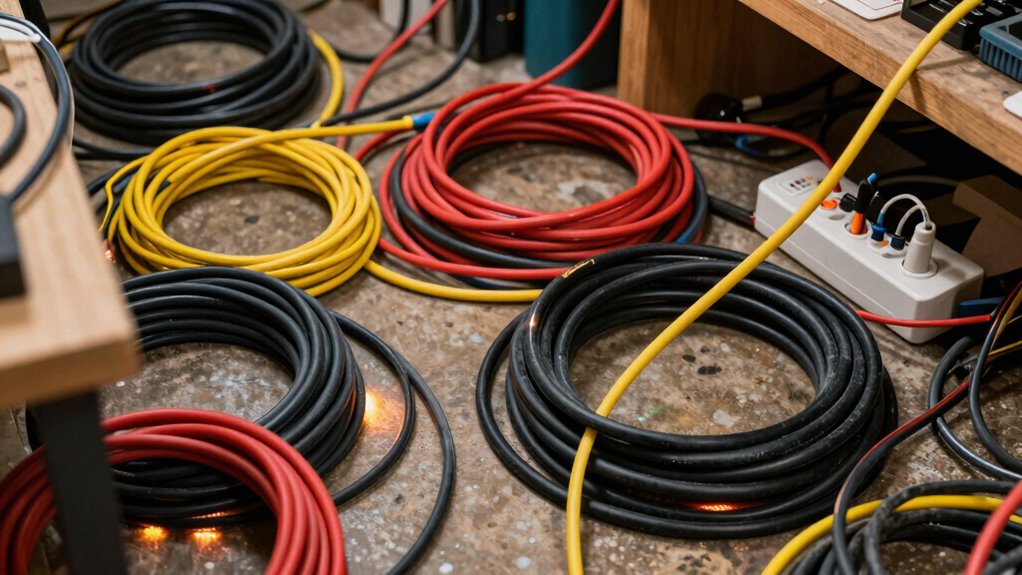

When choosing extension cords for backup power, pick one with a gauge of 12 or 14 for higher current devices, and keep it as short as possible to reduce heat and voltage drops. Avoid thin cords like 16 or 18 gauge, especially for longer distances or heavy loads, as they can overheat. Regularly inspect cords for damage, and make sure they’re rated for your needs. To learn more about safe practices, keep exploring for tips and precautions.

Get garden gear delivered free — and shop member deals
- Fast, free delivery on millions of items
- Access to Prime Big Deal Days deals on October 6–7
- Prime Video, Amazon Music and more included
Key Takeaways
- Choose a heavy-duty extension cord with a lower gauge number (12 or 14) for backup power to handle higher current safely.
- Limit extension cord length to reduce voltage drops and heat buildup, especially for critical backup power applications.
- Regularly inspect cords for damage or wear to prevent overheating and ensure reliable backup power.
- Avoid daisy-chaining multiple cords; use a single, appropriately rated extension cord for safety and performance.
- Follow manufacturer guidelines on maximum length and load capacity to minimize heat risks during backup power use.

Having a reliable backup power source is essential during outages, and extension cords can play a crucial role in keeping your devices running. However, to guarantee safe and effective use, you need to pay close attention to the gauge, length, and heat risk associated with these cords. Choosing the right extension cord begins with understanding its gauge—the thickness of the wire inside. Thicker wires, indicated by a lower gauge number (such as 14 or 12), can carry more current safely, making them suitable for heavier appliances or longer distances. Conversely, thinner gauges like 16 or 18 are better for light-duty use over short spans. Using a cord with an inadequate gauge can cause overheating, increasing the risk of fire or damage to your devices.
Choose extension cords with appropriate gauges—lower numbers for heavier loads and longer distances—to ensure safety and prevent overheating.
Length matters too. While it might be tempting to use a longer extension cord to reach distant outlets, keep in mind that longer cords increase resistance, which can lead to voltage drops and added heat. This not only hampers device performance but also raises safety concerns. Whenever possible, opt for the shortest cord that meets your needs, and avoid daisy-chaining multiple cords together, as this can create points of failure and potential hazards. Always check the manufacturer’s recommendations for maximum length and load capacity to prevent overloading the cord.
Heat buildup is a significant risk when using extension cords, especially during backup power scenarios where devices may draw more current. To minimize heat, avoid running cords under rugs, furniture, or other objects that can trap heat and restrict airflow. Regularly inspect cords for signs of wear, fraying, or scorch marks, and replace damaged cords immediately. When in use, ensure cords are laid out in open areas without sharp bends or kinks, which can damage the wire and impair safety. It’s also wise to unplug cords when not in use to prevent accidental overloads or overheating. Proper cord gauge selection and regular maintenance are essential components of safe backup power management.
Safety precautions and proper installation tips are vital for safe extension cord use during power outages. Never connect multiple extension cords to extend their reach considerably—this increases resistance and heat risk. Instead, use a single, appropriately rated cord. Make sure your cords are rated for the power needs of your devices, and avoid plugging high-power appliances into cords not designed for such loads. Keep cords away from water and moisture, and ensure they’re not pinched or damaged by furniture or foot traffic. By adhering to these safety precautions and installation tips, you can maximize your backup power setup while minimizing hazards. Properly selected and maintained extension cords provide a reliable, safe way to keep critical devices operational during outages.
heavy-duty extension cords for backup power
As an affiliate, we earn on qualifying purchases.
As an affiliate, we earn on qualifying purchases.
Frequently Asked Questions
Can I Use Outdoor Extension Cords Indoors for Backup Power?
You can use outdoor extension cords indoors for backup power, but it’s not ideal. Indoor extension cords are designed with different insulation and safety features than outdoor ones. Outdoor cords are built to withstand weather but may have thicker insulation, which can make them less flexible and potentially cause overheating indoors. Always check the cord’s gauge and ratings, and prefer indoor extension cords for indoor use to make certain of safety and efficiency.
How Often Should I Replace Damaged Extension Cords Used for Backup Power?
You should replace damaged extension cords used for backup power immediately to guarantee safety. Regular extension cord maintenance helps identify frayed wires, exposed conductors, or cracks, which can cause overheating or electrical hazards. Follow proper replacement guidelines: inspect cords frequently, replace if damaged, and avoid using cords with compromised insulation. Staying vigilant with maintenance minimizes risks, ensures reliable backup power, and keeps you safe during emergencies.
Are There Specific Certifications to Look for in Backup Power Extension Cords?
You should look for extension cords with UL certification and OSHA compliance to guarantee safety and reliability. UL certification indicates the cord meets rigorous safety standards, reducing fire and electric shock risks. OSHA compliance ensures the cord adheres to workplace safety regulations. Always choose cords with these certifications to protect your equipment and yourself during backup power use, and regularly inspect them for damage or wear.
What Safety Precautions Should I Take When Using Extension Cords During Outages?
Using extension cords during outages is like walking a tightrope—you need focus and caution. Always check for proper grounding and avoid overloading cords to prevent fire hazards. Keep cords away from water and heat sources, and don’t daisy-chain multiple cords. Regularly inspect for damage, and use cords rated for your power needs. These precautions help guarantee your safety and keep your backup power solutions reliable and fire-safe.
Can Extension Cords Be Connected End-To-End for Longer Backup Power Runs?
You shouldn’t connect extension cords end-to-end for longer backup power runs because it exceeds their limitations and creates safety risks. Doing so can cause overheating, reduce power efficiency, and increase fire hazards. Always follow safety considerations by using the appropriate gauge and length of cords designed for your power needs. If longer runs are necessary, consider a properly rated power strip or installing a dedicated backup power system instead.
Conclusion
So, next time the power’s out, don’t just grab any old extension cord and hope for the best. Remember, your backup power isn’t a game—choose the right gauge, keep it short, and avoid turning your home into a portable sauna. Because nothing says “smart backup plan” like risking a fire just to keep your Wi-Fi alive. Stay safe, stay smart, and maybe invest in a proper generator instead of a glorified extension cord jungle.
Fall Picks
fall essentials
As an affiliate, we earn on qualifying purchases.