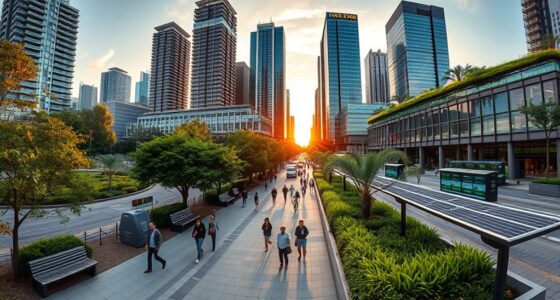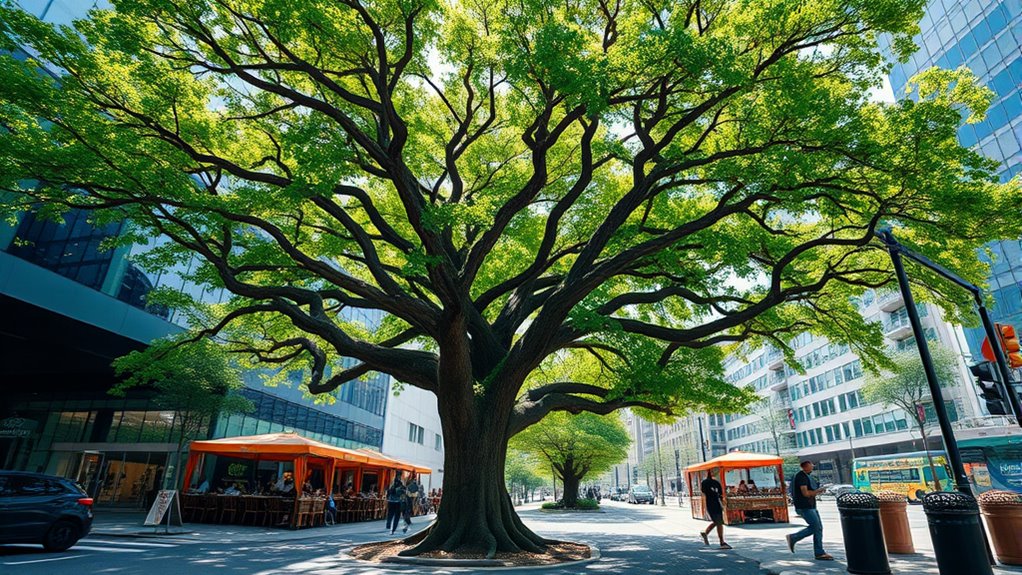

To successfully plant the right tree in your urban space, you need to consider its growth habits, mature size, and adaptability to local soil and microclimates. Properly matching trees to site conditions prevents future issues like root conflicts, debris buildup, and infrastructure damage, while maximizing ecological and aesthetic benefits. Analyzing soil, site constraints, and choosing species suited for confined areas or more open spaces ensures long-term success. Continue exploring these essential factors to create sustainable, thriving urban landscapes.

Get garden gear delivered free — and shop member deals
- Fast, free delivery on millions of items
- Access to Prime Big Deal Days deals on October 6–7
- Prime Video, Amazon Music and more included
Key Takeaways
- Select tree species suited to specific urban site conditions to ensure healthy growth and longevity.
- Assess soil quality and site microclimate to match trees with existing environmental factors.
- Consider mature size and growth habits to prevent future infrastructure conflicts and debris issues.
- Incorporate soil improvements and site modifications to enhance tree survival and performance.
- Prioritize compatibility with urban infrastructure, including maintenance needs like vacuum systems, for sustainable green spaces.

Urban forestry is the practice of managing and maintaining trees and green spaces within cities to improve the quality of urban life. When you’re planning to add new trees to your cityscape, it’s essential to focus on proper tree selection. Choosing the right tree involves more than just picking a species you like; it requires understanding how different trees will perform in specific urban environments. You need to consider factors like growth habits, mature size, and adaptability to urban stressors. For example, some trees flourish in confined spaces, while others require more room to grow. By selecting appropriate trees, you help ensure they’ll thrive without causing issues like root interference or excessive debris.
Choosing the right trees ensures urban spaces thrive without issues like root interference or debris buildup.
Equally important is evaluating soil compatibility. Urban soils can vary substantially from natural landscapes—they’re often compacted, poorly drained, or lacking in nutrients. You must evaluate soil conditions before planting. Soil compatibility means matching tree species to the soil’s characteristics, such as pH, drainage, and nutrient levels. For instance, if the soil is acidic, you’ll want to select species that tolerate or prefer such conditions. If drainage is poor, choosing trees that can withstand or even thrive in moist environments will improve survival rates. Sometimes, you may need to amend the soil or implement soil improvement strategies, like aeration or adding organic matter, to create a more suitable environment for your chosen trees.
Understanding soil compatibility and making informed tree selection decisions go hand in hand. If you ignore soil conditions, even the most carefully chosen tree may struggle to establish itself, leading to poor growth or early failure. Conversely, when you match trees to the soil environment, you set the stage for healthy development, reduced maintenance, and longevity. Proper planning involves analyzing soil tests, considering the site’s microclimate, and understanding the specific needs of the tree species. This way, you’re not just planting a tree; you’re planting a sustainable, thriving addition to your urban ecosystem.
Additionally, selecting trees that are compatible with local vacuums can help ensure maintenance is easier and more effective, reducing potential damage to the trees and surrounding infrastructure. Ultimately, the success of your urban forestry efforts hinges on these foundational choices. By prioritizing appropriate tree selection and soil compatibility, you create green spaces that are resilient, beneficial, and beautiful for years to come. This careful approach ensures that urban trees will flourish, providing shade, improving air quality, and enhancing the overall quality of life for city residents.
urban tree planting soil test kit
As an affiliate, we earn on qualifying purchases.
As an affiliate, we earn on qualifying purchases.
Frequently Asked Questions
How Do I Choose the Best Tree Species for My Specific Location?
To choose the best tree species for your location, start with a thorough site assessment, considering soil, climate, and space. Focus on species selection that thrives in those conditions, ensuring it won’t outgrow the area or cause issues later. Research native or adaptable trees, and consult local experts or nursery staff for recommendations. This approach guarantees a healthy, sustainable addition to your urban environment.
What Maintenance Is Required After Planting a New Urban Tree?
Think of caring for your new urban tree as nurturing a young artist. You’ll want to establish a consistent watering schedule, ensuring deep, infrequent soakings to promote strong roots. Mulch application around the base helps retain moisture and regulate temperature, shielding the tree from harsh conditions. Regular checks for pests or diseases and pruning dead branches keep your tree healthy and vibrant, allowing it to flourish in its new environment.
How Can I Prevent Pests and Diseases in Urban Trees?
To prevent pests and diseases in urban trees, you should implement integrated pest management practices, which include regular inspections and targeted treatments. Choose disease-resistant varieties when planting, as they’re less vulnerable. Keep trees healthy with proper watering, mulching, and pruning, and remove any infected or dead branches promptly. These steps help maintain strong, resilient trees that can better withstand pests and diseases over time.
What Are the Environmental Benefits of Urban Forestry?
Urban forestry improves air quality by filtering pollutants and producing oxygen, making your environment healthier. It also boosts carbon sequestration, helping reduce greenhouse gases and combat climate change. When you support urban trees, you create cooler, more inviting spaces, reduce noise pollution, and enhance biodiversity. These environmental benefits not only improve your quality of life but also contribute to a sustainable, resilient city.
How Do Urban Trees Impact Local Property Values?
You’ll be pleased to know that properties with a healthy tree canopy can see up to a 15% increase in property appreciation. Urban trees boost your property value by providing shade, enhancing curb appeal, and creating a welcoming environment. When you invest in strategic planting, you not only enjoy these aesthetic benefits but also capitalize on higher local property values, making your neighborhood more desirable and valuable over time.
Conclusion
By planting the right tree in the right place, you’re not just improving your city—you’re transforming it into a breathtaking, life-giving paradise that could rival the most legendary forests in history. Imagine your neighborhood bursting with vibrant colors, cleaner air, and cooler streets, all thanks to your thoughtful choices. So go ahead, make the biggest, boldest tree selection, and watch your urban landscape become an awe-inspiring masterpiece that leaves everyone in awe!
Fall Picks
fall essentials
As an affiliate, we earn on qualifying purchases.