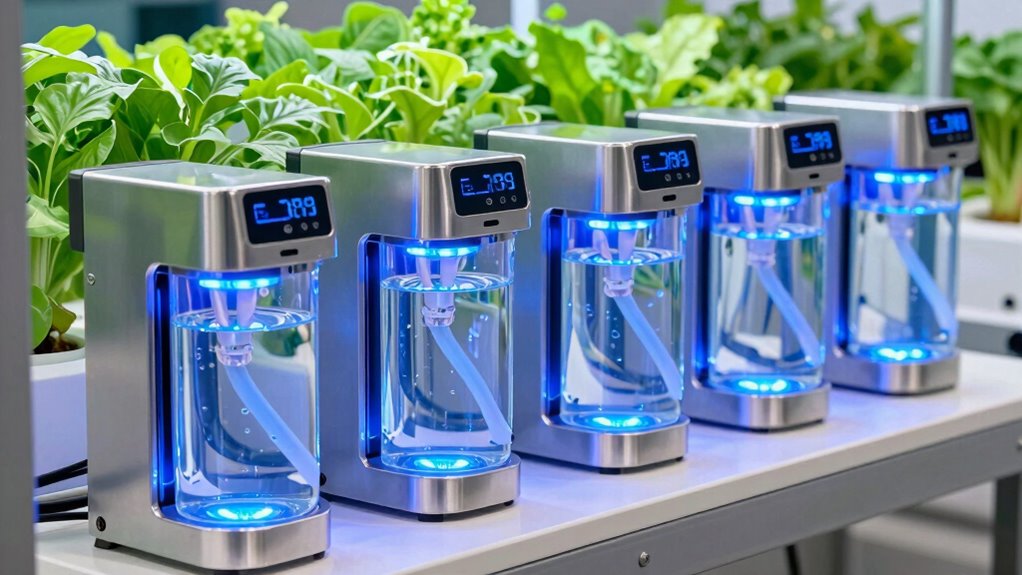

Choosing the right UV sterilizer for a hydroponic water system involves balancing efficiency, ease of installation, and long-term durability. For 2026, the iSpring UVF50 stands out for its eco-friendly LED technology and smart features, making it ideal for those wanting a low-maintenance system. The HQUA TWS-121 offers a high flow rate and effective microorganism reduction, perfect for larger setups but requires more space and power. Meanwhile, the APEC UG-UVSET-1-4-SS provides a robust stainless steel build suitable for both residential and commercial applications, though it demands electrical connections and has limited flow info. These options reflect different priorities, tradeoffs, and installation needs for hydroponic growers.

Get garden gear delivered free with Prime
- Fast, free delivery on millions of items
- Prime Video, Amazon Music and more included
- Member-only deals all year
Complete the kit


Key Takeaways
- The iSpring UVF50 excels with eco-friendly LED UV tech and smart flow sensors, ideal for DIY installations.
- HQUA TWS-121 offers a higher flow rate and includes extra bulbs, suited for larger hydroponic systems.
- APEC UG-UVSET-1-4-SS emphasizes durability and versatility, suitable for both small and commercial setups.
- Tradeoffs include initial costs, space requirements, and the need for electrical connections depending on the model.
- All three options effectively reduce microorganisms but vary in ease of installation, maintenance, and capacity.
| iSpring UVF50 Whole House LED UV Water Filter, 1″ NPT Inlet/Outlet, 13 GPM |  | Best Overall for Eco-Friendly, Smart Operation | Flow Rate: 13 GPM | Inlet/Outlet: 1-inch NPT | UV System Life: Over 8,000 hours | VIEW ON AMAZON | See Our Full Breakdown |
| HQUA TWS-121 Whole House Ultraviolet Water Purifier Filter, 120V, 55W, 12 GPM | 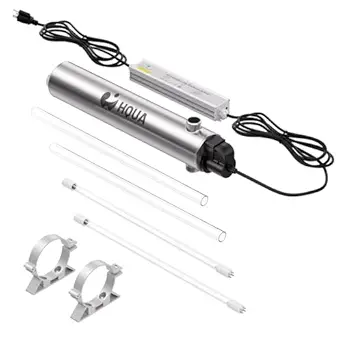 | Best for High Flow and Microorganism Reduction | Flow Rate: 12 GPM | Power: 55W | Dimensions: 21″L x 3.5″W x 3.5″H | VIEW ON AMAZON | See Our Full Breakdown |
| APEC Water UG-UVSET-1-4-SS UV Sterilizer Water Filtration Kit |  | Best for Durability and Versatility | Material: 304 stainless steel | UV Lamp Effectiveness: Eliminates up to 99.99% of bacteria, viruses, microorganisms | Application: Residential and commercial | VIEW ON AMAZON | See Our Full Breakdown |
| uv sterilizer for hydroponic water system | Flow Rate | Inlet/Outlet | Installation | Material |
|---|---|---|---|---|
| iSpring UVF50 Whole House LED | 13 GPM | 1-inch NPT | DIY-friendly | — |
| HQUA TWS-121 Whole House Ultra | 12 GPM | 1" MNPT | — | stainless steel 304 |
| APEC Water UG-UVSET-1-4-SS UV | — | — | Quick and easy | 304 stainless steel |
More Details on Our Top Picks
iSpring UVF50 Whole House LED UV Water Filter, 1″ NPT Inlet/Outlet, 13 GPM
The iSpring UVF50 stands out for integrating LED UV technology, which is both eco-friendly and long-lasting. Its smart flow sensor automatically activates the UV system when water flows, reducing unnecessary operation and energy use. Compared to traditional UV lamps, its LED module can operate for over 8,000 hours, translating to less maintenance and lower replacement costs over time. Its flow rate supports typical hydroponic systems, but installation requires careful attention to plumbing and electrical setup. While the initial cost may be higher, its durability and smart features make it a compelling choice for those prioritizing sustainability and automation.
Pros:- Eco-friendly LED UV technology with no mercury or ozone
- Long-lasting LED with over 8,000 hours of operation
- Smart flow sensor for automatic UV activation
Cons:- Requires careful installation to maximize performance
- Limited details on maintenance procedures
- Higher initial cost compared to traditional UV systems
Best for: Hydroponic growers seeking a durable, eco-friendly, and automated UV sterilizer with low maintenance.
Not ideal for: Buyers on a tight budget or those with limited DIY skills who prefer plug-and-play solutions.
- Flow Rate:13 GPM
- Inlet/Outlet:1-inch NPT
- UV System Life:Over 8,000 hours
- Activation:Smart flow sensor
- Installation:DIY-friendly
- Power Source:LED-based, no mercury or ozone
Our verdict“A smart, eco-conscious choice ideal for those wanting long-term reliability and automation in their hydroponic water sterilization.”
HQUA TWS-121 Whole House Ultraviolet Water Purifier Filter, 120V, 55W, 12 GPM
The HQUA TWS-121 delivers a robust 12 GPM flow rate, making it suitable for larger hydroponic setups or multiple systems running simultaneously. Its 55W power output ensures effective microorganism reduction, eliminating 99.99% of bacteria and viruses without affecting taste or water chemistry. The inclusion of an extra UV bulb and quartz sleeve simplifies maintenance and prolongs system life. However, its bulkier size and reliance on 120V power mean it requires ample space and electrical setup, which can complicate installation for smaller or DIY-focused growers. Despite these tradeoffs, it’s a reliable, high-capacity sterilizer for demanding hydroponic environments.
Pros:- Effective 99.99% microorganism reduction
- High flow rate of 12 GPM suitable for large systems
- Includes extra UV bulb and quartz sleeve for maintenance ease
Cons:- Requires 120V power supply
- Size may be a challenge in tight spaces
- Limited TDS compatibility (up to 1000 PPM)
Best for: Large-scale hydroponic systems needing high flow rates and effective microbial control.
Not ideal for: Growers seeking a compact, low-power solution or those with limited space and electrical capacity.
- Flow Rate:12 GPM
- Power:55W
- Dimensions:21″L x 3.5″W x 3.5″H
- Inlet/Outlet:1″ MNPT
- UV Bulb Life:9000 hours
- Maximum Temperature:122 °F
- Water TDS Level:up to 1000 PPM
- Material:stainless steel 304
Our verdict“A high-capacity, effective UV sterilizer best suited for large hydroponic systems where flow and microbial control are priorities.”
APEC Water UG-UVSET-1-4-SS UV Sterilizer Water Filtration Kit
The APEC UG-UVSET-1-4-SS offers a sturdy stainless steel reactor chamber that ensures durability and long-term performance. Its UV technology can eliminate up to 99.99% of bacteria, viruses, and microorganisms, making it suitable for both residential and commercial hydroponic setups. The quick and straightforward installation process involves minimal water and electrical connections, appealing to users seeking an easy upgrade. However, it requires electrical power to operate and offers limited information on its maximum flow rate, which could be a drawback for those needing precise capacity details. The unit’s stainless steel construction enhances longevity but might be overkill for small, hobbyist systems.
Pros:- High-efficiency UV sterilization up to 99.99%
- Durable stainless steel construction for long-lasting use
- Easy installation suitable for residential and commercial settings
Cons:- Requires electrical connection
- Limited info on maximum flow capacity
- No included replacement UV lamp
Best for: Hydroponic growers who need a durable, versatile sterilizer for varied system sizes, including commercial operations.
Not ideal for: Small-scale hobbyists or growers seeking a compact, plug-and-play device without electrical requirements.
- Material:304 stainless steel
- UV Lamp Effectiveness:Eliminates up to 99.99% of bacteria, viruses, microorganisms
- Application:Residential and commercial
- Installation:Quick and easy
- Electrical Connection:Required
Our verdict“A sturdy, long-lasting UV sterilizer ideal for those prioritizing durability and versatility over compact size.”

How We Picked
Our selection process focused on UV sterilizers that specifically target hydroponic water systems, prioritizing flow rate, ease of installation, durability, and microbial effectiveness. We evaluated the technological approach (LED vs. traditional UV), construction materials, and maintenance requirements. Compatibility with typical hydroponic setups was a key factor, along with the ability to serve different scales—from small home systems to larger commercial operations. We also considered user-friendliness and long-term reliability, aiming to identify options that balance performance with practical application.
| uv sterilizer for hydroponic water system | Installation |
|---|---|
| iSpring UVF50 Whole House LED | DIY-friendly |
| HQUA TWS-121 Whole House Ultra | — |
| APEC Water UG-UVSET-1-4-SS UV | Quick and easy |
Factors to Consider When Choosing Uv Sterilizer For Hydroponic Water System
Selecting the right UV sterilizer for your hydroponic water system depends on your specific setup needs, size, and microbial control goals. Important factors include flow rate capacity, installation complexity, durability, and energy consumption. Understanding these aspects helps ensure you pick a system that integrates smoothly into your hydroponic operation, providing reliable microbial reduction without excessive maintenance or cost.
Flow Rate and Capacity
For hydroponic systems, matching the UV sterilizer’s flow rate with your water circulation needs is key. Larger setups require higher GPM ratings to prevent bottlenecks, and a system that cannot handle your flow volume may lead to reduced sterilization effectiveness. Consider your system’s size and choose a UV unit with a capacity that exceeds your maximum flow to ensure consistent microbial control.
Installation and Maintenance
Ease of installation varies among models. DIY-friendly units with clear instructions and minimal plumbing modifications save time and effort. Maintenance considerations include UV lamp replacement frequency, accessibility, and whether the system has features like smart sensors or indicator lights. Durability of construction materials, such as stainless steel, also impacts long-term reliability.
Technological Features
LED UV technology, as seen in the iSpring UVF50, offers longer lifespan and lower environmental impact but may come at a higher initial price. Traditional UV lamps are often less expensive but require more frequent replacements. Evaluate if smart features like automatic activation or indicators are worth the added investment based on your operational needs.
Power and Space Requirements
Some units demand a dedicated electrical connection, which could influence your setup if space or wiring options are limited. Size and weight are also factors—compact models are easier to install in tight spaces, while larger units are better suited for commercial or extensive setups. Make sure your system can accommodate the physical footprint of the chosen sterilizer.
Frequently Asked Questions
How does UV sterilization improve hydroponic water quality?
UV sterilization effectively reduces harmful microorganisms, including bacteria and viruses, without altering the water’s chemical properties. This helps prevent root diseases, algae growth, and contamination, leading to healthier plants and more predictable growth cycles. UV systems are a chemical-free way to keep water microbiologically safe, making them ideal for sensitive hydroponic environments.
What flow rate should I look for in a hydroponic UV sterilizer?
The flow rate you need depends on the size of your hydroponic system and the volume of water circulating. Generally, a flow rate of 10-15 GPM covers most small to medium setups. Larger commercial systems may require units with higher GPM ratings to ensure all water is sterilized effectively without bypassing the UV process.
Are LED UV systems better than traditional UV lamps for hydroponics?
LED UV systems, like the iSpring UVF50, offer longer lifespan, lower energy consumption, and no mercury or ozone emissions, making them more environmentally friendly and lower maintenance. However, they are often more expensive upfront. Traditional UV lamps are less costly initially but require more frequent replacements, which can add to ongoing costs over time. Your choice depends on your priority for sustainability versus initial investment.
Can I install a UV sterilizer myself?
Many UV sterilizers designed for hydroponic water systems are DIY-friendly, especially models with clear instructions, simple plumbing connections, and minimal electrical work. However, it’s important to follow safety procedures, particularly with electrical components and water connections. For larger or more complex setups, professional installation might be advisable to ensure optimal performance and safety.
How often do UV lamps need replacement?
The replacement frequency varies by model and usage but generally ranges from 8,000 to 10,000 hours of operation. LED UV systems tend to last longer, often over 8,000 hours, with some exceeding 10,000 hours. Traditional UV lamps may need replacement every year or two depending on usage. Regular maintenance ensures continuous microbial control and system efficiency.
Conclusion
For small home hydroponic growers prioritizing eco-friendliness and automation, the iSpring UVF50 offers a compelling balance of efficiency and sustainability despite a higher initial cost. Larger or commercial growers needing high flow capacity and robust microbial reduction should consider the HQUA TWS-121, especially when space and power are available. For those seeking a durable, versatile option suitable for various system sizes, the APEC UG-UVSET-1-4-SS provides long-lasting performance and easy installation. Each choice aligns with different operational scales and priorities, making it essential to match the product to your specific hydroponic setup and goals.