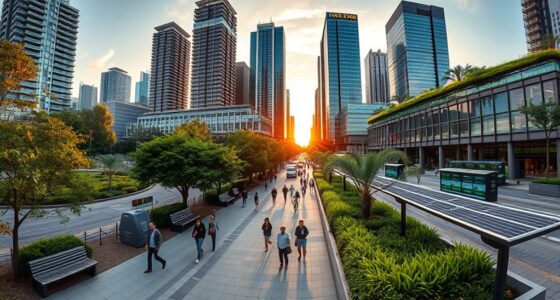
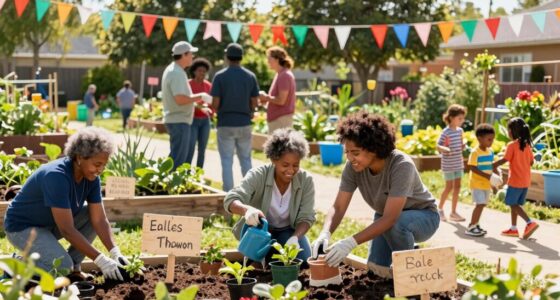
Good public space design helps you build stronger community bonds and boosts social resilience. When spaces are inclusive, safe, and flexible, you and others can connect, share trust, and participate actively. Thoughtful design encourages diverse groups to engage and adapt to challenges, making neighborhoods more resilient. By focusing on these principles, you’ll see how well-designed public spaces can truly strengthen social fabric—discover more about how to create impactful environments that support enduring communities.

Get garden gear delivered free — and shop member deals
- Fast, free delivery on millions of items
- Access to Prime Big Deal Days deals on October 6–7
- Prime Video, Amazon Music and more included
Key Takeaways
- Thoughtful design fosters social interactions, strengthening community bonds and trust.
- Inclusive, adaptable spaces ensure participation from diverse groups, enhancing social cohesion.
- Green infrastructure and sustainable features improve environmental resilience, supporting community well-being.
- Well-designed public spaces promote safety and comfort, encouraging continuous community use.
- Integrating public spaces into urban planning boosts overall community resilience and social equity.

Public spaces are more than just physical environments; they’re essential for fostering community connections and enhancing social resilience. When designed thoughtfully, these spaces become vibrant hubs where people come together, share ideas, and build trust. This sense of community engagement isn’t just about social interaction; it’s about creating a foundation that can withstand social challenges and adapt to change. Well-designed public spaces encourage diverse groups to participate, ensuring that everyone feels included and valued. This inclusivity strengthens communal bonds, making neighborhoods more resilient in times of crisis or upheaval.
Thoughtfully designed public spaces strengthen community bonds and boost resilience through inclusion and shared trust.
Urban sustainability also hinges on how public spaces are designed. When you prioritize eco-friendly materials, green infrastructure, and natural elements, you’re not only reducing environmental impact but also creating healthier, more livable environments. These sustainable features attract residents and visitors alike, fostering a sense of pride and ownership in the community. As public spaces become greener and more accessible, they support local ecosystems, improve air quality, and promote healthier lifestyles. These benefits ripple outward, contributing to the overall resilience of urban areas by reducing vulnerability to climate change and environmental stressors. Incorporating sustainable design principles can significantly enhance these efforts by aligning environmental benefits with community needs. Additionally, incorporating climate-responsive design ensures that public spaces remain functional and comfortable under changing weather patterns. A thoughtful approach to urban planning can further optimize these benefits by integrating public space design into broader city development strategies.
Design plays a critical role in shaping the functionality and appeal of public spaces. By integrating features that facilitate community engagement—such as seating areas, open plazas, or multi-use pathways—you invite people to gather and interact naturally. When spaces are flexible and adaptable, they can host a variety of activities, from markets to cultural events, fostering social cohesion. You also want to incorporate elements that promote safety and comfort, making it easier for individuals of all ages and abilities to participate. These thoughtful touches build a welcoming atmosphere, encouraging sustained use and strengthening community ties. Recognizing how urban design influences social behavior can help planners create more effective and engaging environments.
Furthermore, inclusive public space design considers the needs of marginalized populations, ensuring that everyone benefits from urban sustainability initiatives. When you design with equity in mind, you help bridge social divides and create a sense of shared ownership. This inclusivity enhances social resilience because it ensures that all voices are heard and that the community can mobilize collectively in times of need. Ultimately, the way you design public spaces impacts not just the physical environment but also the social fabric of your community, making it more adaptable, cohesive, and resilient for generations to come.
As an affiliate, we earn on qualifying purchases.
Frequently Asked Questions
How Do Public Spaces Influence Mental Health During Crises?
Public spaces influence your mental health during crises by providing urban tranquility and a refuge from stress. When you visit parks or open areas, you experience stress reduction through natural surroundings that soothe your mind. These spaces offer a calming environment, helping you decompress amid chaos. By fostering a sense of community and safety, well-designed public spaces support your resilience, making it easier to cope and recover during challenging times.
What Role Do Community Members Play in Designing Public Spaces?
You are the architects of your community’s future, shaping spaces that reflect your needs and dreams. Through community engagement and participatory planning, you breathe life into public spaces, turning them into vibrant hubs of connection and resilience. Your voices guide design choices, ensuring spaces foster inclusivity and strength during crises. By actively participating, you become the foundation upon which resilient, adaptable communities are built—your collective effort shaping a resilient tomorrow.
How Can Public Spaces Adapt to Climate Change Challenges?
To adapt public spaces to climate change, you can incorporate features like urban cooling strategies, such as shaded walkways and green roofs, to reduce heat. Implement flood mitigation measures like permeable pavements and rain gardens that absorb excess water. These adaptations help protect communities from extreme weather, ensuring public spaces remain accessible and safe, fostering resilience. Your involvement in advocating for and designing these features makes a real difference.
What Funding Options Are Available for Public Space Projects?
You might find funding for your public space projects through a mix of options like public-private partnerships and grant opportunities. These collaborations bring together government agencies, private investors, and community groups to share costs and resources. Grants from local, state, or federal agencies can also provide essential financial support. By exploring these avenues, you can secure the necessary funds to design resilient and inclusive public spaces that serve everyone’s needs.
How Do Public Spaces Impact Local Economic Development?
Public spaces boost local economic development by attracting visitors and encouraging spending. Urban greenery enhances the area’s appeal, making it more inviting for residents and tourists alike. Well-designed public spaces can transform vacant lots into vibrant commercial hubs, creating jobs and supporting local businesses. These spaces foster community engagement, increase property values, and stimulate economic activity, ultimately strengthening the area’s economic resilience and making it more attractive for future investments.
Conclusion
Think of public space design as the backbone of your community’s strength. When you create inviting, accessible areas, you’re weaving a fabric of social resilience that can stretch and adapt through challenges. These spaces become the threads that hold everyone together, fostering connection and support. Remember, a well-designed public space isn’t just a place—it’s the heartbeat that keeps your community vibrant and resilient, ready to face whatever comes next.
Fall yard work Picks
leaf blowers
As an affiliate, we earn on qualifying purchases.