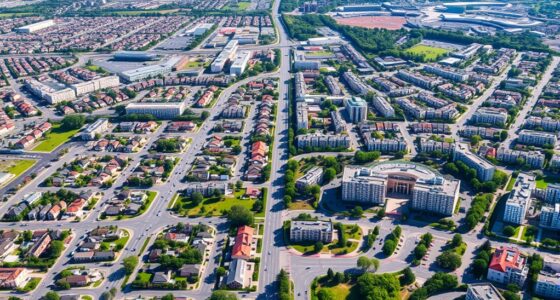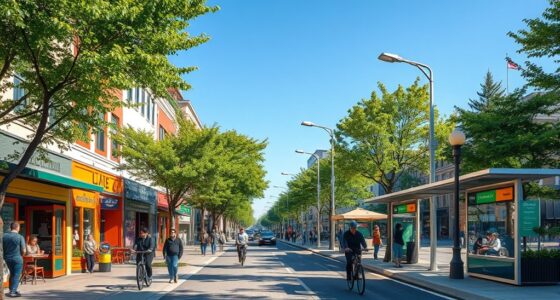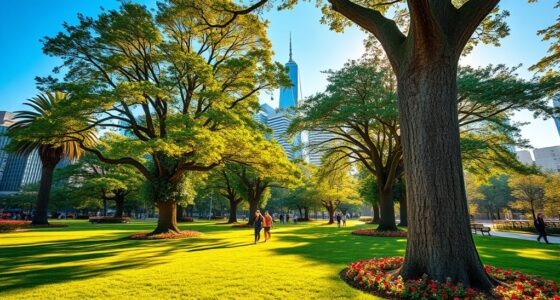
To cool cities effectively, focus on adding water features like fountains and misting stations that absorb heat and increase humidity for quick relief. Expand tree canopies by planting shade trees along streets and in parks, which block sunlight and lower surface temperatures. Combining these strategies creates a comfortable, sustainable environment by reducing heat, improving air quality, and enhancing urban beauty. If you keep exploring, you’ll discover even more ways to transform urban spaces into cooler, greener places.
Key Takeaways
- Incorporate water features like fountains and misting stations to absorb heat and increase urban moisture for cooling.
- Expand tree canopy cover through planting on streets, rooftops, and public spaces to provide natural shade and lower surface temperatures.
- Use reflective and water-based surfaces to reduce heat absorption and enhance the cooling effect in city environments.
- Combine water features with increased greenery for a comprehensive approach to reducing urban heat islands.
- Implement sustainable water management practices to maximize water efficiency and support long-term urban cooling strategies.
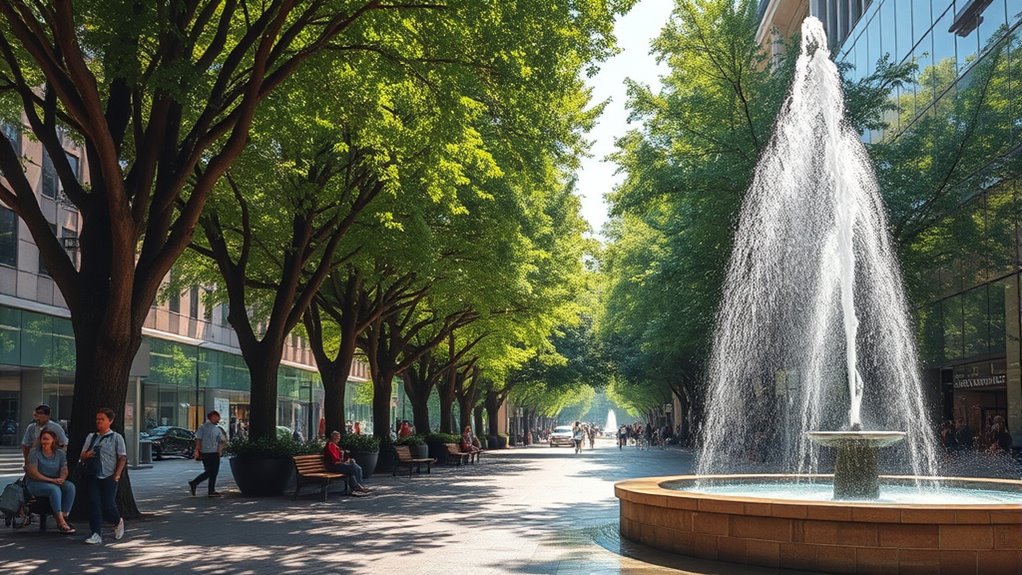
As global temperatures rise, cities are turning to innovative strategies like water features and shaded areas to combat urban heat. One effective approach is improving urban water management, which involves carefully planning and utilizing water sources to cool down city environments. Think about installing fountains, reflective pools, and misting stations in busy public spaces. These water features absorb heat and release moisture into the air, creating a cooling effect that reduces the surrounding temperature. Proper urban water management also means ensuring efficient stormwater systems that prevent flooding and allow for strategic water use during heatwaves. When managed well, water can serve both functional and aesthetic purposes, making the city more comfortable and visually appealing. Incorporating water-efficient technologies can further enhance these efforts and promote sustainable urban design.
At the same time, expanding the tree canopy plays a crucial role in cooling urban landscapes. By planting more trees and increasing existing canopy cover, you create natural shade that markedly lowers surface and air temperatures. Trees absorb sunlight with their leaves, preventing the heat from penetrating concrete and asphalt, which tend to trap and radiate heat. As a result, shaded areas become cooler, and the overall urban microclimate improves. Tree canopy expansion isn’t just about adding greenery; it’s about designing urban spaces that prioritize shade and airflow, which can make a noticeable difference during scorching summer days. When you increase tree cover, you also enhance air quality and boost the city’s resilience to heat stress.
Combining these strategies—smart urban water management and tree canopy expansion—offers a thorough approach to urban cooling. Water features can be integrated into parks and streetscapes, providing immediate relief while also creating inviting spaces for residents. Simultaneously, planting more trees along sidewalks, in plazas, and on rooftops can extend shade coverage, promoting comfort and safety. This integrated approach not only cools the city but also improves sustainability and quality of life. As a city dweller or planner, you have the power to advocate for and implement these strategies, making urban environments more livable amid rising global temperatures. By thoughtfully managing water resources and expanding tree canopies, you help transform urban areas into cooler, greener, and more resilient places for everyone.
Frequently Asked Questions
How Cost-Effective Are Water and Shade Cooling Strategies?
Water and shade cooling strategies are generally cost-effective when considering their long-term benefits. You’ll find that a thorough cost analysis shows reduced energy expenses and improved urban comfort. However, implementation challenges like maintaining water sources and designing effective shade structures can add initial costs. Still, with proper planning, these strategies can offer sustainable, affordable cooling solutions, making them worth the investment for city resilience and public health.
What Are Potential Environmental Impacts of Using Water for Cooling?
Using water for cooling can lead to significant environmental impacts, including high water consumption, ecosystem disruption, and increased strain on local water resources. You might unintentionally deplete supplies essential for wildlife and agriculture, disturb aquatic ecosystems, or cause water temperature shifts that harm flora and fauna. By understanding these risks, you can better balance urban cooling needs with environmental preservation, ensuring sustainable and eco-friendly solutions.
How Do Water and Shade Solutions Perform During Droughts?
During droughts, water and shade solutions like evaporative cooling may struggle to perform effectively, as water shortages limit availability. Shade trees can still provide some relief by reducing urban microclimates, but evaporative cooling loses efficiency without sufficient water. You should consider drought-resistant plants and alternative shading methods. This way, you guarantee your cooling strategies remain sustainable and effective even in dry conditions.
Are These Cooling Methods Sustainable Long-Term?
Cooling methods like water and shade are surprisingly sustainable long-term if you focus on evaporation efficiency and shade durability. While some worry about droughts, modern techniques maximize water use and guarantee shade structures last for decades. You can create a cooler city without exhausting resources or losing effectiveness, making these solutions not just effective now, but resilient enough to battle future climate challenges.
How Can Urban Planners Integrate Water and Shade Efficiently?
You can integrate water and shade efficiently by incorporating green infrastructure like parks, green roofs, and water features into urban microclimates. Use strategic placement of trees and shaded pathways to maximize cooling effects. Implement sustainable water management practices, such as rain gardens and permeable surfaces, to enhance cooling while reducing runoff. This approach creates healthier, more comfortable urban environments and helps mitigate heat without overtaxing resources.
Conclusion
By embracing water and shade, you can transform your city into a invigorating oasis amid the heatwave. Think of trees and fountains as nature’s cool embrace, gently wrapping you in relief. When you plant shade or add water features, you’re planting hope—cooling the streets and lifting spirits. So, take action now and turn your city into a vibrant, shady sanctuary. Together, you can make every summer day feel like a gasp of new, cool air.