
You can be part of citizen-led climate policy by mobilizing your community to raise awareness, gather signatures, and engage with local lawmakers. Grassroots actions like rallies and educational campaigns show lawmakers that climate change is a top priority for their constituents. Persistent community efforts and strategic advocacy can influence policy changes, such as renewable incentives and emissions standards. If you continue exploring, you’ll discover how ordinary people are making extraordinary impacts on climate laws and policies.
Key Takeaways
- Grassroots activism mobilizes communities to raise awareness and demonstrate support for climate policies, influencing lawmakers.
- Community-led initiatives gather signatures, participate in hearings, and build public pressure for legislative change.
- Citizens advocate for policies like renewable incentives and stricter emissions standards through direct engagement with policymakers.
- Technology, such as AI analytics, empowers ordinary people to target impactful areas and strengthen their advocacy efforts.
- Persistent grassroots efforts demonstrate public demand, prompting elected officials to prioritize and pass stronger climate laws.
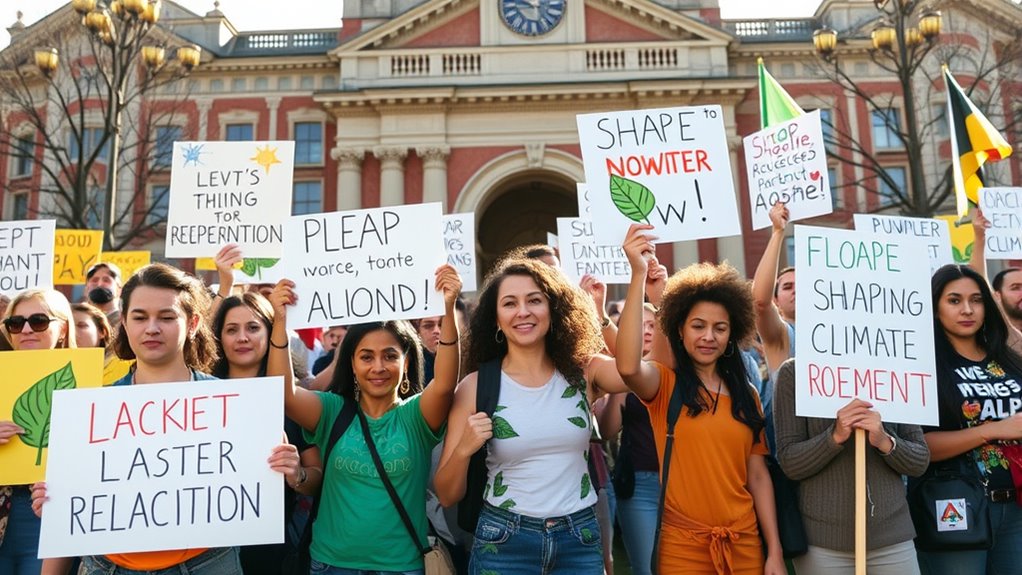
As climate change accelerates, more communities are taking matters into their own hands by leading efforts to shape policies that address environmental challenges. You might be surprised to discover how powerful grassroots activism can be when it’s paired with strategic policy advocacy. Ordinary people like you are stepping up, organizing, and making their voices heard to push for meaningful change. This movement isn’t just about raising awareness; it’s about directly influencing the laws and regulations that govern environmental action. When communities band together, they can create a force that policymakers can’t ignore.
Through grassroots activism, you can mobilize neighbors, local organizations, and volunteers to demonstrate widespread support for climate initiatives. This hands-on approach involves organizing rallies, educational events, and letter-writing campaigns that highlight urgent issues like fossil fuel reduction, renewable energy adoption, and conservation efforts. It’s about making climate concerns impossible for lawmakers to dismiss. By gathering signatures for petitions or participating in public hearings, you lay the groundwork for policy advocacy that’s rooted in community needs. Your involvement shows elected officials that climate action isn’t a fringe concern — it’s a priority for their constituents.
Policy advocacy, in this context, becomes a tool to translate grassroots energy into tangible legislative change. It involves engaging directly with policymakers, providing evidence-based recommendations, and pushing for specific laws that support sustainable practices. You can work with local officials to draft climate-friendly ordinances, advocate for renewable energy incentives, or lobby for stricter emissions standards. The key is persistence: persistent dialogue, ongoing education, and continuous pressure. Your voice, combined with others’, creates a compelling case that can sway decision-makers and reshape policies.
What makes citizen-led efforts so effective is their authenticity and immediacy. Elected representatives often respond more quickly to community-led initiatives because they represent the people directly affected by climate impacts. When you participate in grassroots activism and policy advocacy, you help bridge the gap between public concern and legislative action. Your actions demonstrate that change is possible when communities unite with a clear purpose. Over time, these efforts can lead to stronger environmental laws, better funding for green projects, and a shift in political priorities that favor sustainability.
Additionally, leveraging AI-powered data analytics can help communities identify the most impactful areas for climate action and tailor their advocacy strategies more effectively. It’s about empowering yourself and others to take control of the future you want to see. Your voice matters, and through grassroots activism and policy advocacy, you can be a catalyst for real, lasting change that puts climate solutions at the forefront of legislative agendas.
petition signing kits for climate activism
As an affiliate, we earn on qualifying purchases.
As an affiliate, we earn on qualifying purchases.
Frequently Asked Questions
How Can Individuals Effectively Influence Climate Legislation?
You can influence climate legislation effectively by engaging in innovative advocacy strategies and policy lobbying. Start by educating yourself on key issues and connecting with local organizations. Reach out to lawmakers through calls, emails, or meetings, emphasizing your concerns. Use social media to raise awareness and mobilize others. Your persistent efforts can shape public opinion and pressure policymakers to prioritize climate action, turning your voice into impactful change.
What Obstacles Do Citizen-Led Climate Initiatives Face Legally?
Legal barriers and policy restrictions challenge your efforts to drive change. While your passion fuels action, laws often hinder progress, creating a frustrating tug-of-war. These obstacles, like restrictive regulations and complex legal processes, can slow or block initiatives. Yet, your persistence and creativity can navigate or challenge these barriers, proving that even in restrictive environments, ordinary people can push for meaningful climate policies.
How Successful Have Grassroots Climate Campaigns Been Historically?
You might wonder how successful grassroots climate campaigns have been historically. In many cases, community activism has led to significant grassroots victories, inspiring policy changes and raising awareness. While challenges remain, persistent efforts often result in tangible impacts, showing that ordinary people can drive meaningful environmental change. Your involvement in community activism can contribute to these successes, proving that collective action truly makes a difference in addressing climate issues.
What Skills Are Essential for Organizing Citizen-Led Policy Changes?
When organizing citizen-led policy changes, you need strong community organizing skills to rally support and build momentum. Strategic planning is essential for setting clear goals and crafting effective campaigns. You should communicate persuasively, collaborate with diverse groups, and stay adaptable to challenges. By mastering these skills, you empower yourself to influence laws and create meaningful change, making your efforts impactful and sustainable.
How Can Marginalized Communities Participate in Climate Policymaking?
To participate in climate policymaking, you can focus on community empowerment and policy advocacy. Engage with local organizations, build awareness, and voice your community’s concerns. Attend public meetings, collaborate with allies, and leverage social media to influence decision-makers. Your active involvement amplifies marginalized voices, helping shape policies that address your community’s needs. Empowered communities can drive meaningful change, ensuring that climate policies are inclusive and equitable.
Conclusion
You hold the power to turn the tide of climate change, like a mighty river shaping the landscape. When you speak up and stand together, your voices become a blazing torch illuminating the path to change. Every petition, protest, and vote is a brushstroke on the canvas of a better world. So, step into the storm, wield your influence, and watch as ordinary people like you transform laws and ignite a future worth fighting for.