TL;DR
Growing a peach tree from a pit starts with a viable seed and a period of cold, moist storage, commonly about three to four months. The seedling may eventually bear fruit, but its fruit, size and timing are uncertain because seed-grown trees do not reliably reproduce the parent peach.
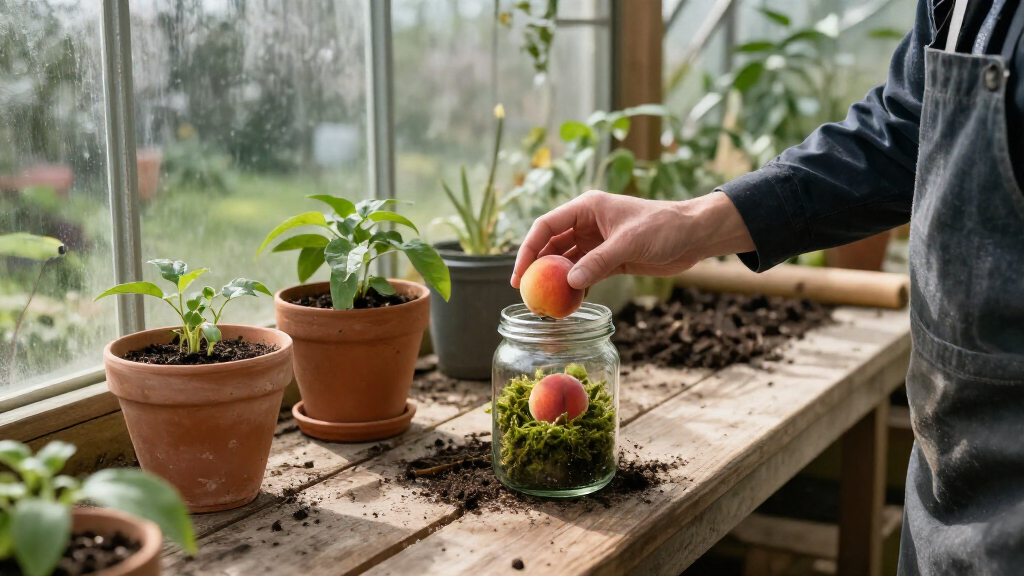
Grow Organic’s guide describes a refrigerator method for starting a peach tree from a pit: keep the seed in a moist, clean medium at about 35–40°F for roughly three to four months, then plant it when a healthy root appears. The method can encourage germination, but it cannot predict whether the seedling will produce fruit like the peach it came from.

Get garden gear delivered free with Prime
- Fast, free delivery on millions of items
- Prime Video, Amazon Music and more included
- Member-only deals all year
A peach pit is the hard shell around the seed, or kernel. Grow Organic recommends starting with a fully ripe peach, washing away the flesh and allowing the pit to dry briefly for easier handling. Gardeners can chill the intact pit or carefully remove the kernel; cracking is optional and can damage the seed. The guide cautions against applying strong heat and says not to eat the seed.
For refrigerator stratification, place the cleaned pit or kernel in a labeled bag with barely moist sand, vermiculite or another clean medium. Add small ventilation holes and keep the medium damp, not dripping. Store the bag in a refrigerator at about 35–40°F, away from the freezer compartment. Check periodically for drying, mold or root growth, and plant promptly once a healthy root emerges.
Grow Organic gives three to four months as a planning estimate, not a fixed deadline. The guide cites Iowa State guidance of 98–105 days for peaches and University of Georgia guidance of 90–130 days for several peach rootstocks. Those ranges differ, and individual seeds may not follow either schedule.
What Seed-Grown Peaches Can Deliver
Cold stratification gives a peach seed conditions resembling winter, which can help overcome dormancy and prompt germination. For home gardeners, it offers a relatively low-cost way to grow a tree and observe how a seed develops. The process is a germination step, not a guarantee of a harvest.
A tree grown from seed may differ from its parent in fruit quality, tree size and bearing time. Grow Organic says some seedling peach trees may begin fruiting in about three to five years under favorable conditions, while others take longer or may not produce usable fruit. Climate, genetics, care, winter survival and damage to blossoms all affect the outcome. Gardeners seeking a named variety with known traits may prefer a grafted nursery tree, though site and care still affect its harvest.
Popular right now

Hisense E6 Cinema Series 85-Inch 4K UHD Hi-QLED Smart Fire TV

Roborock Q10 S5+ Robot Vacuum and Mop with 10,000 Pa Suction

Dyson Cyclone V10 Origin Cordless Vacuum
As an affiliate, we earn on qualifying purchases.
From Refrigerator to Garden Soil
Once a root appears, the guide recommends planting in a deep container with drainage holes and fresh, freely draining potting mix. Set the root downward without bending it. University planting guidance cited in the report commonly places peach seeds about 1½–2 inches below the soil surface. Water to settle the mix, then keep it moist without leaving the pot standing in water. After shoots emerge, provide strong light.
Seedlings started indoors should be protected from freezing weather. Before moving one outdoors, gradually expose it to sun and wind over about a week. Choose a sunny site with well-draining soil and room for a potentially large tree; a seedling does not inherit the size control of a nursery rootstock. Transplant carefully to avoid tearing roots, keep the soil line near its original level and monitor moisture after watering.
Refrigerator chilling supports germination, but it does not establish that a mature tree will suit the local climate. Grow Organic notes that peach trees have winter-chill needs that vary with genetics. The seedling’s later growth and fruiting depend on conditions beyond the stratification period.
““Plan for roughly three to four months, although individual seeds vary.””
— Grow Organic
Germination and Fruit Remain Uncertain
The guide does not provide a success rate for germination, and a viable seed is not guaranteed. Mold, drying, damage to the kernel and differences among seeds can affect whether a root emerges. The cited chilling ranges are guidance, not a promise that a particular seed will sprout on schedule.
Even after germination, the seedling’s eventual fruit characteristics, mature size and bearing date are unknown. The source also gives no specific variety or local climate, so it cannot establish whether a resulting tree would meet its winter-chill needs or thrive at a particular site.
Plant When Roots Appear
For gardeners following the method, the next step is to check the chilled seed regularly and plant it when a healthy root has emerged. Keep the container draining freely, maintain steady moisture and give the new shoot strong light. Move the plant outdoors only when freezing conditions have passed, and acclimate it gradually before transplanting.
After planting, watch the seedling’s growth and protect its roots during handling. A gardener who needs predictable fruit or a selected variety can compare grafted nursery trees instead. For a seed-grown tree, the longer-term test is whether it establishes well and eventually bears fruit; the source’s three-to-five-year estimate is not a guarantee.
Key Questions
Can you grow a peach tree from a pit?
Yes. A pit contains a seed that may grow if it is viable and receives suitable moisture, oxygen and cold treatment. Germination and future fruit are not guaranteed.
How long should a peach seed be cold-stratified?
Grow Organic suggests planning for roughly three to four months. It cites guidance ranging from 98–105 days for peaches to 90–130 days for several peach rootstocks, so the timing varies.
Does the peach seed need to be removed from the pit?
No. The guide says gardeners can chill the intact pit or carefully remove the kernel. Cracking the pit is optional and risks damaging the seed.
Will a peach grown from seed produce the same fruit?
That is not assured. A seedling’s fruit may differ from the peach it came from, and its size and time to bearing are also uncertain.
How long until a seed-grown peach tree bears fruit?
Grow Organic says some may begin bearing in about three to five years under favorable conditions, but others take longer. Fruiting depends on genetics, climate and care.
Source: groworganic.com